

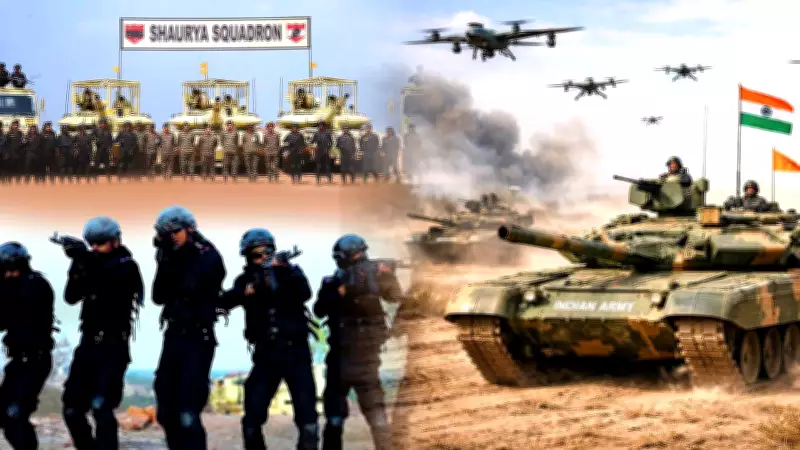
Indian Army Reshapes Armored Warfare with Drone-Integrated Shaurya Squadrons
The Indian Army is undergoing a profound transformation in its armored warfare strategy, marking a significant doctrinal shift by incorporating drone capabilities directly into tank formations through the newly developed 'Shaurya Squadrons'. These specialized units are engineered to function as an organic and integral component of armored regiments, providing comprehensive real-time surveillance, precision targeting, and advanced electronic warfare support. This innovative approach fundamentally alters traditional military setups where drones typically operate as separate or detached assets.
Compressing the Sensor-to-Shooter Cycle
By embedding drones directly within maneuver units, the Indian Army aims to dramatically compress the critical 'sensor-to-shooter' cycle, enabling faster and more efficient decision-making processes during combat scenarios. This integration allows for seamless coordination between ground forces and aerial surveillance, creating a more responsive and agile battlefield presence. The concept represents a strategic evolution in how modern armies leverage technology to gain tactical advantages.
Successful Testing at Babina Field Firing Ranges
The Shaurya Squadron concept was recently put to the test during comprehensive exercises at the Babina Field Firing Ranges, where drone-integrated operations were conducted alongside mechanized forces and attack helicopters. These demonstrations showcased the enhanced ability to identify, track, and engage targets with unprecedented speed and coordination. The exercises highlighted the operational superiority of integrated systems, proving that combined arms operations with embedded drone support can deliver decisive battlefield outcomes.

Building on Broader Doctrinal Evolution
This development builds upon a broader doctrinal evolution within the Indian Army, heavily influenced by lessons learned from recent global conflicts where drone technology has played increasingly decisive roles. Similar adaptations have already been implemented across other military branches, including the introduction of Ashni platoons in infantry formations and Divyastra batteries in artillery units. The Army's commitment to technological integration reflects a forward-thinking approach to modern warfare challenges.
Information Dominance for Armored Fleet
With an impressive armored fleet comprising approximately 4,500 tanks, including advanced variants such as the T-90, T-72, and indigenous Arjun models, the addition of organic drone capabilities introduces a crucial new dimension: information dominance. This enhancement ensures that armored units not only maintain their traditional strengths in firepower and mobility but also gain superior situational awareness and intelligence-gathering capabilities. The integration represents a holistic upgrade to the Army's combat effectiveness.
Future of Armored Warfare
While the Shaurya Squadron concept continues to undergo refinement and development, it clearly signals the direction of future armored warfare. The Indian Army's vision emphasizes that success in modern combat will not rely solely on conventional firepower and mobility but increasingly on integrated intelligence systems and rapid targeting capabilities. This strategic pivot positions the Army to meet evolving threats with enhanced technological sophistication and operational flexibility, ensuring readiness for contemporary and future battlefield environments.






