

Awami League Exiles in Kolkata Breathe Easier as Bangladesh Election Results Trickle In
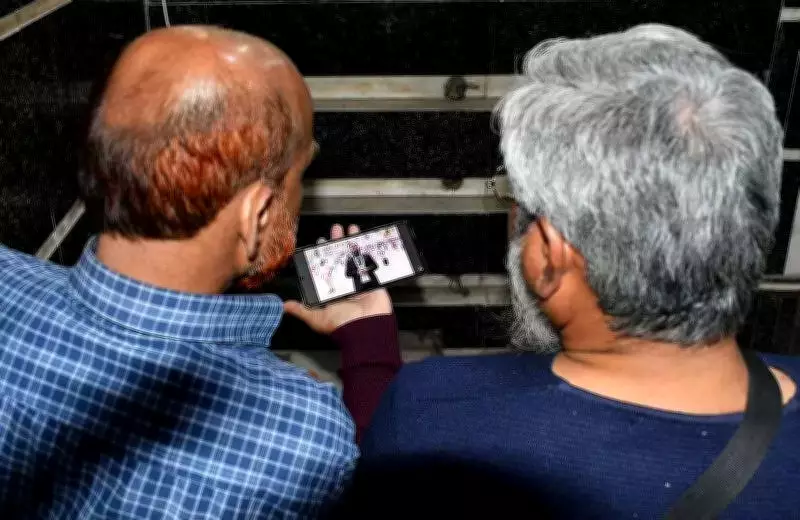
For Awami League leaders living in exile in Kolkata, the past several days have been marked by intense anxiety and sleepless nights. However, by Thursday evening, a palpable sense of relief washed over them as preliminary election trends from Bangladesh began to surface. While these exiled politicians maintained that the "real voter turnout" across their homeland did not exceed 22%, citing public adherence to their "No Boat, No Vote" boycott call, they also found solace in the apparent containment of the radical Jamaat-e-Islami's influence within Dhaka's power corridors.
Claims of a Managed Election and Rigging Allegations
Alauddin Ahmed Chowdhury, the Feni (1) MP and former private secretary to Sheikh Hasina, meticulously monitored the voting patterns from Thursday morning. He presented a starkly different picture from the official narrative. "Based on data collected by our party workers nationwide, actual votes polled likely fall between 20% and 22%," Chowdhury asserted. He described an implausible surge, noting, "Approximately 15% of votes were cast by 11 AM. Suddenly, an additional 18% appeared in the next hour, with figures climbing exponentially thereafter. This pattern defies logic and points to a managed election, a planned farce." This stands in contrast to the Election Commission's reported final turnout of 48%.
Salim Mahmud, the Chandpur (1) MP and party information secretary, echoed these concerns, alleging blatant electoral engineering over the preceding days. "Jamaat and its allies employed every conceivable method to rig the polls," Mahmud stated. He detailed efforts since Wednesday, including reports of BNP and Jamaat workers infiltrating polling booths, the distribution of pre-stamped ballots, and coercion of voters. Mahmud himself remained tethered to three mobile phones and two laptops, fielding constant updates from hundreds of dedicated WhatsApp and Telegram groups coordinating Awami League workers.

Digital Campaigning and Social Media Struggles
The election period saw the Awami League's exiled wing heavily reliant on digital outreach. A month prior, the party had launched its "No Boat (the party's symbol), No Vote" campaign, urging a peaceful boycott of an election they deemed illegitimate due to their exclusion. Leaders campaigned tirelessly through virtual channels, advocating for an inclusive electoral process.
Rokeya Prachi, the former cultural secretary of the party's women's wing, was tasked with managing social media broadcast channels to unite party workers and supporters. Despite two of her channels being abruptly shut down, Prachi persevered with an alternative platform to disseminate the party's message. "We view this as a victory for Sheikh Hasina, demonstrated by the people's boycott," she claimed, also citing reports of electoral violence from regions like Noakhali, Mymensingh, Kishoreganj, and Sylhet.
Relief at Jamaat's Apparent Setback and Hopes for the Future
Beyond the turnout claims, a significant source of relief for the Kolkata-based leaders was the emerging trend showing Jamaat-e-Islami, and its influential student wing Chhatra Shibir, falling far behind. One AL leader reflected on the broader implications, "Our leader hoped that if the BNP came to power, it might lift the ban on the Awami League. The BNP has roots in mass politics. However, Jamaat's rise during Muhammad Yunus's tenure opened floodgates for radicalism in Bangladesh. We are hopeful that this trend will now be restricted." This sentiment underscores a complex political landscape where containing radical forces is viewed as a critical, albeit partial, positive outcome amidst a disputed electoral process.






