

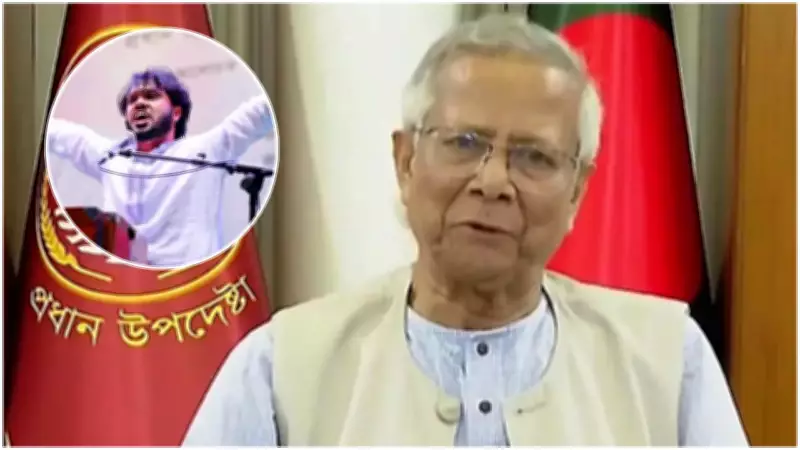
Bangladesh Interim Government Formally Requests UN Assistance in Hadi Murder Investigation
Bangladesh's interim administration, currently led by Nobel Peace Prize laureate Muhammad Yunus, has officially approached the United Nations human rights office seeking international cooperation for a fair and transparent investigation into the killing of prominent student leader Sharif Osman Hadi. This development marks a significant escalation in efforts to address the politically charged case that has rocked the nation.
Details of the Fatal Shooting and International Response
Sharif Osman Hadi, aged 32, was a central figure during the massive July–August 2024 protests that ultimately led to the collapse of the Sheikh Hasina-led Awami League government. The young leader was tragically shot in the head during an election campaign event in Dhaka on December 12. Despite being airlifted to Singapore for advanced medical treatment, Hadi succumbed to his injuries on December 18, sparking nationwide outrage and violent demonstrations.
According to Bangladesh's state-run news agency BSS, the country's Permanent Mission in Geneva submitted a formal diplomatic communication, known as a Note Verbale, to the Office of the United Nations High Commissioner for Human Rights (OHCHR) this past Friday. The interim government's Chief Adviser's press wing confirmed this diplomatic outreach on Saturday, emphasizing their commitment to justice.

"The government of Bangladesh has reiterated that it is firmly committed to identifying those responsible for the killing of Shaheed Sharif Osman Hadi and bringing them to justice," stated the press wing, as reported by news agency PTI. The formal request specifically seeks technical and institutional assistance from the UN human rights office to ensure the investigation meets rigorous international standards of transparency and accountability.
Political Background and Ongoing Legal Proceedings
Hadi served as the spokesperson for Inqilab Moncho and emerged as a national symbol during last year's youth-led uprising against the previous administration. He was also actively campaigning as a parliamentary candidate for the upcoming February 12 elections when he was targeted. In January, Dhaka Metropolitan Police's Detective Branch filed formal charges against seventeen individuals, including alleged shooter Faisal Karim Masud.
Police investigators have characterized the killing as an act of "political vengeance" orchestrated at the behest of the Awami League. Detective Branch Additional Commissioner Md Shafiqul Islam publicly claimed that Masud maintained connections with the Awami League's student wing, Chhatra League, and that the murder was directly ordered by Awami League-nominated ward councillor Taizul Islam Chowdhury Bappi.
Controversy Surrounding the Investigation and Wider Political Fallout
Hadi's political party has vehemently rejected the police chargesheet, alleging deeper involvement of state agencies in the orchestration of the killing. The interim government had previously banned both the Awami League and its affiliated Chhatra League last year as part of broader political reforms. The assassination has further destabilized Bangladesh's already volatile political landscape, triggering widespread protests and calls for systemic change.
The interim administration has publicly pledged to ensure "the highest standards of transparency and accountability" throughout the investigative process. Meanwhile, Hadi's death has strained diplomatic relations with neighboring India after certain groups circulated allegations of an Indian connection to the crime. New Delhi has categorically denied these claims, dismissing them as a "false narrative" without substantive evidence.
Supporters and political allies of Sharif Osman Hadi have memorialized him as a martyr and enduring symbol of Bangladesh's youth-driven anti-establishment movement. His killing represents not just a personal tragedy but a critical test for the interim government's commitment to justice and political reform during this transitional period.






