

Bangladesh's 2026 Election Unfolds Amidst Violence and Political Turmoil
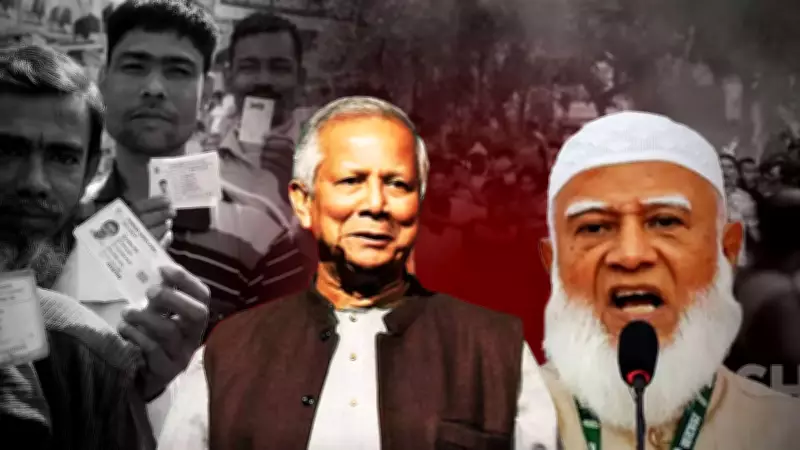
The first national election in Bangladesh following the dramatic ouster of former Prime Minister Sheikh Hasina has been marred by significant violence, low voter turnout, and widespread allegations of electoral irregularities. Held on February 12, 2026, this pivotal vote is not only selecting a new government but also deciding on the critical July Charter, a document that could fundamentally reshape the nation's Constitution and democratic framework.
Violent Clashes and Electoral Irregularities Dominate Polling Day
Polling stations across Bangladesh became scenes of intense conflict as supporters of the Bangladesh Nationalist Party (BNP) and Jamaat-e-Islami engaged in fierce clashes. Reports from the ground detailed multiple bomb attacks, the seizure of ballot books by partisan groups, and numerous incidents of voter intimidation. The political landscape, already fractured, revealed deep-seated divisions as these two major political entities battled for supremacy in the absence of Hasina's leadership.
Tarique Rahman, a prominent BNP leader, issued a stern warning that his party would only accept the election results if the voting process was conducted in a completely free and fair manner. This statement underscored the heightened tensions and lack of trust in the electoral machinery, casting further doubt on the legitimacy of the eventual outcome.

Muhammad Yunus's Vision for a New Bangladesh
Amidst the chaos, Nobel laureate Muhammad Yunus delivered a message of hope and transformation. He called upon the citizens of Bangladesh to reject the tumultuous past and actively participate in building a new, progressive nation. Yunus emphasized the importance of this election as a turning point, urging voters to look beyond immediate conflicts and focus on long-term democratic stability and economic development.
However, the ground reality starkly contrasted with Yunus's aspirational rhetoric. The widespread violence and procedural issues reported from various constituencies indicated that the path to a peaceful and transparent election remains fraught with challenges. The low voter turnout further suggested a possible disillusionment among the electorate, potentially impacting the mandate of the incoming government.
Regional Implications and International Scrutiny
The outcome of this election holds profound implications for regional stability in South Asia. Neighboring India is closely monitoring the developments, given the strategic and economic ties between the two nations. A stable and democratic Bangladesh is crucial for maintaining peace and fostering cooperation in the region, making this electoral process a matter of significant international interest.
As vote counting proceeds, the world watches to see whether Bangladesh can navigate this turbulent period and emerge with a government capable of addressing the deep political divisions and advancing the country's democratic aspirations. The final results will not only determine the immediate political leadership but also set the course for constitutional reforms and the nation's future trajectory.






