

Bangladesh's Crucial Parliamentary Election: A Defining Moment for India
Bangladesh is set to vote on Thursday in a parliamentary election that may have more far-reaching consequences for India than any recent electoral exercise in its neighbourhood. This vote occurs under unprecedented circumstances, with Sheikh Hasina's Awami League banned from participation, fundamentally altering the political landscape and India's strategic considerations.
India's Diplomatic Pivot: From Awami League to BNP
Ironically, with the Awami League out of contention, India's best hopes for a realistic reset in ties with Dhaka now rest on a majority for the frontrunner Bangladesh Nationalist Party (BNP). Historically, the BNP has been Hasina's bête noire and maintained fraught relations with New Delhi. However, India's perspective shifted dramatically following the July 2024 Uprising that ousted long-term ally Hasina.
Recognising that the then Khaleda Zia-led BNP offered the optimum choice for future legitimacy and stability, India intensified its outreach to the party. This renewed engagement included Prime Minister Narendra Modi's offer of assistance for Zia's medical treatment just before her passing, and his letter to her son and current BNP leader Tarique Rahman, delivered through Foreign Minister S. Jaishankar. These efforts solidified the initiative, despite the complicating factor of Hasina's presence in India.

The Electoral Contest and Constitutional Referendum
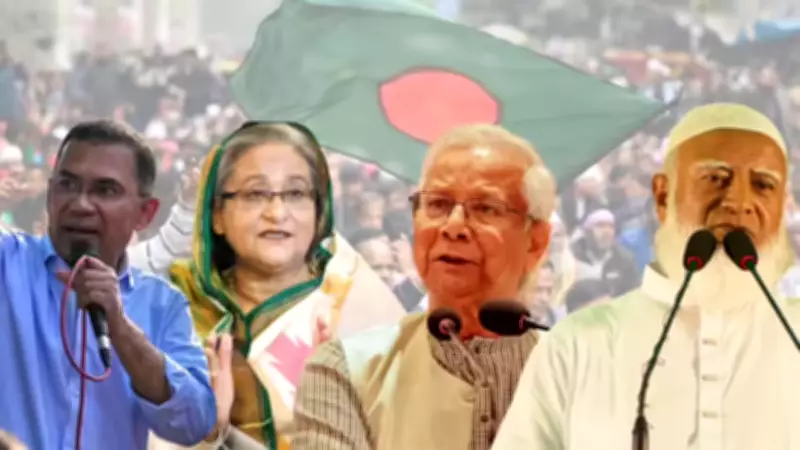
In the absence of the banned Awami League, the election is expected to feature a tight bipolar contest between the BNP alliance and another major bloc comprising 11 parties. This coalition presents a curious mix of Islamists and Gen-Z revolutionaries, led by India's traditional foe Jamaat-e-Islami. Jamaat is joined by the National Citizen Party (NCP), a new political outfit composed of student leaders who spearheaded the mass protests that toppled Hasina.
Alongside the general election, India will closely monitor the Constitutional "July Charter" referendum. This referendum emphasises a two-term limit for the prime minister, introduces an upper house to review legislation, and focuses on Bangladeshi rather than Bengali identity. These provisions appear designed not only to prevent the return of authoritarianism but also to minimise India's deep-rooted cultural and linguistic bonds with Bangladesh.
India's Key Concerns and Strategic Priorities
While India aims to engage promptly with the likely new government, given the critical importance of Dhaka ties for its security and Bangladesh's growing reputation as a "swing state" coveted by powers like the US and China, several key concerns will shape this outreach.
Security Imperatives Top the Agenda
- Preventing Indian insurgent groups in the northeast from using Bangladeshi territory against India will be paramount, especially since the BNP-Jamaat government two decades ago faced accusations of providing safe havens to such groups.
- Robust security cooperation, including enhanced intelligence-sharing, could help mitigate these concerns.
- Equally critical will be thwarting Pakistani forces from leveraging Bangladesh to target Indian interests. The interim government has already initiated a dramatic turnaround in ties with Pakistan, and increased defence and security cooperation, including frequent visits by ISI officials to Dhaka, heightens India's security anxieties.
Regional Dynamics and Internal Factors

- India will vigilantly monitor Chinese ingress into Bangladesh's defence sector, notably a recent deal to manufacture drones near Indian territory.
- The safety and security of Bangladesh's 13-million-strong Hindu community will remain a top priority, as evidenced by Prime Minister Modi's repeated raising of this issue.
- India expects continued cooperation for transporting goods to the northeast through Bangladeshi ports under existing frameworks.
The Hasina Factor and Future Challenges
For any meaningful outreach, India may first need to address the Hasina factor. The BNP is likely to press for the extradition of Hasina, who has been sentenced to death for alleged crimes against humanity. According to sources in Dhaka, this issue resonates deeply with public sentiment, and India risks being perceived as an unreliable ally if seen as shielding Hasina.
A potential BNP government is expected to aggressively pursue issues such as border killings, water sharing, and even the revival of SAARC. However, India might also confront challenges from a resurgent Jamaat, projected to win between 50 to 100 seats—more than ever in its history. If this occurs, the party could trigger significant anxiety in India about its role as both a powerful opposition and a potential BNP ally.
This election represents a watershed moment for India-Bangladesh relations, with outcomes that could redefine regional stability, security architectures, and diplomatic alignments for years to come.





