

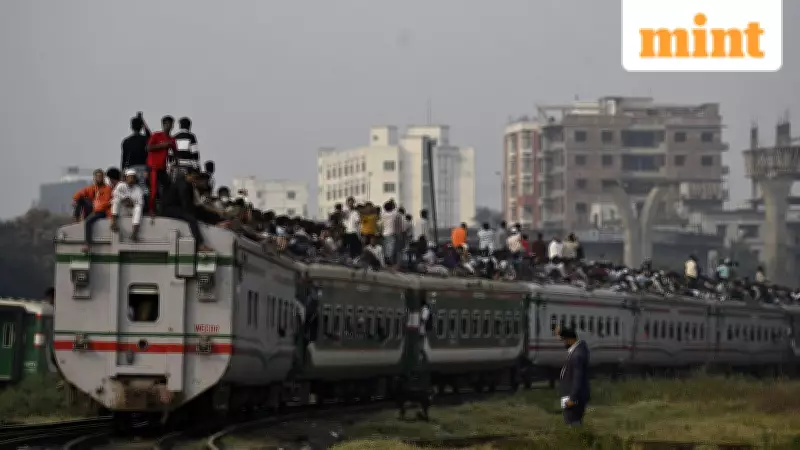
Bangladesh's Defining Moment: A Nation Casts Its Vote in Historic Election
Bangladesh is poised for a landmark national election on Thursday, February 12, widely regarded as the most consequential vote in the country's recent history. This election, coupled with a constitutional referendum on political reforms, will conclude the transition period that began 18 months ago when youth-led protests toppled the government of former Prime Minister Sheikh Hasina. The interim administration, led by Nobel laureate Muhammad Yunus, has steered the nation toward this critical juncture, putting Bangladesh's democratic resilience to the test.
The Political Landscape: A New Contest Emerges
The electoral battlefield features a primary contest between the Bangladesh Nationalist Party (BNP), under the leadership of Tarique Rahman, and a newly formed coalition officially known as the ‘Like-minded 11 Parties.’ This alliance is spearheaded by the Bangladesh Jamaat-e-Islami and the National Citizen Party. Notably, the Awami League, with Sheikh Hasina as its President, remains suspended and barred from participating, creating a significant void in the political arena. Pre-election surveys and opinion polls consistently indicate a lead for the BNP over the Jamaat-e-Islami, setting the stage for a tightly watched race.
Key Election Issues Shaping the Vote
With 175 million people and a history of governance by an unelected interim administration since Hasina's fall in August 2024, several pressing issues dominate the electoral discourse.

1. The Sheikh Hasina Factor and Political Void
Former Prime Minister Sheikh Hasina, currently in exile in New Delhi, has voiced concerns that her party's exclusion leaves millions of supporters without representation, potentially leading to election boycotts. The BNP has centered its campaign on demanding Hasina's extradition, arguing that India's sheltering of the ousted leader undermines Bangladesh's sovereignty and justice system. Mirza Fakhrul Islam Alamgir, BNP secretary general, remarked in an interview with The Week that while Hasina is a factor, she is not insurmountable, citing her role in dismantling democratic institutions. Analysts, however, do not anticipate a mass boycott, with recent surveys showing nearly half of former Awami League voters now favoring the BNP.
2. Corruption: A Top Voter Concern
Corruption emerges as the foremost issue for voters, according to a poll by the Dhaka-based Communication Research Foundation and Bangladesh Elections and Public Opinion Studies. Bangladesh has long ranked poorly on Transparency International’s Corruption Perceptions Index. Both the BNP and Jamaat-e-Islami have pledged to tackle graft in their campaigns, with Jamaat's anti-corruption image fueling its resurgence. Voters express hope that the election will restore law and order, protect civil liberties, and bring accountable leadership, though fears of political instability and marginalization persist.
3. Economic Challenges and Recovery
Once Asia's fastest-growing economy, Bangladesh has struggled post-COVID-19, with its export-driven garment sector paralyzed and further disrupted by the 2024 protests. The Yunus-led administration is credited with stabilizing an economy in free fall, but critics note failures in restoring security, protecting human rights, and safeguarding religious minorities. Dhaka resident Rajit Hasan highlighted that while efforts were made, deep reforms and accountability fell short due to political fragmentation. The economy is now in a phase of restructuring and recovery, with the IMF projecting real GDP growth of 4.9% for 2026, up from 3.7% in 2025, and nominal GDP estimated at $519 billion.

4. Jobs and Inflation: Pressures on Youth and Households
High consumer prices remain a critical concern, with inflation forecast at 8.7% for 2026 and food staples seeing significant hikes. Official data shows inflation edged up to 8.58% in January, with over two-thirds of poll respondents citing prices as a major worry. Employment is a primary issue for young voters, who led the 2024 uprising, with an estimated 40% of Bangladeshis under 30. The next government faces intense pressure to create millions of jobs after months of instability. The BNP has promised 10-15 million jobs within 18 months, while Jamaat-e-Islami focused on skill development and regional economic stability in its campaign.
5. Security and Minority Rights
Voters seek a fair election amid perceptions that previous polls under Hasina were rigged, contributing to the student-led uprising that ended her 15-year rule. Post-Hasina, rising political violence and attacks on Hindu minorities have heightened concerns. Following the August 2024 upheaval, violent incidents targeting the Hindu community resulted in multiple deaths and property damage, as reported by organizations like Ain o Salish Kendra and the Bangladesh Hindu Buddhist Christian Unity Council. Street vendor Zainul Abedeen, 62, emphasized the need for the government to prevent riots and killings.
6. Women's Representation in Politics
For decades, Bangladesh was governed by women prime ministers—Khaleda Zia and Sheikh Hasina—offering a sense of representation. With Zia's recent death and Hasina's exile, fewer women candidates are running despite women's pivotal role in the 2024 protests. Economics student Wasima Binte Hussain expressed disappointment, noting that women's leadership remains scarce and issues affecting women lack attention. This shift marks a significant change in the political landscape.
7. The Rise of Islamists and Social Fears
The resurgence of Jamaat-e-Islami, banned under Hasina but gaining influence since her ouster, has alarmed many, particularly women. The party's conservative stance, including suggestions to restrict women's activities, has sparked fear among young women like Sayma Nowshin Suha, 22, who described conservatism as the scariest aspect. Jamaat-e-Islami insists it would rule moderately if elected, but its rise adds a layer of complexity to the election dynamics.
Key Takeaways from the Election
- The absence of the Awami League creates a significant representation gap for millions of supporters, potentially influencing voter turnout and political alignment.
- Corruption stands as the leading concern, underscoring the urgent need for transparency and accountable governance in Bangladesh.
- With a large youth population, job creation is critical to prevent further unrest and ensure economic stability.
- The election outcome will shape Bangladesh's trajectory on issues like minority rights, women's representation, and the balance between secular and Islamist forces.
As Bangladesh heads to the polls, the nation grapples with a complex interplay of historical legacies, economic pressures, and social anxieties, making this election a pivotal moment for its future democracy and development.





