

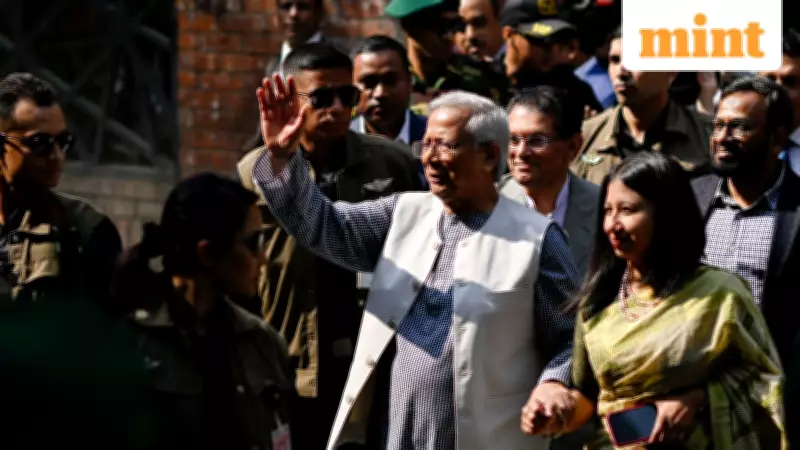
Bangladesh's Pivotal Parliamentary Election: A Nation Votes Amidst Political Transition
Bangladesh is holding a crucial parliamentary election today, a vote that could fundamentally reshape the nation's political landscape after years of significant instability and unrest. This election marks the first national poll since former Prime Minister Sheikh Hasina was ousted from power following widespread and violent protests in August 2024, setting the stage for a potential new era in Bangladeshi governance.
Voting Process and Massive Electorate
Voting commenced at 7:30 AM local time across 299 of the 300 parliamentary constituencies and is scheduled to continue until 4:30 PM. Polling in one constituency has been officially cancelled due to the unfortunate death of a candidate and will be rescheduled for a later date. The counting of ballots will begin immediately after voting concludes, with official results anticipated by Friday.
The scale of this democratic exercise is immense. A staggering 12.7 crore Bangladeshis are eligible to cast their votes in a country with an approximate population of 17 crore. According to official data released by the Bangladesh Election Commission, this electorate comprises about 6.48 crore men, 6.29 crore women, and 1,234 registered transgender voters. Notably, there are roughly 50 lakh first-time voters participating, a demographic of particular significance given that the 2024 uprising against Hasina's administration was spearheaded by students and young activists whose influence is expected to be substantial in this election.

Security Measures and International Oversight
To ensure a smooth and secure voting process, the election is being conducted at 42,779 polling stations nationwide, overseen by approximately 800,000 election officials. The interim administration, led by Nobel Peace Prize laureate Muhammad Yunus, who serves as Chief Adviser, has publicly committed to conducting free, fair, and peaceful elections. In support of this pledge, the government has deployed a massive security contingent of nearly 1 million personnel, which includes around 100,000 police officers and additional support from the army.
Further bolstering the integrity of the process, about 500 foreign observers and journalists are present to monitor the proceedings. This international delegation includes representatives from the European Union and the Commonwealth, of which Bangladesh is a member nation.
Parliamentary Structure and Government Formation
The Bangladesh Parliament, known as the Jatiya Sangsad, consists of 350 seats in total. This includes 300 directly elected seats and 50 seats reserved exclusively for women. With voting taking place in 299 constituencies today, voters will directly elect 299 lawmakers. The 50 reserved seats for women are allocated post-election based on each party's share of the 300 directly elected seats and do not impact the initial threshold required to form a government.
To secure a governing majority, a political party or coalition must win a simple majority of the directly elected seats, which translates to at least 151 out of the 300 seats. Members of Parliament who are elected will serve a standard five-year term.
Political Contenders and Key Players
This election features a broad field with 50 political parties officially contesting the polls. Notably, Sheikh Hasina's former ruling party, the Awami League, has been banned from participating. A total of 2,028 candidates are vying for the 299 parliamentary seats across the nation.
The election is widely perceived as a two-way contest primarily between the Bangladesh Nationalist Party (BNP) and an 11-party alliance led by the Jamaat-e-Islami, which is the country's largest Islamist political organization. The BNP's prominent figure, Tarique Rahman—son of former Prime Minister Khaleda Zia—is considered a frontrunner for the position of the next Prime Minister of Bangladesh. The challenging 11-party alliance includes the newly formed National Citizen Party (NCP), which was established by the student leaders who led the 2024 uprising.

Historical Context and Pre-Poll Indicators
Today's vote represents the 13th Parliamentary election since Bangladesh achieved independence in 1971. It follows a series of controversial elections under Hasina's tenure in 2014, 2018, and 2024, which were broadly criticized and believed by many to be rigged in her favor, leading to major opposition boycotts.
Regarding the likely outcome, three major pre-election surveys have provided insights. Two of these surveys indicate a clear advantage for the BNP, while the third suggests a very close and competitive race between the BNP and the Bangladesh Jamaat-e-Islami alliance, highlighting the uncertain and dynamic nature of this electoral battle.
Key Takeaways from the 2024 Bangladesh Election
- This election is critically important, occurring after years of intense political turmoil, protests, and a significant leadership change.
- Youth voters and first-time participants constitute a powerful demographic that could decisively influence the final results and the nation's future direction.
- The electoral landscape is defined by a primary contest between the BNP and the Jamaat-e-Islami-led alliance, signaling a potential and substantial shift in the country's power dynamics and political alignment.





