

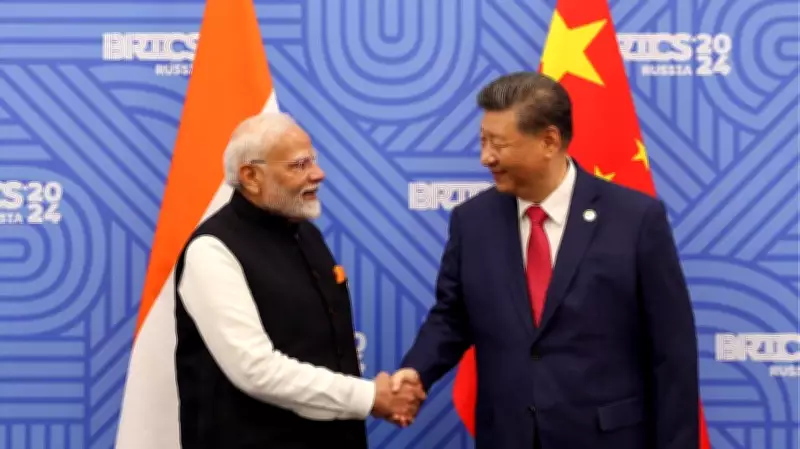
Beijing's Veiled Dig at US: India, China's Growth Built on Hard Work, Not Foreign Generosity
In a pointed statement that underscores the geopolitical tensions between major powers, China has asserted that the economic growth of both India and itself is fundamentally rooted in hard work and domestic innovation, rather than relying on foreign generosity or aid. This remark, widely interpreted as a veiled criticism of the United States and its international policies, highlights Beijing's ongoing emphasis on self-reliance and sovereignty in global affairs.
The Core Assertion: Self-Made Success
Chinese officials, through state media and diplomatic channels, have articulated that the rapid development witnessed in China and India over recent decades is a direct result of the diligent efforts of their populations and strategic government initiatives. They argue that this progress stands in stark contrast to narratives that might attribute such advancements to external assistance or foreign investment alone.
This perspective challenges the notion that Western countries, particularly the US, play a pivotal role in fostering growth in developing nations through aid or trade agreements. Instead, Beijing posits that the true drivers are internal factors such as education reforms, infrastructure projects, and technological advancements spearheaded by local enterprises.

Context and Implications
The timing of this statement is significant, coming amid heightened global economic competition and ongoing disputes between China and the US over trade, technology, and influence in regions like the Indo-Pacific. By including India in this narrative, China may be attempting to forge a common ground with New Delhi, despite their own bilateral tensions, to present a united front against perceived Western dominance.
Analysts suggest that this rhetoric aligns with China's broader strategy to promote its model of state-led development as an alternative to Western liberal economies. It also serves to bolster national pride and reinforce the Communist Party's messaging that China's rise is independent and self-sustaining.
Reactions and Global Dynamics
While India has not officially responded to this specific comment, the statement could resonate with segments of the Indian public and policymakers who advocate for greater self-reliance, as seen in initiatives like "Make in India." However, it also risks being viewed as a political maneuver by Beijing to sway opinions amid complex India-US-China relations.
Key points to consider include:
- The emphasis on hard work over foreign aid reflects a growing trend among emerging economies to assert their autonomy in development pathways.
- This veiled dig at the US may exacerbate diplomatic frictions, particularly in forums like the United Nations or G20, where aid and cooperation are frequent topics.
- For India, balancing its strategic partnerships with both the US and China remains a delicate act, and such statements could influence future policy decisions.
Looking Ahead
As global power dynamics continue to evolve, statements like these underscore the shifting narratives around economic growth and international assistance. China's positioning of itself and India as exemplars of self-made success is likely to fuel further debates on the role of foreign aid in development, potentially impacting aid policies and bilateral relations worldwide.
In conclusion, Beijing's remarks serve as a reminder of the complex interplay between national pride, economic strategy, and geopolitical rivalry in today's interconnected world.






