

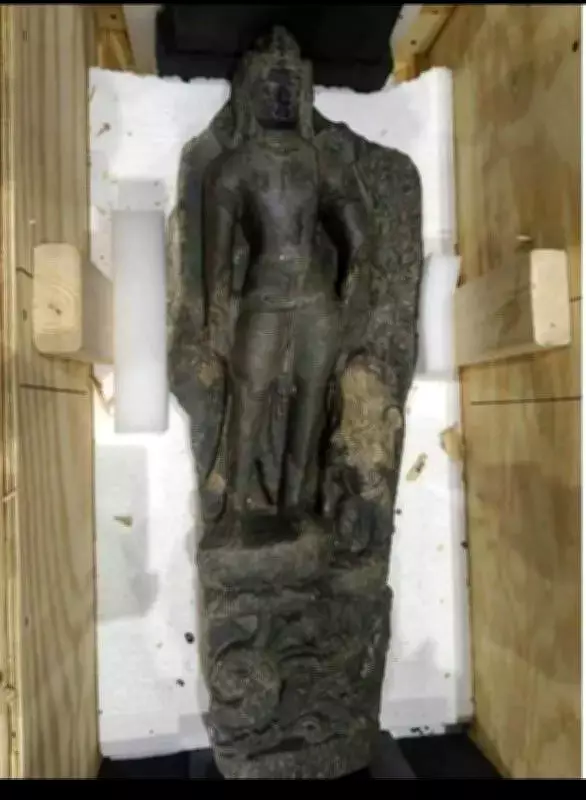
Bengaluru Airport Seizure Uncovers Stolen Ninth-Century Nepalese Idol
In a significant development, the interception of a consignment declared as a 'grey stone stele of Padmapani' by the Air Cargo Commissionerate at Bengaluru airport five months ago has taken a dramatic turn. Investigations have now conclusively revealed that the idol is, in fact, a precious ninth-century antiquity stolen from Nepal, marking a critical breakthrough in international cultural heritage protection.
Initial Interception and Suspicious Origins
The case originated last November when a 32-year-old traveler arriving from the United Kingdom was subjected to questioning by airport authorities. The individual had brought in the consignment, which had been imported from Vienna, Austria, claiming it was purchased at an auction. However, officials grew increasingly suspicious about its true origin during the initial inspection.
During a detailed examination, air cargo officials meticulously noted the sculpture's intricate craftsmanship and exceptional artistic details. The level of workmanship immediately raised red flags, suggesting the item held historical significance far beyond that of a mere decorative piece. This prompted authorities to escalate the matter for further expert analysis.

Archaeological Verification and Theft Confirmation
The artefact was subsequently forwarded to the Archaeological Survey of India (ASI) for comprehensive scientific evaluation. After thorough assessment, the ASI confirmed the sculpture as an authentic ninth-century creation, consistent with early medieval Himalayan iconography and material traits characteristic of that historical period.
Further verification efforts successfully linked the object to archival records documenting a stolen Padmapani stele from Nepal. This connection was strongly corroborated by Nepalese media reports that had previously documented the theft, providing additional evidentiary support for the artifact's illicit provenance.
International Coordination and Official Confirmation
Senior air cargo officials disclosed that Indian authorities subsequently coordinated closely with the Ministry of External Affairs, which actively engaged the Nepalese government in the investigation. Following diplomatic exchanges and evidentiary review, Nepal officially confirmed the piece as a stolen cultural artefact of significant national heritage value.
This international cooperation underscores the importance of cross-border collaboration in combating the illicit trafficking of cultural properties and preserving global historical treasures for future generations.
Current Status and Legal Proceedings
The consignment remains securely under Customs custody as authorities prepare for further legal proceedings. The case highlights the vigilance of Indian customs officials in identifying potentially smuggled cultural artifacts and the sophisticated methods now employed to verify their origins through archaeological expertise and international cooperation.
This development serves as a reminder of the ongoing challenges in protecting cultural heritage across borders and the critical role that airport security and customs authorities play in intercepting stolen antiquities before they disappear into private collections or the black market.






