The Bharatiya Janata Party's anticipated success in forming a government in West Bengal under the 'double engine' model is expected to eliminate the state-level hurdles that have complicated India's relationship with Bangladesh. This political shift opens the door for enhanced cooperation in critical areas such as water management, border security, trade, connectivity, and bilateral security.
Political Alignment and Bilateral Cooperation
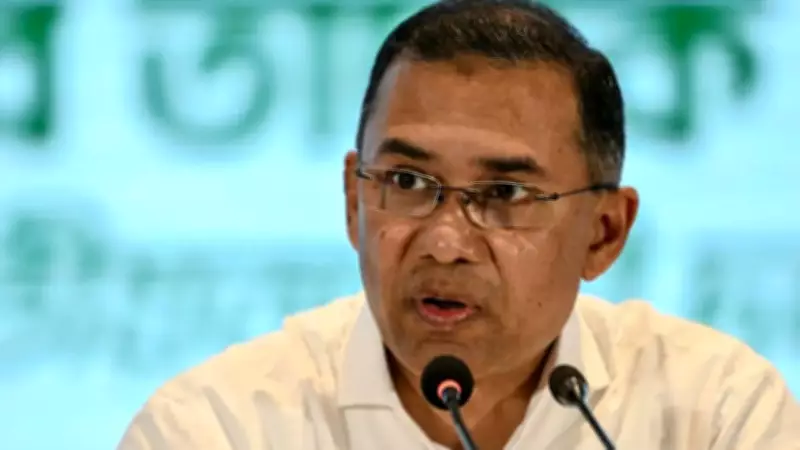
A Delhi-Kolkata alignment is likely to result in a more responsive Indian stance on bilateral issues, a development that would be welcomed by Bangladesh's leadership, including Prime Minister Tarique Rahman, who seeks a relationship that delivers tangible benefits to people on both sides of the border. However, given that political dynamics in Bangladesh often mirror those in India, the BJP government in Bengal must be cautious to avoid aggressive majoritarianism. It should exercise restraint on issues that dominated its campaign, including illegal immigration, mass deportations, unilateral border fencing, and the implementation of the Citizenship Amendment Act and National Register of Citizens.
Challenges in Public Perception
As Dhaka has emphasized, while government-level relations are warming, the real challenge lies in building public understanding of the complexities in the bilateral relationship. This requires positive signaling and careful messaging. The situation is particularly delicate for India given that former Prime Minister Sheikh Hasina has transitioned from an asset to a liability, while the Islamist Jamaat-e-Islami has made a dramatic comeback as the principal opposition to the ruling Bangladesh Nationalist Party. A strong backlash from Jamaat and hardliners within Rahman's own party against intensified identity politics and deportations from India cannot be ruled out. This poses a concern for India due to the presence of a large Hindu minority in Bangladesh.

Geopolitical Implications
The likelihood of the BJP forming a government in Bengal was recently discussed in the Bangladesh Parliament, where an opposition MP from the National Congress Party warned that the BJP would 'push all Bangladeshis into Bangladesh,' potentially creating a major refugee crisis. The new government cannot afford to ignore the geopolitical consequences of its actions or indulge in unfettered nationalist rhetoric on sensitive issues like illegal immigration. Seeing Dhaka drift into China's orbit, with Beijing emerging not only as an economic partner but also a major security ally for Bangladesh, would harm India's interests in the neighborhood.
Opportunities for Water Sharing and Diplomacy
Among the diplomatic benefits is an opportunity for the central government to advance the 2011 Teesta river water-sharing agreement, which was previously blocked by Trinamool Congress chief Mamata Banerjee. While the deal may not transform the relationship overnight, it could serve as a significant confidence-building measure at a critical juncture. The central government may need to study the implications for farmers in north Bengal, but prolonged delay in implementing the agreement would be seen by Dhaka as a major breach of trust. Progress on the Teesta pact could also make Bangladesh more receptive to Indian suggestions in ongoing negotiations for the renewal of the 1996 Ganges water-sharing treaty.
Strengthened Diplomatic Representation
The outcome in Bengal will also bolster the position of India's new high commissioner in Dhaka, Dinesh Trivedi, a rare political appointee and a BJP leader from the state. His appointment is expected to facilitate smoother communication and coordination between the two countries.
Follow the latest election results 2026, live updates, winner lists, constituency-wise results, party-wise trends, and full coverage for Tamil Nadu, West Bengal, Kerala, Assam, and Puducherry elections on Times of India.