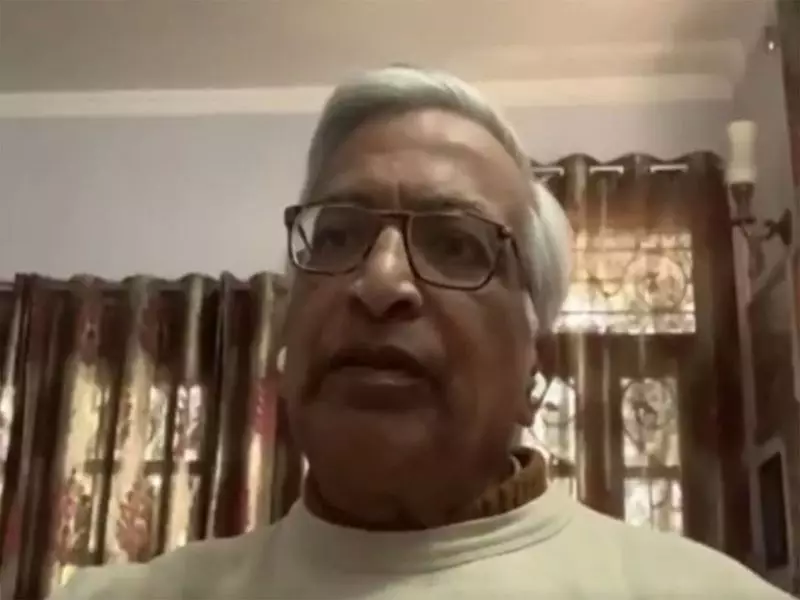
In a significant commentary on the political future of a key South Asian neighbour, former Indian diplomat Suresh K. Goel has emphasised that the participation of the main opposition party, the Bangladesh Nationalist Party (BNP), in the country's electoral process is a fundamental step towards reviving genuine democratic governance. His analysis comes at a critical juncture for Bangladesh, which has witnessed prolonged political tensions and questions over electoral inclusivity.
The Core Argument for Inclusive Elections
Suresh K. Goel, who served as India's High Commissioner to Bangladesh, articulated a clear and compelling viewpoint. He stated that for Bangladesh to demonstrate a sincere and credible attempt at reverting to a stable democratic system, the involvement of all major political stakeholders, especially the BNP, is non-negotiable. Elections without the participation of the principal opposition lack legitimacy and deepen political fractures, he implied. This perspective underscores a widely held democratic principle: a contested election with broad participation is the cornerstone of public trust in governance.
The former diplomat's remarks indirectly highlight the ongoing political standoff in Dhaka. The BNP, led by figures like Tarique Rahman, has historically been a major political force, alternating power with the ruling Awami League. However, recent electoral cycles have been marred by boycotts and allegations of an uneven playing field, leading to questions about the completeness of the democratic mandate.

Historical Context and Regional Stability
Goel's analysis is not made in a vacuum. It is informed by the complex history of India-Bangladesh relations and the broader need for stability in the region. A politically stable and democratic Bangladesh is seen as beneficial for the entire subcontinent, fostering economic cooperation and regional security. Internal political discord in Bangladesh can have ripple effects, impacting cross-border initiatives and diplomatic harmony.
The call for the BNP's participation is, therefore, also a call for long-term regional steadiness. When a major political party remains outside the electoral framework, it often leads to sustained agitation, protests, and uncertainty, which can spill over into international relations. Goel, with his deep experience in bilateral ties, is likely pointing towards the necessity of a durable political solution that includes all voices.
The Path Forward and Implications
What does this mean for the immediate political future of Bangladesh? Goel's statement serves as a nuanced diplomatic nudge, suggesting that the onus is on both the government and the opposition to create conditions conducive for inclusive polls. For the ruling establishment, it implies ensuring a fair environment where opposition parties can campaign without fear. For the BNP, it underscores the importance of engaging in the democratic process rather than abstaining from it.
The ultimate goal, as highlighted by the former High Commissioner, is the restoration of a democratic rule that is perceived as legitimate both domestically and internationally. This legitimacy is crucial for Bangladesh's next government to effectively address pressing challenges like economic development, climate change, and social welfare.
In conclusion, Suresh K. Goel's intervention brings a seasoned, diplomatic lens to a pressing issue. His argument that BNP participation in Bangladesh elections is a litmus test for the country's democratic sincerity is a powerful reminder of foundational democratic values. As Bangladesh moves forward, the choices made regarding electoral inclusivity will profoundly shape its democratic trajectory and its standing in the world community.