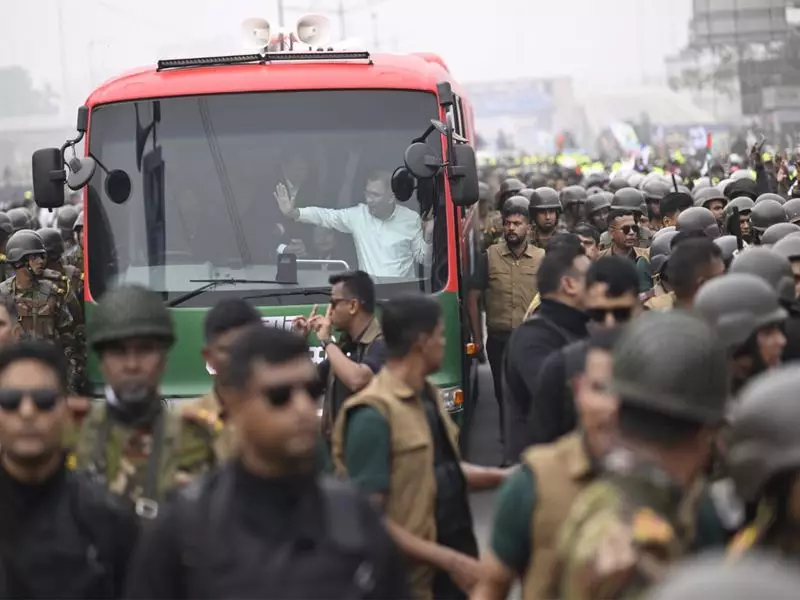
In a dramatic political homecoming, Tarique Rahman, the acting chairman of the Bangladesh Nationalist Party (BNP), returned to his homeland on Sunday after spending nearly six years in exile. His arrival at Hazrat Shahjalal International Airport in Dhaka sparked a massive and emotional reception from thousands of supporters, marking a pivotal moment in Bangladesh's opposition politics.
A Grand Welcome After Years in Exile
Tarique Rahman, the elder son of BNP founder and former President Ziaur Rahman, had been living in London since 2018. His return on July 21, 2024, was met with an overwhelming show of force from party loyalists. Despite the authorities denying permission for a large gathering at the airport, BNP workers and supporters thronged the streets leading from the airport to the capital, creating a sea of people waving party flags and chanting slogans.
Rahman, visibly moved by the reception, expressed his profound gratitude. "I am grateful to everyone," he stated, acknowledging the unwavering support of the party rank and file during his prolonged absence. His return comes at a critical juncture for the BNP, which has been navigating a challenging political landscape.

The Political and Legal Backdrop
The BNP leader's homecoming is not without its complexities. Tarique Rahman has been convicted in several cases in Bangladesh, including a high-profile money laundering case. The party and his legal team have consistently denounced these convictions as politically motivated. His return, therefore, raises immediate questions about the legal proceedings he will face domestically.
Prior to his departure from London, Rahman was granted bail by the Bangladesh Supreme Court, a necessary legal step enabling his travel. The BNP has framed his return as an act of courage and a commitment to leading the party from the front within the country. This move is widely seen as an effort to reinvigorate the party's grassroots and consolidate its position ahead of future political challenges.
Implications for Bangladesh's Political Future
The grand reception for Tarique Rahman underscores his enduring influence within the BNP, the country's primary opposition force. Analysts suggest his physical presence in Bangladesh could significantly alter the dynamics of opposition politics, potentially mobilizing the party base in a way that remote leadership could not.
However, his return also sets the stage for a new chapter of engagement—and possibly confrontation—with the current government led by Prime Minister Sheikh Hasina and the Awami League. How the legal cases against him proceed will be closely watched as a barometer of the political climate. For the BNP, Rahman's homecoming is a strategic gamble aimed at reclaiming political momentum and demonstrating strength through a show of popular support.
The days and weeks following this emotional return will be crucial in determining whether this marks the beginning of a renewed political struggle or a new phase of reconciliation within Bangladesh's often turbulent democracy.