In a significant diplomatic development, China has publicly criticized a recent United States Department of Defense report while simultaneously extending an olive branch to India. The Chinese foreign ministry expressed its willingness to strengthen communication and dialogue with New Delhi, aiming to foster a more stable and constructive bilateral relationship.
China's Firm Rejection of the Pentagon Assessment
The controversy stems from the latest annual report released by the US Pentagon, titled "Military and Security Developments Involving the People's Republic of China." This document presented a detailed analysis of China's expanding military capabilities. A key assertion was that China likely possessed more than 500 operational nuclear warheads as of May 2023 and was on a trajectory to exceed previous projections. The report estimated that by 2030, China could field over 1,000 warheads, a dramatic increase aimed at matching the capabilities of other major powers.
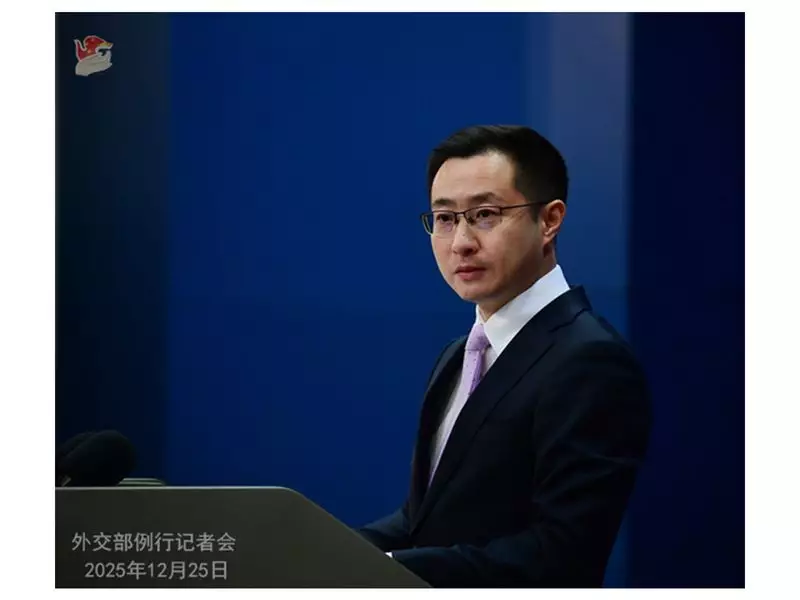
Chinese Foreign Ministry spokesperson Wang Wenbin issued a sharp rebuttal to these claims. During a regular press briefing, he dismissed the Pentagon's findings as "full of bias and spreading the 'China threat' theory." Wenbin argued that the report disregarded China's consistent adherence to a defensive national policy and its longstanding commitment to a no-first-use nuclear weapons policy. He framed the document as part of a broader US strategy to find pretexts for maintaining its own military dominance globally.

An Open Door for Dialogue with India
Amidst this war of words with Washington, China pivoted to address its relationship with its southern neighbor. When questioned about the state of Sino-Indian ties, particularly in the context of the ongoing border standoff, spokesperson Wang Wenbin struck a notably conciliatory tone. He emphasized that China is "ready to strengthen communication and dialogue with India" to build mutual trust and deepen cooperation.
This statement is viewed as a clear signal from Beijing to de-escalate tensions and work towards resolving outstanding issues. The relationship between the two Asian giants has been under severe strain since the deadly clashes in the Galwan Valley in June 2020. Multiple rounds of military and diplomatic talks have been held since then, resulting in disengagement from several friction points, but a comprehensive resolution remains elusive.
Navigating Complex Geopolitical Currents
The dual nature of China's statements reveals a nuanced diplomatic approach. On one front, it is actively contesting the US narrative on its military modernization, a topic of global concern. On another, it is seeking to stabilize its relationship with India, a key regional power and fellow member of influential groups like BRICS and the Shanghai Cooperation Organisation (SCO).
Analysts suggest that Beijing's offer for enhanced communication serves multiple strategic purposes. It aims to prevent the further solidification of a US-India alliance against Chinese interests. Furthermore, stable borders with India allow China to focus its strategic attention and resources on other pressing areas, including the Taiwan Strait and the South China Sea. For India, the response to this overture will involve careful calibration, weighing the imperative for peaceful borders against the need to address long-term strategic challenges posed by China's rise.
The coming months will be crucial in determining whether this verbal commitment to dialogue translates into tangible progress on the ground. The world will be watching to see if the two nations can move beyond the current impasse and forge a more predictable and peaceful modus vivendi along their disputed Himalayan frontier.