

China Announces Plans to Restore Select Ties with Taiwan, Easing Travel and Trade Restrictions
In a significant development, China announced on Sunday its intention to restore certain suspended connections with Taiwan. This includes the resumption of direct flights to additional mainland cities and the easing of import restrictions on Taiwanese aquaculture products. The move signals a potential, albeit limited, thaw in the strained cross-strait relationship.
High-Level Talks Pave the Way for Limited Engagement
The announcement followed talks between senior leaders from China's ruling Communist Party and Taiwan's opposition Kuomintang (KMT) party. China's Taiwan Work Office stated it would explore establishing a "longstanding communication mechanism" with the KMT and facilitate the import of Taiwanese aquaculture goods, which had faced restrictions in recent years.
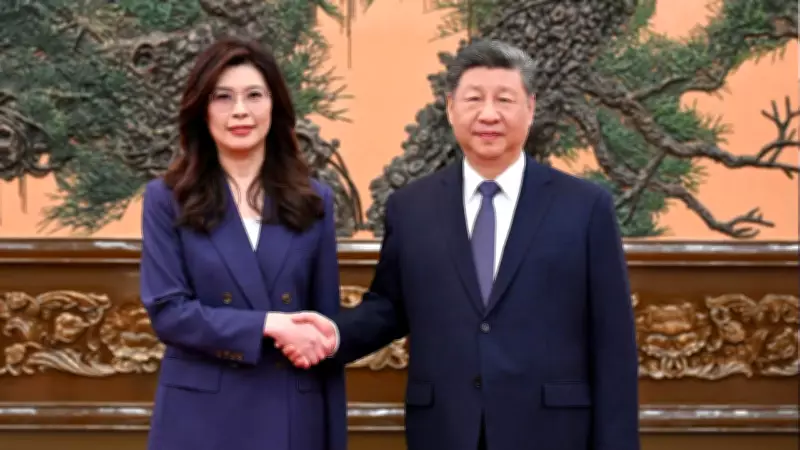
This diplomatic step comes after a high-level meeting between Chinese President Xi Jinping and Kuomintang leader Cheng Li-wun. During their discussions, both sides emphasized calls for peace, though specific actionable steps were not initially outlined.

Key Measures: Travel and Trade Easing
As part of the newly announced measures, Beijing plans to resume direct flights between Taiwan and more mainland cities, such as Xi'an and Urumqi. However, precise details regarding the implementation timeline and operational specifics remain unclear at this stage. China had previously curtailed travel links, including a ban on individual tourist visits to Taiwan implemented in 2019.
In addition to travel, trade restrictions are set to be relaxed. Since 2021, China had imposed bans on a range of Taiwanese agricultural and seafood products, including pineapples, grouper fish, squid, and tuna. The latest announcement indicates a partial rollback of these economic curbs, specifically targeting aquaculture imports.
Infrastructure Proposals and Broader Context
Beijing also reiterated its plans to advance infrastructure proposals, such as a bridge linking mainland China with Taiwan-controlled islands, including Matsu and Kinmen. This project has been previously floated by Chinese authorities as part of broader integration efforts.
Cross-strait relations have remained notably strained since 2016, when Taiwan elected Tsai Ing-wen of the Democratic Progressive Party (DPP). Following this, Beijing suspended most official dialogue and significantly increased military activity around the island, heightening regional tensions.
Taiwan's Response and Future Outlook
In response to these developments, Taiwan indicated it would continue efforts to help its farmers and businesses diversify their export markets. This strategy aims to reduce economic dependence on China, reflecting ongoing concerns about sovereignty and economic security.
While these measures represent a cautious step toward re-engagement, the broader geopolitical landscape remains complex. Observers note that the restoration of select ties may be limited in scope, with significant political and military challenges still unresolved between the two sides.






