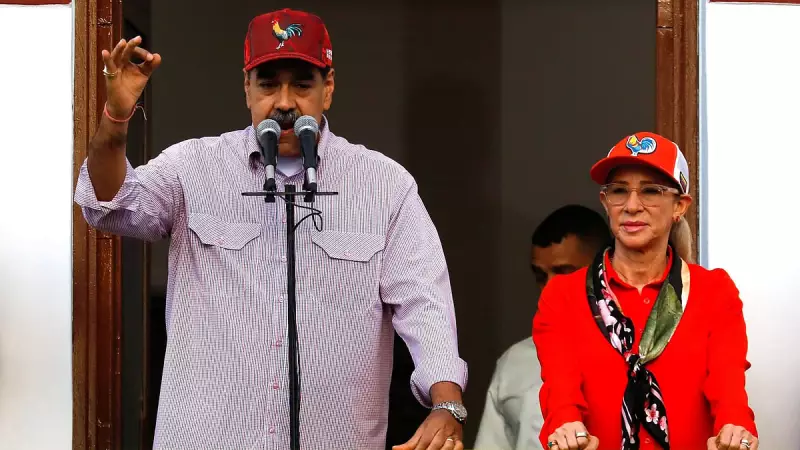
In a significant escalation of international tensions, China has formally demanded that the United States immediately release Venezuelan President Nicolás Maduro and his wife, following their reported capture by US forces. The call came after China's foreign ministry issued a strong condemnation of US military actions on Venezuelan soil.
China's Stern Condemnation of US Actions
The Chinese foreign ministry, in a statement issued on Saturday, January 4, 2026, did not mince words. It described the US airstrikes targeting Venezuela and the subsequent apprehension of President Maduro and his spouse as a "hegemonic act." Beijing asserted that this move by Washington "seriously violates international law" and the fundamental principles governing relations between sovereign nations.
The demand for the unconditional and prompt release of the Venezuelan leader and his wife was made public shortly after the initial condemnation. This rapid sequence of statements underscores the gravity with which Beijing views the situation, positioning itself in direct opposition to Washington's actions in Latin America.

The Core of the Accusation: A Breach of Sovereignty
At the heart of China's criticism is the principle of national sovereignty. By conducting airstrikes and a military operation leading to the capture of a sitting head of state, the United States has, according to China, crossed a red line. The term "hegemonic act" is a pointed critique, suggesting the US is using its military power to impose its will, disregarding the rules-based international order it often champions.
This incident is not occurring in a vacuum. It represents a flashpoint in the ongoing geopolitical rivalry between the United States and China, with Venezuela being a long-standing point of contention. China has maintained significant economic and diplomatic ties with the Maduro government, while the US has recognized opposition figures and imposed severe sanctions on the Venezuelan regime for years.
Potential Ramifications and Global Reaction
The capture of President Maduro and China's forceful response are likely to trigger a major diplomatic crisis. The immediate consequences could include:
- Escalation at the United Nations: China may lead efforts to convene the UN Security Council to condemn the US action.
- Strained US-China Relations: This event adds another layer of complexity to an already tense bilateral relationship.
- Instability in Latin America: The move could destabilize the region further, prompting reactions from other nations.
- Debate on International Law: A global legal and political debate is imminent regarding the legality of such an intervention.
As of now, the United States has not publicly responded to China's specific demand for Maduro's release. The world watches closely to see how this unprecedented situation unfolds, with the potential to reshape diplomatic norms and great-power competition. The events of January 4, 2026, mark a dramatic and dangerous new chapter in international politics.