

In a bold geopolitical move, China has signalled its firm intention to maintain and expand its influence in Latin America and the Caribbean, directly challenging the Trump administration's efforts to reassert exclusive American dominance in what it considers its backyard. This escalating rivalry is unfolding through diplomatic statements, strategic investments, and a war of narratives, setting the stage for a prolonged contest for regional supremacy.
A Clash of Strategic Visions
The friction intensified in December when the Trump administration's national-security strategy vowed to "restore American pre-eminence in the Western Hemisphere" and "deny non-Hemispheric competitors." While not explicitly naming China, the target was clear. In a swift and pointed response, Beijing issued a significant, 6,700-word policy paper on Latin America and the Caribbean less than a week later. This document, the first of its kind in nearly a decade, frames China's engagement as solidarity with the "Global South" and cites a "significant shift... in the international balance of power"—terminology used by President Xi Jinping to declare the end of U.S. global supremacy.
Analysts at the Washington-based Center for Strategic and International Studies (CSIS) interpret this as the opening salvo in a protracted struggle. "Great power competition in the region has only just begun," their analysis states. According to Ryan Berg, a co-author of the CSIS report, "China's strategy is basically not giving an inch." The evidence is in the numbers: China now counts 24 regional signatories to its Belt and Road Initiative (BRI), up from zero before 2017, and has displaced the United States as the top trading partner for numerous Latin American nations.

Flashpoints from Panama to Venezuela
The tension is palpable in Panama, a strategic linchpin. Soon after President Trump took office in January and argued that Beijing had excessive influence there, Panama—which uses the U.S. dollar—announced its withdrawal from the BRI. Its president also skipped a summit with Xi Jinping in May. In a move seen as appeasing Trump, a BlackRock-backed group moved to buy control of key container ports at the Panama Canal from a Hong Kong-based operator, a symbol of Chinese influence since 1996. However, The Wall Street Journal reported that Beijing is pressuring a restructuring to shift control to the Chinese state-owned shipping giant, COSCO.
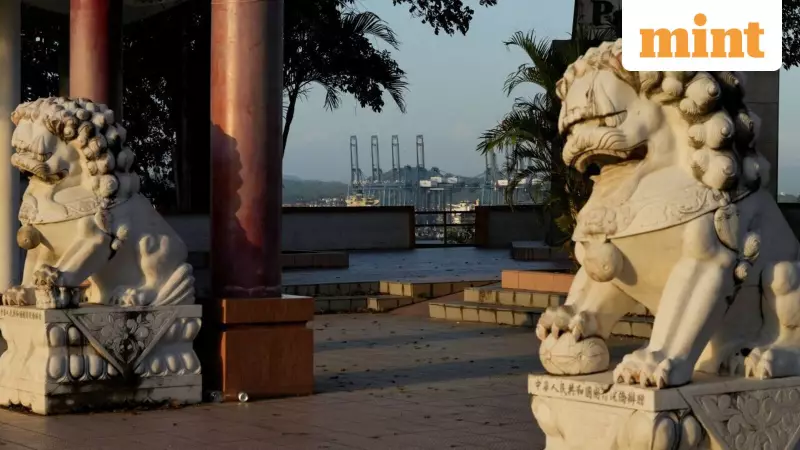
In a lower-stakes but symbolic incident, the recent demolition of a Chinese-built friendship park near the canal by a local mayor drew sharp anger from Beijing's embassy. Meanwhile, Venezuela presents a critical test. As the Trump administration flexes military muscle against the Maduro regime, China has denounced U.S. actions as "illegal hegemony" and "unilateral bullying." At a UN Security Council meeting on December 23, China's deputy permanent representative, Sun Lei, forcefully defended Venezuela, stating opposition to any move that "infringes upon other countries’ sovereignty and security." While analysts expect most of Beijing's support to remain rhetorical to avoid direct military confrontation, the diplomatic stance is firm.
Beyond Economics: Security Signals and Taiwan
China's ambitions are evolving beyond pure economics. A provocative signal was sent when state broadcaster CCTV aired a wargame simulation featuring Chinese "red" forces engaging "blue" ships and aircraft near Cuba and Mexico. Leland Lazarus, a former U.S. diplomat and risk consultant, notes this is a reminder that Beijing's ambitions are no longer purely economic. A U.S. Defense Department report to Congress in December cited Cuba as the only nation in the Americas where China may have considered a military base, highlighting concerns about Beijing developing global "strategic support points."

A core priority in China's new policy paper is severing the region's ties with Taiwan. Latin America hosts seven of the twelve governments worldwide that still recognise Taiwan, including Guatemala and Paraguay. China promises benefits to nations that switch allegiance to its "One China" policy, a strategy that succeeded with Panama. However, a new challenge emerged with the election of Trump-backed candidate Nasry Asfura in Honduras, who campaigned on potentially reversing his country's 2023 decision to establish ties with Beijing.
The Trump administration's "Trump Corollary" to the Monroe Doctrine implicitly targets China by warning of the "hidden costs" of foreign assistance like espionage and debt traps. Lazarus calls this neocolonial language a "narrative gift" to Beijing, allowing China to position itself as a respectful alternative. As both powers dig in, the battle for influence in Latin America is becoming a central theatre in the defining great-power competition of the era.





