China's Calculated Response to Iran's Crisis
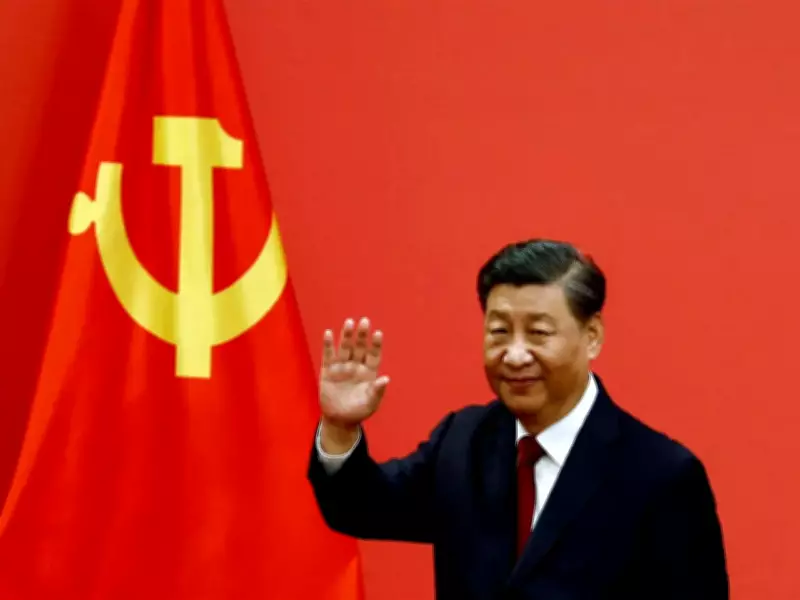
When American and Israeli military operations resulted in the death of Iran's supreme leader, Ayatollah Ali Khamenei, Beijing issued a formal condemnation. Chinese officials denounced the actions as violations of sovereignty and called for restraint, urging stability in the critical Strait of Hormuz. State media echoed these sentiments, warning against further escalation in the region.
What China Did Not Do Speaks Volumes
However, China's inaction was more revealing than its statements. The nation did not mobilize its military forces, airlift weapons to Tehran, offer security guarantees, or threaten retaliation. This restraint is particularly striking given China's role as Iran's primary economic backer, raising questions about the depth of their strategic partnership.
Driving the News: Asymmetric Ties Exposed
China is Iran's most significant economic ally, yet Beijing shows little inclination to materially defend Tehran after US and Israeli strikes escalated into a broader regional conflict. While condemning the attacks and advocating for de-escalation, China has largely confined its response to diplomatic channels—issuing statements, making calls, and highlighting risks like disruptions to shipping lanes.

This cautious approach underscores a perception gap: many view China as Iran's great-power counterbalance to US pressure, reinforced by years of discounted oil sales, sanctions evasion, and talk of partnership. Some analysts, including boosters of former President Donald Trump, have portrayed Khamenei's death as a humbling blow for China, but this interpretation overlooks Beijing's strategic calculus.
Why It Matters: The Imbalance in Relations
The disparity between Iran's dependence on China and China's reliance on Iran has never been more apparent, explaining why Beijing's support remains rhetorical rather than substantive.
- Iran Needs China: Under international sanctions, China serves as Tehran's economic lifeline, purchasing the majority of Iran's oil exports and facilitating cash flow. This trade forms the core of their relationship.
- China Can Live Without Iran: According to Bloomberg reports, Iranian crude constitutes about 13% of China's seaborne oil imports—significant but replaceable in a global market where Beijing can pivot to other suppliers.
Data from the Center for Strategic and International Studies indicates Iran accounts for less than 1% of China's total commerce. This imbalance shapes Beijing's strategy: it can condemn strikes, continue limited oil purchases, and avoid jeopardizing broader economic interests for Tehran's survival. As The Economist notes, China's approach reflects "ice-cold calculus," prioritizing internal stability over external conflicts.
The Big Picture: Beijing's Dual-Track Strategy
Western commentary often frames China-Iran ties in alliance terms, but Beijing's Middle East policy is built on balance, not bloc politics. Analysts describe a dual-track approach: maintaining channels with Iran while deepening relationships with regional rivals like Saudi Arabia and the UAE.
This posture allows China to achieve multiple objectives simultaneously:
- Position itself as a Global South champion challenging US dominance.
- Safeguard its business interests across the Gulf region.
- Avoid entanglement in conflicts that do not directly threaten its core security priorities.
China's role in brokering the 2023 Iran-Saudi detente exemplifies this strategy—gaining diplomatic prestige without assuming defense obligations. Professor She Gangzheng of Tsinghua University bluntly summarizes the logic: military support for Iran is "not the way that China does things in the region."
Zoom In: Economic Realities vs. Rhetoric
Even China's economic engagement with Iran is less robust than often portrayed. In 2021, Chinese Foreign Minister Wang Yi signed a 25-year cooperation agreement in Tehran, promising up to $400 billion in investment. However, follow-through has been minimal: Bloomberg estimates only $2-3 billion has been confirmed since, a fraction of China's commitments to the UAE or Saudi Arabia.

Official data shows China's foreign direct investment stock in Iran totaled $4.5 billion by end-2024, compared to $9.5 billion in the UAE. The American Enterprise Institute's tracker records cumulative Chinese investment in Iran at $4.7 billion since 2005, versus $15.7 billion in Saudi Arabia. Iranian officials have expressed frustration, with former President Ebrahim Raisi noting a "serious regression" in ties and another trade official stating Russia has overtaken China as Iran's top foreign investor.
Corporate behavior further illustrates Beijing's restraint. Esfandyar Batmanghelidj, CEO of the Bourse & Bazaar Foundation, observes that Chinese companies have a limited footprint in Iran relative to other regional countries, with major firms avoiding the market due to sanctions risks. This pattern highlights China's preference for low-exposure engagements like oil buying, rather than deep investments that could entangle it in Iran's conflicts.
Between the Lines: Why China Avoids Security Commitments
China is unlikely to rally behind Iran as many observers anticipate, for several key reasons:
- Design Avoidance of Binding Obligations: Analyst Evan A. Feigenbaum argues that expecting China to mimic US-style defense commitments is a misread. Beijing deliberately refrains from such alliances, and when it doesn't act like the US, it's a strategic choice, not a failure.
- Balancing Act with Regional Rivals: Bloomberg analysts note that China's Middle East strategy depends on maintaining ties with Iran's Sunni Gulf adversaries and historically with Israel. Overtly arming Iran would jeopardize these relationships and threaten market access.
- Preference for Deniable Support: If China provides assistance beyond diplomacy, it will likely be in dual-use gray zones. Beijing officially halted weapons sales to Iran in 2005, and while reports suggest transfers of air-defense systems or missile components, neither side confirms them publicly.
What's Next: Continuity in Chinese Policy
Beijing is expected to persist with its current approach, emphasizing trade and diplomacy over security guarantees. Anticipate China to:
- Continue purchasing Iranian oil via discounted, hard-to-trace channels if flows persist.
- Intensify calls for restraint and protection of shipping lanes.
- Position itself as a "voice of stability" while privately hedging for various outcomes in Tehran.
- Avoid visible arms transfers that could damage Gulf relations or disrupt broader diplomatic agendas.
- Engage pragmatically with whatever leadership emerges in Iran.
The Bottom Line: Pragmatism Over Partnership
China is not abandoning Iran, but it is refusing to fight for it. Beijing will likely continue its crisis playbook: condemn aggression, advocate for restraint, protect economic interests, and maintain strategic flexibility. This reflects a broader foreign policy ethos where pragmatic calculus outweighs ideological commitments, ensuring China navigates global tensions without overextending itself.