The Indian National Congress has publicly challenged Prime Minister Narendra Modi to clarify India's position on South Africa's landmark case against Israel at the International Court of Justice. The opposition party demands to know whether India will support South Africa's allegations of genocide in Gaza.
Congress Puts Modi Government on the Spot
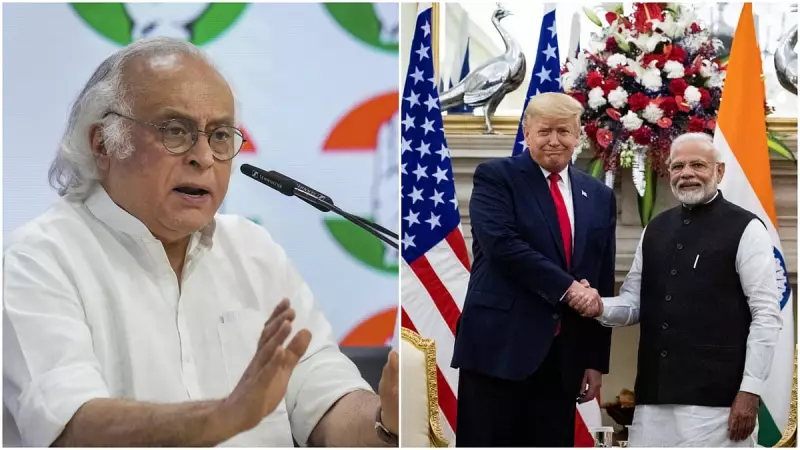
In a significant political move, the Congress party has raised critical questions about India's foreign policy direction under the current administration. Jairam Ramesh, Congress General Secretary, articulated the party's concerns through a detailed statement that directly addresses the Prime Minister.
The Congress leader specifically questioned whether PM Modi would take up South Africa's cause with his "good friend" former US President Donald Trump. This reference to Modi's relationship with Trump adds a diplomatic dimension to the political challenge.
South Africa's Bold Move at The Hague
The controversy centers around South Africa's unprecedented legal action at the International Court of Justice. South Africa has formally accused Israel of committing genocide against Palestinians in Gaza, marking one of the most significant international legal challenges in recent history.
The case, filed at the principal judicial organ of the United Nations, alleges that Israel's military operations in Gaza violate the Genocide Convention. South Africa has requested the court to indicate provisional measures to protect the Palestinian population from further harm.
Jairam Ramesh emphasized the historical context, reminding that India had initially supported the UN General Assembly resolution calling for an immediate humanitarian truce in Gaza. However, he noted concerning shifts in India's subsequent positions at the United Nations.
India's Evolving Stance on Palestine
The Congress statement highlights what it perceives as inconsistencies in India's foreign policy approach. India abstained from voting on a UN resolution that demanded an immediate humanitarian ceasefire, marking a departure from its traditional pro-Palestine stance.
This abstention came despite India's historical support for the Palestinian cause and its long-standing commitment to anti-colonial struggles worldwide. The Congress party questions whether this signals a fundamental reorientation of India's foreign policy principles.
Jairam Ramesh's statement pointedly asks: "Will the Prime Minister take up South Africa's cause with his good friend Trump? Or is the Modi government's interest limited to photo opportunities and headline management?" This rhetorical question underscores the political tension surrounding India's international positioning.
International Implications and Domestic Politics
The Congress challenge comes at a crucial juncture in international relations. The International Court of Justice case represents a significant test for international justice mechanisms and could set important precedents for interpreting the Genocide Convention.
Domestically, the issue touches upon India's traditional foreign policy foundations, including:
- Support for anti-colonial struggles
- Commitment to international law
- Historical solidarity with Global South nations
- Non-aligned movement principles
The Congress party's intervention reflects broader concerns about whether India's current foreign policy adequately represents these longstanding principles. The statement suggests that India's voice on international platforms should consistently reflect its stated commitment to justice and human rights.
As the International Court of Justice considers South Africa's application, the world watches how different nations, including India, will position themselves on this landmark case. The Congress party has clearly signaled that it intends to make this a subject of domestic political debate and accountability.
The Modi government now faces pressure to clearly articulate India's stance on what many consider one of the most significant international legal challenges of our time.