The Designated Survivor: A Critical Role in US Government Continuity
As President Donald Trump delivered his State of the Union address to a joint session of Congress on Tuesday night, a crucial security protocol was quietly in effect. One senior official deliberately remained away from the Capitol building, serving as the designated survivor. This long-standing measure ensures continuity of government in the event of a catastrophic incident that might incapacitate the president and other top leaders gathered at the event.
Congressman Mike Thompson's Role in the 2025 Address
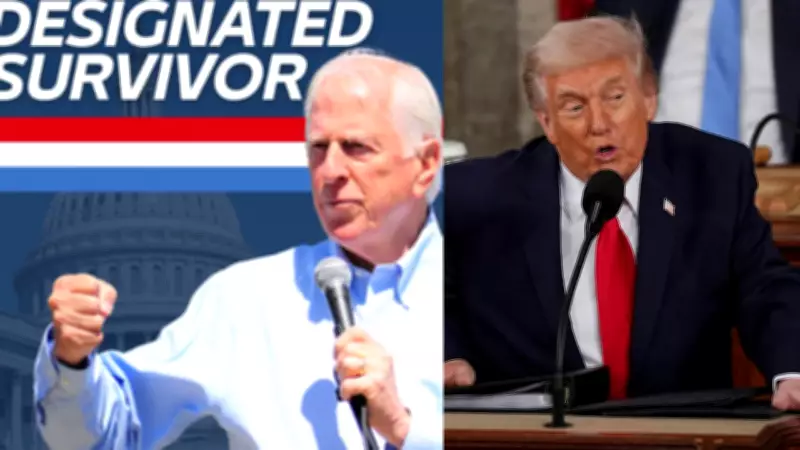
California's 4th District Congressman Mike Thompson appeared to be the designated survivor for this particular address, as he was notably absent from the House chamber. Through a post on X, Thompson confirmed his role, stating, "I've been selected as a designated survivor for tomorrow's State of the Union, so I won't be there in person, but I'll be watching." This statement highlights the dual nature of the position—both a solemn responsibility and a routine administrative duty.
The designated survivor carries the theoretical possibility of assuming the presidency if a disaster strikes during the address. However, former participants emphasize that the experience is generally less dramatic than fictional portrayals in television and film. James Nicholson, who served as veterans affairs secretary under President George W. Bush and was the designated survivor during the 2006 State of the Union address, explained to the Associated Press, "It focuses your mind. It also enhances your prayer that it doesn’t happen to you."

Constitutional Basis and Selection Process
The US Constitution does not explicitly require a designated survivor or outline the process for selecting and isolating one. This practice is believed to have emerged during the Cold War era, when US officials were particularly concerned about the possibility of a nuclear attack by the Soviet Union that could decapitate the nation's leadership.
There is no formal protocol for selecting the designated survivor, though the choice is typically made by the president and/or the president’s chief of staff, as reported by Time magazine. Constitutional eligibility is a strict requirement: the designated survivor must be eligible to serve as president, meaning they must be a natural-born US citizen and at least 35 years old. This ensures that if the worst happens, the line of succession remains constitutionally valid.
Historical Origins and Evolution of the Practice
The origins of the designated survivor practice can be traced back to April 1980, when the White House Military Office directed the Federal Emergency Management Agency to plan for presidential succession. This included recommending which official should be absent when top leaders gathered outside the White House for major events.
The first publicly disclosed instance of a Cabinet member being kept away from a presidential address to Congress occurred in 1981, when Education Secretary Terrel Bell served in this role—though his participation was only revealed afterward. Today, with televised coverage of the House chamber becoming standard, observers can quickly identify the absent Cabinet member, making the practice more transparent while maintaining its security function.
Ongoing Preparedness and Modern Implications
Officials continue to prepare for large-scale attacks or disasters that could threaten government continuity. In January 2025, a military helicopter involved in a collision with a regional jet near Reagan National Airport was reportedly on a continuity-of-government training mission, underscoring how seriously this protocol is taken.
This practice represents a fascinating intersection of constitutional law, national security, and practical governance. While the likelihood of needing to activate the designated survivor remains extremely low, the position serves as a tangible reminder of the vulnerabilities inherent in gathering the nation's top leadership in one place—and the meticulous planning that goes into safeguarding democratic institutions against unforeseen catastrophes.