

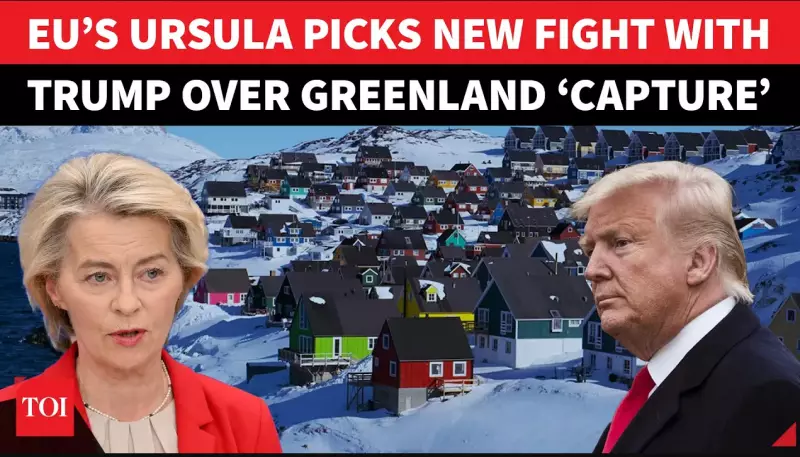
A significant diplomatic storm has broken out across the Atlantic following a controversial move by former US President Donald Trump. The appointment of a special envoy to advance the idea of the United States annexing Greenland has triggered fierce backlash from Europe, threatening unity among long-standing NATO allies.
EU Throws Full Weight Behind Denmark
The European Union, led by Commission President Ursula von der Leyen, has issued a stern warning, declaring that "borders are not for sale." The bloc has mobilised its full diplomatic might in support of Denmark, the nation that governs Greenland. The core message from Brussels is unambiguous: sovereignty and territorial integrity are fundamental principles that cannot be bargained. This strong stance underscores the EU's commitment to the rules-based international order.
In Copenhagen, the Danish government has taken concrete action by summoning the American ambassador to register a formal protest. Officials have labelled the US move, which occurred on December 23, 2025, as completely "unacceptable." Both the government in Copenhagen and the local authorities in Greenland have issued flat rejections of any potential annexation attempt, presenting a united front against Washington's overture.

Clash of Narratives: Security vs. Self-Determination
The heart of the dispute lies in two conflicting viewpoints. The Trump administration, through its newly appointed envoy Landry, insists that Greenland holds immense strategic importance for US national security, likely referring to its geographic position in the Arctic. This perspective frames the issue through a lens of geopolitical competition.
However, the European and Danish position is firmly rooted in the principle of self-determination. EU leaders have forcefully stated that only the people of Greenland and Denmark have the legitimate right to decide the island's future. This stance champions democratic will over strategic ambition, creating a fundamental impasse between the allies.
Deepening Fears of a Transatlantic Rift
This confrontation over Greenland is not an isolated incident but appears to be a symptom of a wider and growing divide. Analysts fear it could significantly weaken the NATO alliance, which has relied on unity among its members for decades. The prospect of a major rift between the United States and key European partners like Denmark introduces a new layer of instability into global politics at a time of existing tensions.
The situation remains fluid, with diplomatic channels actively engaged. The world now watches to see if this crisis can be contained or if it will escalate further, testing the resilience of the transatlantic partnership in an increasingly polarised era.






