

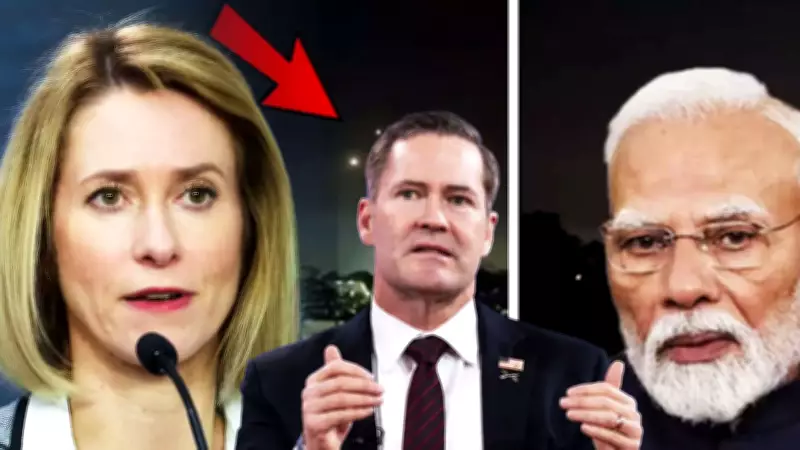
EU Diplomatic Reaction to US Claims on India-Pakistan War and Kashmir at Munich Conference
At the prestigious Munich Security Conference, a senior United States diplomat made bold assertions regarding American involvement in South Asian conflicts, triggering a notable diplomatic undercurrent. The US official claimed that American leadership was instrumental in ending the recent India-Pakistan war and criticized the United Nations for its perceived failures in addressing the Kashmir issue.
Visible European Disagreement
European Union foreign policy chief Kaja Kallas displayed a visible reaction to these remarks, with observers noting subtle but clear signs of disagreement. This diplomatic moment occurred against the backdrop of broader tensions between the United States and the European Union concerning global conflict management strategies.
The incident highlights growing divergences within the Western alliance on how to approach international mediation and sovereignty matters. European officials have expressed concerns that certain US initiatives, including a proposed "Board of Peace" for Gaza, may diverge from established United Nations Security Council mandates.

Broader Context of Western Alliance Tensions
This diplomatic exchange reflects deeper questions about:
- The appropriate mechanisms for international conflict resolution
- The balance of power within Western diplomatic alliances
- Diverging approaches to sovereignty and mediation in global hotspots
The Munich Security Conference has traditionally served as a platform for high-level diplomatic discussions, making this exchange particularly significant for observers of international relations. The visible reaction from EU leadership suggests that European perspectives on South Asian conflicts and UN effectiveness may differ substantially from American assessments.
As global powers navigate complex geopolitical landscapes, incidents like this underscore the evolving dynamics within traditional alliances and the challenges of maintaining unified approaches to international conflict management.






