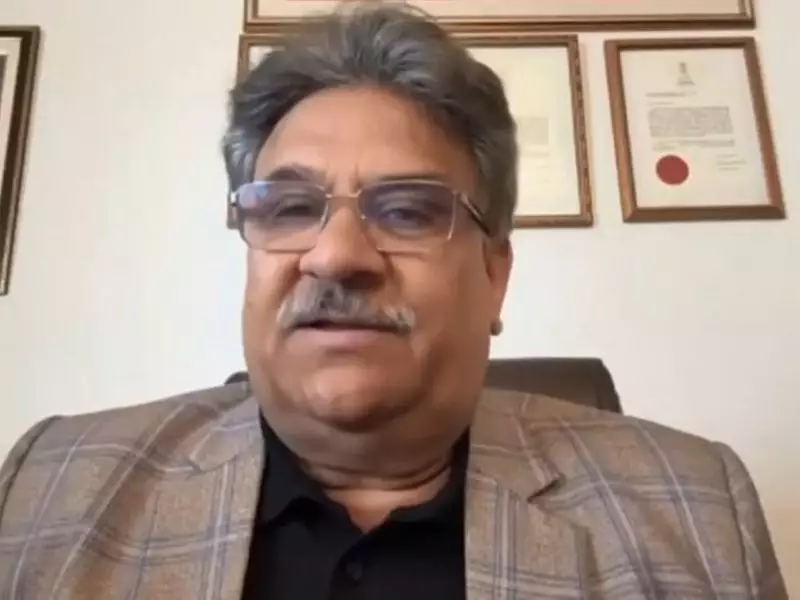
Former Indian diplomat Anil Trigunayat has issued a sharp rebuke against a controversial demand made by a Kuwaiti political group, labeling it as an act of 'utter stupidity'. The demand in question, which has sparked significant concern, calls for the Kuwaiti government to suspend all work permits for Indian nationals.
The Controversial Demand and Its Source
The call to halt work permits for Indians originated from a political gathering known as the 'Inqilab March'. This group presented a list of demands to the Kuwaiti government, with the suspension of Indian work permits being a prominent and contentious point. The Inqilab March is a political movement within Kuwait that has been vocal on various national issues.
Anil Trigunayat, a seasoned former ambassador with extensive experience in the Middle East, did not mince words in his criticism. He highlighted the profound and potentially damaging consequences such a move would entail, not just for bilateral relations but for Kuwait's own economy and societal fabric.

Why the Demand is Economically Flawed
Trigunayat's condemnation is rooted in hard economic realities. The Indian expatriate community forms a critical backbone of Kuwait's workforce, particularly in key sectors like construction, healthcare, engineering, and domestic services. A sudden suspension of work permits would trigger immediate and severe disruptions.
Kuwait's economy is heavily reliant on foreign labor, and Indians constitute one of the largest expatriate communities in the country. Their contribution is integral to daily operations across industries. Removing this workforce overnight would likely stall projects, strain essential services, and create a vacuum that would be difficult to fill swiftly, potentially harming Kuwait's economic stability and development goals.
Diplomatic Repercussions and Community Impact
Beyond economics, the former diplomat warned of serious diplomatic fallout. India and Kuwait share historically warm and friendly relations, strengthened by robust people-to-people ties. A discriminatory policy targeting Indian citizens would be a major setback for this bilateral partnership, which is built on mutual respect and cooperation.
Furthermore, such a demand unfairly targets a peaceful and law-abiding community. The vast majority of Indian professionals and workers in Kuwait are respected for their hard work and contribution to Kuwaiti society. Trigunayat's statement implicitly defends the dignity and standing of the Indian diaspora against what he perceives as a baseless and inflammatory proposal.
A Voice of Reason Amidst Political Posturing
Analysts view Trigunayat's strong statement as a necessary intervention from a knowledgeable expert. It serves to highlight the potential dangers when domestic political maneuvers overlook complex international and economic interdependencies. His use of the phrase 'utter stupidity' underscores the recklessness of the demand from a strategic and practical standpoint.
While the Inqilab March's list contains other points, the demand concerning Indian work permits has drawn the most international attention. It remains to be seen how the Kuwaiti government will respond to these demands. However, voices like Trigunayat's emphasize that any rational analysis would find the proposal against Indian workers to be deeply flawed and counterproductive.
The incident underscores the delicate balance countries must maintain in managing their foreign workforce while preserving valuable international relationships. For now, the strong rebuttal from a respected diplomatic figure serves as a reminder of the enduring strength and importance of the India-Kuwait corridor.