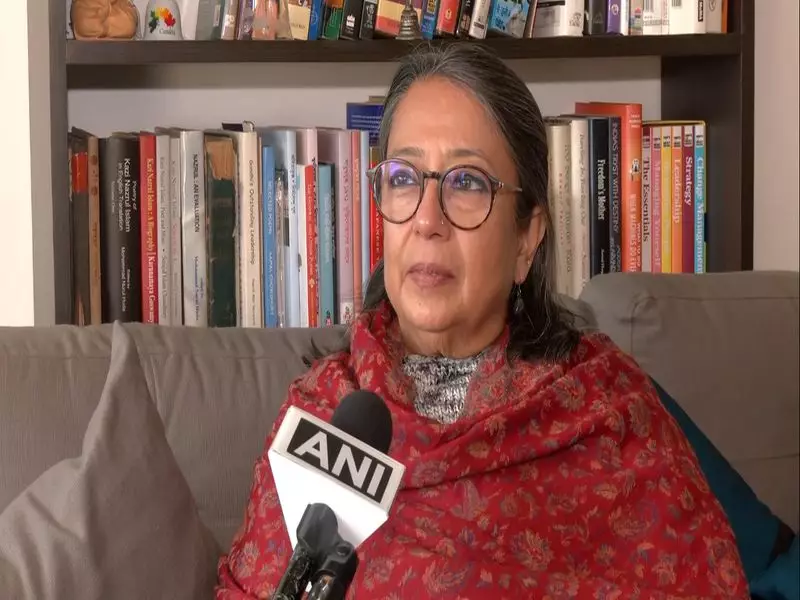
The potential return of Tarique Rahman, the acting chairman of the Bangladesh Nationalist Party (BNP), to his home country is an event loaded with deep political meaning for the region, according to a former Indian diplomat. Veena Sikri, who served as India's High Commissioner to Bangladesh, has underscored that this development carries significant weight for the future trajectory of India-Bangladesh relations.
A Diplomat's Perspective on a Political Crossroads
In a detailed analysis, Veena Sikri highlighted the complex backdrop against which this possibility arises. Tarique Rahman, the son of former Prime Minister Khaleda Zia, has been living in London since 2008. His departure followed the Awami League's victory in the general elections that year, led by Sheikh Hasina.
Sikri pointed out that Rahman's exit was not a simple political defeat. He left facing a series of serious charges, including those related to a brutal grenade attack in 2004 that targeted an Awami League rally. This attack resulted in numerous casualties, and the legal proceedings against him have been a persistent feature of Bangladesh's political landscape.

The Stakes for Domestic Politics and Bilateral Ties
The former High Commissioner explained that Rahman's role is pivotal. As the acting chairman of the BNP, he is effectively the leader of the primary opposition force in Bangladesh. His physical absence from the country has created a unique dynamic, with the party operating under his guidance from abroad.
Sikri emphasized that his return would fundamentally alter the domestic political equation. It would signal a direct re-entry of the BNP's top leadership into the fray, potentially reshaping opposition strategies and the nature of political discourse within Bangladesh. This internal shift, she argued, has immediate and profound consequences for India.
"For India, Bangladesh is an extremely important neighbour," Sikri stated, framing the relationship within the broader context of regional stability and connectivity. The health of this bilateral partnership is a cornerstone of New Delhi's 'Neighbourhood First' policy.
Implications for the Future of India-Bangladesh Partnership
According to the seasoned diplomat, the political stability and policy continuity in Dhaka are of paramount importance to New Delhi. The current government under Prime Minister Sheikh Hasina has fostered a period of robust cooperation, particularly on issues of security, trade, and connectivity. Any major political recalibration, such as the return of a key opposition figure, introduces new variables into this carefully managed relationship.
Sikri's analysis suggests that India would be watching closely to see how Rahman's potential return influences the political climate. Would it lead to a more vibrant and participatory democracy, or would it trigger fresh instability? The answer to this question would directly impact the pace and depth of bilateral projects and shared strategic goals.
Ultimately, Veena Sikri's commentary frames Tarique Rahman's situation not merely as a Bangladeshi domestic matter, but as a politically very significant event with the power to influence the geopolitical balance in South Asia. It underscores the intricate link between a neighbour's internal political dynamics and the pursuit of stable, productive international partnerships.