

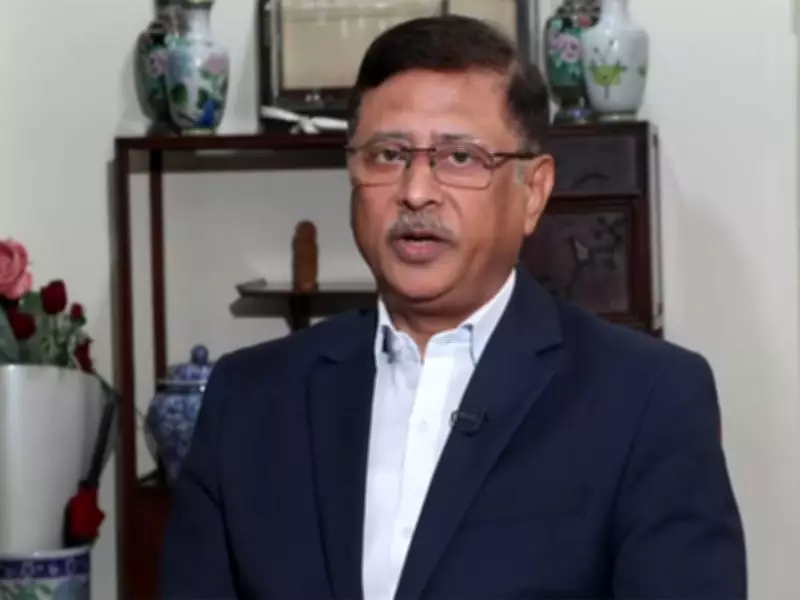
Former Envoy Sanjay Verma Criticizes Trudeau's 'Ill-Advised' Nijjar Allegations
Former Indian High Commissioner to Canada, Sanjay Kumar Verma, has strongly criticized former Canadian Prime Minister Justin Trudeau for his public allegations linking India to the killing of Khalistani separatist Hardeep Singh Nijjar. Verma labeled Trudeau's actions as "ill-advised," asserting that they unnecessarily strained a robust bilateral relationship between the two nations.
Verma Questions Timing and Motives Behind Allegations
In recent remarks, Verma highlighted that Trudeau's decision to raise the issue publicly was misguided. "He was ill-advised. The timing was of his choosing, but he was ill-advised to put a very strong bilateral relationship on hold and move ahead with his political, I would say, motives," Verma stated. He emphasized that the move came despite a lack of concrete evidence, as later confirmed by Canadian authorities.
Canadian Police Find No Evidence Linking India to Nijjar Case
Verma's comments follow statements from Canadian National Police Chief Mike Duheme, who indicated that there is currently no evidence connecting the Indian state to the Nijjar case. This issue had previously sparked a significant diplomatic rift between India and Canada, with tensions escalating after Trudeau's initial claims of "credible allegations."

Verma dissected the term "credible allegations," questioning why no legal charges have been filed if such evidence existed. "So let's try to sort of dissect that. And if we say credible allegations, it was still not evidence. But due to some reason, the then Prime Minister thought it appropriate to state that in their own parliament. I did not consider it well thought of on his part," he explained.
India Maintains Accusations Are Politically Motivated
Verma reiterated India's consistent stance that the accusations were politically driven and lacked substantiation. "We always maintained that. If you recall, both from New Delhi and from Ottawa, the Indian interests, the Indian representation, always talked about this. We always said that this is politically motivated, we always said that this is vote-bank politics, we always said that there is no evidence available to say so," he affirmed.
Two Categories in Canadian Investigation
Explaining the recent developments, Verma noted that Canadian authorities have treated the issue in two separate categories:
- First Bucket: The killing of Khalistani terrorist Hardeep Singh Nijjar, which is currently before Canadian courts with charges filed against four Indian nationals who entered Canada as international students.
- Second Bucket: Allegations of transnational repression and crimes, where Verma pointed out that even initial claims by the RCMP in October 2024 have failed to hold up.
Verma emphasized that India does not interfere in other countries' internal affairs, a policy he said was not accepted by the Canadian regime at the time. Referring to the recent police statement, he added, "What he (Canada National Police Chief) said was that right now he doesn't see any link with any foreign entity, which includes India, I'm sure, any foreign entity having links with transnational crimes and transnational repression in Canada."
The former envoy's remarks underscore ongoing diplomatic challenges and highlight the importance of evidence-based dialogue in international relations.






