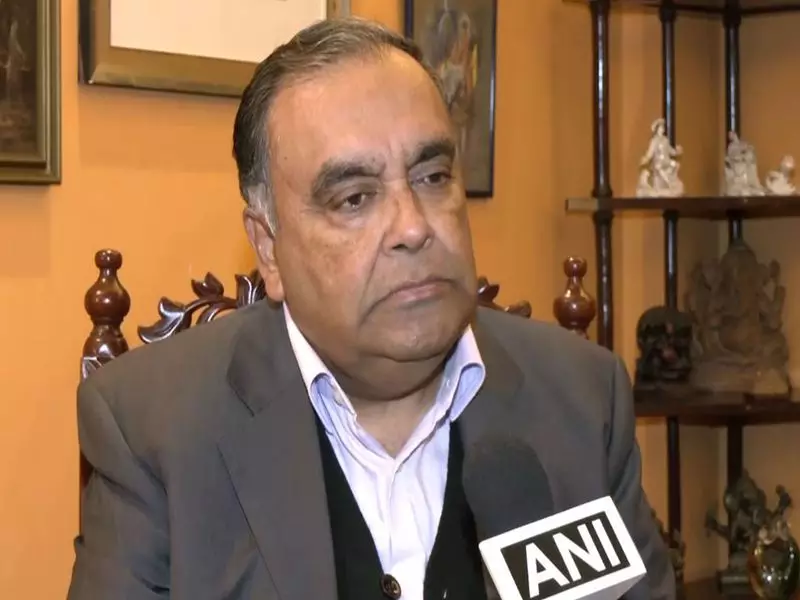
In a sharp critique that has resonated across diplomatic circles, India's former ambassador to Venezuela, Yashvardhan Kumar Sinha, has lambasted the United Kingdom's recent decision to dispatch a warship to Guyana. He characterized the move as a troubling regression to the days of "colonialism and gunboat diplomacy," injecting a volatile element into a long-simmering territorial dispute.
A Naval Deployment Reopens Colonial Wounds
The controversy centers on the UK's announcement in late December 2023 that it would send the offshore patrol vessel HMS Trent to Guyana for a series of joint exercises. This deployment comes amid heightened tensions between Guyana and Venezuela over the vast, resource-rich Essequibo region, which constitutes about two-thirds of Guyana's territory but is claimed by Caracas.
Ambassador Sinha, who served in Caracas from 2000 to 2003, did not mince words in his assessment. He argued that the UK's action undermines ongoing regional diplomatic efforts. "The British sending a warship is a step backwards. It is a reversion to colonialism and gunboat diplomacy," Sinha stated emphatically. He highlighted that the dispute, which dates back to the 19th century, was being actively addressed through dialogue facilitated by regional bodies like the Community of Latin American and Caribbean States (CELAC).

Undermining Regional Peace Efforts
The former diplomat pointed out that the leaders of Guyana and Venezuela had only recently, in December 2023, agreed to a path of peaceful resolution during a meeting in St. Vincent and the Grenadines. They pledged not to use force and to de-escalate tensions. Sinha views the UK's naval deployment as a direct contradiction to this spirit. "The British move is unhelpful when the two sides have agreed to resolve their differences through dialogue," he noted.
He expressed particular concern that such external military posturing could destabilize the delicate peace process and provoke a disproportionate response. "The danger is that it might provoke Venezuela into some knee-jerk reaction," Sinha warned, suggesting it could escalate rather than calm the situation.
A Call for Diplomatic Maturity Over Military Might
Drawing from his extensive experience, Sinha advocated for mature statecraft focused on confidence-building measures and sustained negotiation. He recalled that during his tenure, the border issue was managed calmly through diplomatic channels. His critique extends beyond the immediate crisis, touching on a broader post-colonial sensitivity. The deployment of a former colonial power's warship to a former colony, in a dispute rooted in colonial-era borders, is seen as a profoundly symbolic and negative act.
The Essequibo region has been governed by Guyana for over a century, but Venezuela revived its claim after significant oil and gas discoveries were made offshore. The International Court of Justice (ICJ) is currently adjudicating the case, but Venezuela has rejected its jurisdiction. The UK's support for Guyana, a Commonwealth member, through this naval show of force has thus been interpreted by many, like Sinha, as an anachronistic strategy that prioritizes military signaling over supportive, behind-the-scenes diplomacy.
In conclusion, Y.K. Sinha's strong condemnation frames the UK's dispatch of HMS Trent not as a stabilizing act of solidarity but as a dangerous provocation. It is a move that, in his view, echoes a bygone imperial era and recklessly jeopardizes the contemporary, regional diplomatic frameworks working to resolve the Guyana-Venezuela border dispute peacefully.