

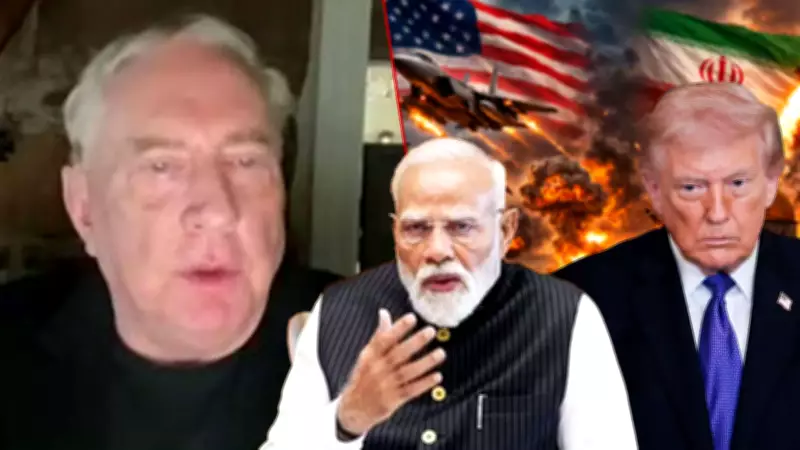
Ex-US Army Colonel Slams Pakistan's Iran Mediation as 'Ludicrous Nonsense'
In a sharp critique of international diplomacy, retired US Army colonel and geopolitical expert Douglas Macgregor has ridiculed Pakistan's push to mediate in the escalating Iran conflict, labeling it as "ludicrous nonsense" and questioning its credibility on the global stage. Speaking to ANI, Macgregor highlighted Pakistan's internal turmoil and economic struggles, arguing that these factors make it an unlikely candidate for neutral brokerage in such a high-stakes crisis.
Pakistan's Credibility Under Scrutiny
Macgregor pointed to Pakistan's ongoing instability, including political unrest and financial challenges, as key reasons why it cannot serve as an impartial mediator. "Given its internal issues, Pakistan lacks the neutrality required for effective conflict resolution," he stated. He further noted that Israel would likely perceive Pakistan as part of the problem rather than a solution, rendering negotiations in Islamabad unrealistic and counterproductive.
India Emerges as a Preferred Mediator
In contrast, Macgregor pitched India as a more viable and effective player in the conflict. He emphasized Prime Minister Narendra Modi's strong global standing and his established relationships with leaders such as Vladimir Putin of Russia, as well as with Iran and Israel. "India, under PM Modi's leadership, has the diplomatic clout and balanced approach needed to facilitate meaningful dialogue," Macgregor asserted. He added that former US President Donald Trump would be more inclined to support and engage with New Delhi's mediation efforts, given the historical ties and strategic alignment between the two nations.

Context of the Escalating Conflict
Macgregor's remarks come amid the intensifying US-Israel-Iran conflict, now in its fourth week, which has heightened tensions across the Middle East and drawn global concern. His analysis underscores the critical need for credible mediators in a volatile geopolitical landscape. By dismissing Pakistan's role and advocating for India's involvement, Macgregor highlights the shifting dynamics in international diplomacy, where stability and influence are paramount.
This development reflects broader trends in global politics, where nations with robust economies and diplomatic networks are increasingly seen as key players in conflict resolution. As the situation evolves, the focus on India's potential role could signal a realignment in how major powers approach mediation in complex international disputes.






