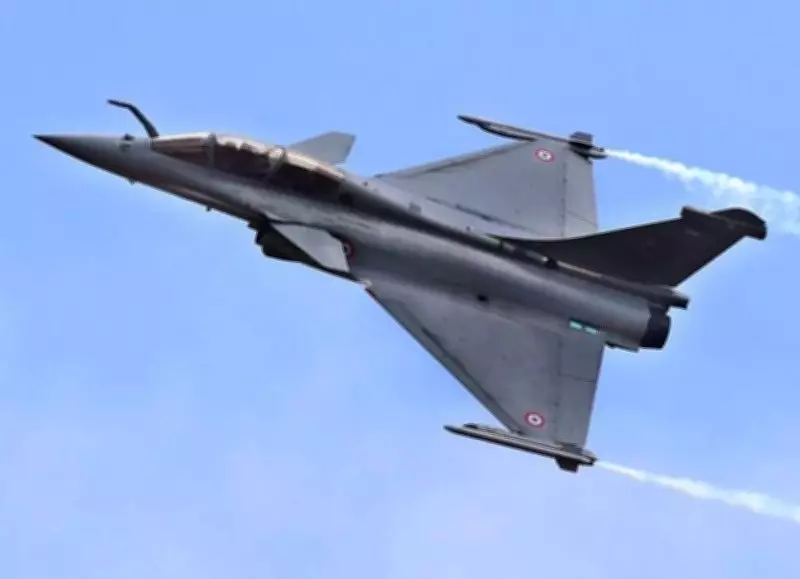
France Steps into a Disruptive Global Role, Echoing Russia's Historical Posture
In a significant shift in international dynamics, France is increasingly being viewed as a new geopolitical challenger, with its actions and policies drawing parallels to the long-standing role played by Russia on the world stage. This transformation is marked by France's assertive foreign policy, military interventions, and a push for strategic autonomy that often places it at odds with traditional allies and global norms.
Assertive Foreign Policy and Military Actions
France has recently taken bold steps in its foreign engagements, particularly in regions like Africa and the Middle East. Unlike many Western nations that often align closely with NATO or U.S. interests, France has pursued independent military operations, such as its interventions in Mali and the Sahel region. These actions demonstrate a willingness to act unilaterally to protect its interests and influence, reminiscent of Russia's approach in conflicts like Syria and Ukraine.
Strategic autonomy has become a cornerstone of French diplomacy, with President Emmanuel Macron advocating for a Europe that can defend itself without over-reliance on the United States. This stance challenges the post-World War II order and introduces a new layer of complexity in global alliances, much as Russia has done by positioning itself as a counterweight to Western hegemony.

Economic and Diplomatic Maneuvering
On the economic front, France has been proactive in forging partnerships that bypass traditional Western frameworks. For instance, it has strengthened ties with countries in the Global South and engaged in energy deals that reduce dependence on Russian gas, while also exploring alternatives to U.S.-led financial systems. This economic diversification mirrors Russia's efforts to build alliances with non-Western nations to circumvent sanctions and isolation.
Diplomatically, France has taken controversial positions, such as calling for dialogue with Russia during the Ukraine conflict and criticizing U.S. policies in the Indo-Pacific. These moves often create friction within the European Union and NATO, highlighting France's role as a disruptor similar to how Russia uses diplomacy to sow division among Western powers.
Implications for Global Stability
The rise of France as a geopolitical challenger has profound implications for international relations. It introduces a new axis of competition, potentially leading to:
- Increased multipolarity in global governance, with more actors vying for influence.
- Strains on traditional alliances like NATO, as France pushes for European independence.
- Greater unpredictability in conflict zones, as France's independent actions could clash with other powers' interests.
This development suggests that the world may be entering an era where middle powers like France play more assertive roles, challenging the dominance of superpowers and reshaping the geopolitical landscape in ways that echo Russia's historical strategies.