Germany Anticipates Signing Major $8 Billion Submarine Agreement with India in Near Future
Germany has announced its expectation to finalize a significant $8 billion submarine cooperation deal with India "soon," according to statements made by Berlin's defence minister, Boris Pistorius. In an interview with Reuters, Pistorius expressed high confidence, predicting the agreement could be concluded within the next three months. This development marks a pivotal step in bolstering bilateral defence ties between the two nations.
Details of the Proposed Submarine Partnership
The $8 billion agreement, which has been under discussion for several months, involves collaboration between German shipbuilder ThyssenKrupp Marine Systems (TKMS) and India's Mazagon Dock Shipbuilders Limited. This partnership is a key component of India's Project-75I initiative, aimed at acquiring advanced diesel-electric submarines equipped with Air Independent Propulsion (AIP) systems. These technologies are designed to enhance underwater endurance and operational capabilities, significantly strengthening India's naval forces.
Defence Minister's Visit and Strategic Agreements
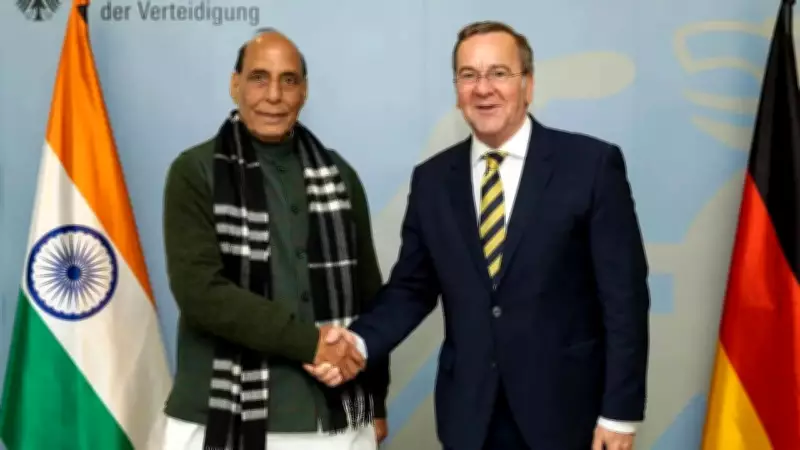
The announcement coincides with a three-day visit to Germany by India's defence minister, Rajnath Singh. During this visit, both countries signed a Defence Industrial Cooperation Roadmap and an Implementing Arrangement for Cooperation in UN Peacekeeping Training. According to the Ministry of Defence, these agreements are intended to boost institutional collaboration and expand opportunities for joint training, capacity building, and capability development.

In bilateral talks held in Berlin, the ministers reviewed a wide range of defence and security cooperation areas, with a focus on co-development and co-production of military equipment, particularly in niche and emerging technologies. Both sides reaffirmed their commitment to strengthening military-to-military engagement as a cornerstone of the India-Germany strategic partnership.
Emphasis on Self-Reliance and Broader Partnerships
Rajnath Singh described his visit as a reflection of the "deep friendship, synergy and trust" between India and Germany, noting that defence relations have gained significant momentum in recent years. He highlighted the importance of the India-EU Security and Defence Partnership signed earlier this year, stating it opens new avenues for deeper engagement. Both nations agreed to leverage this framework to enhance regional stability and strengthen joint capabilities.
Singh also emphasized India's push for self-reliance in defence manufacturing, asserting that "Aatmanirbhar Bharat is not merely a procurement programme, it is an invitation to co-create, co-develop, and co-innovate." Additionally, India has invited the German Air Force to participate in the upcoming Exercise TARANG SHAKTI, scheduled for later this year, further solidifying defence cooperation.
Historical Context and Expanding Defence Ties
India and Germany share a long history of defence cooperation dating back to the 1950s. Early collaborations included the licensed production of the Shaktiman truck based on German MAN designs and the induction of Dornier-228 aircraft, which continue to serve in the Indian Air Force, Navy, and Coast Guard. Submarine cooperation has been a key pillar, with India previously acquiring Shishumar-class submarines from Germany.
The proposed new deal is expected to significantly enhance India's underwater capabilities through AIP technology, allowing submarines to remain submerged for extended periods. The partnership is further expanding into defence manufacturing, with Hyderabad-based VEM Technologies signing an agreement with TKMS to produce heavyweight torpedoes in India, showcasing a deepening of industrial collaboration.