

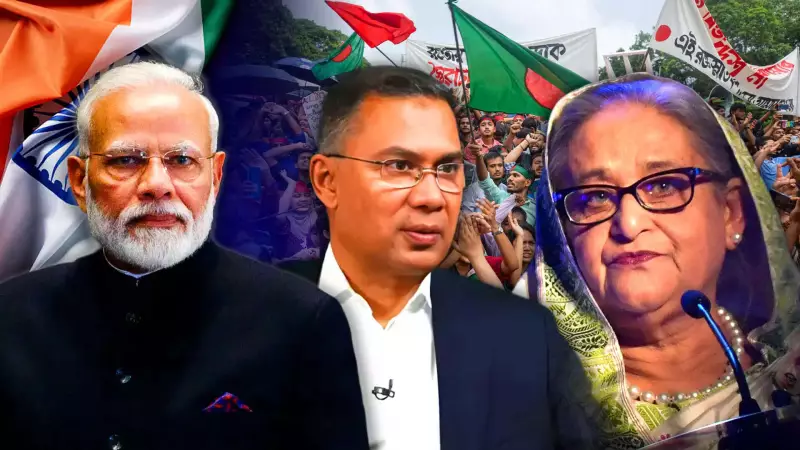
A significant warning for India has surfaced as Bangladesh approaches a potential political shift. Veteran journalist Saleem Samad has indicated that a future government led by the Bangladesh Nationalist Party (BNP) might demand the extradition of current Prime Minister Sheikh Hasina, using it as diplomatic leverage against New Delhi. This development, flagged on December 31, 2025, could fundamentally test the long-standing partnership between the two neighboring nations.
Samad's Warning: A Leverage Play Against India
According to Saleem Samad, the central figure in this potential diplomatic challenge is Tarique Rahman, the acting chairman of the BNP. Samad suggests that Rahman is likely to pursue the extradition of Sheikh Hasina if his party comes to power. The objective would be to use this demand as a strategic tool to pressure India, potentially renegotiating aspects of the bilateral relationship. Samad's analysis presents this not merely as a legal request but as a calculated political maneuver aimed at New Delhi.
Grim Reminders of the Past BNP Era
To underscore the stakes, Saleem Samad recalled the previous period when the BNP was in power under Khaleda Zia. He painted a concerning picture of that time, alleging widespread suppression of media freedom and the unchecked exercise of power by Tarique Rahman. Samad's warnings imply that a return of the BNP to governance could herald a similar era, marked by internal crackdowns and a more adversarial stance towards India, contrasting sharply with the current Awami League government's generally India-friendly policy.

Broader Implications for Regional Diplomacy
What begins as a specific extradition request could rapidly escalate into a major test for India's foreign policy in South Asia. India has invested deeply in its relationship with Bangladesh under Sheikh Hasina's leadership, with cooperation spanning security, connectivity, and trade. A demand for her extradition would force India into a delicate position, balancing legal principles, domestic political sentiments, and crucial regional strategic interests. The situation underscores the fragility of diplomatic ties in the face of volatile political transitions.
Experts believe that New Delhi would need to navigate this scenario with extreme caution. The outcome could redefine India's engagement not just with Bangladesh, but also signal its capacity to manage relations with neighbors undergoing political upheaval. The warning from Samad serves as an early alert for Indian policymakers to prepare for all potential scenarios in the post-Hasina political landscape of Bangladesh.






