

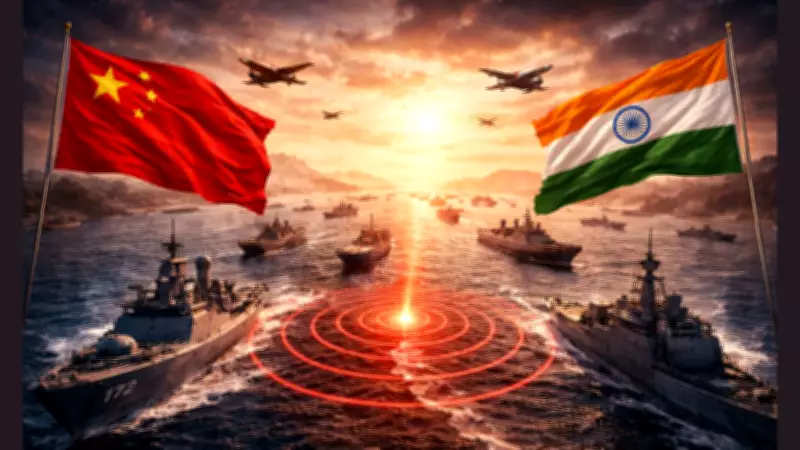
The Strait of Hormuz Crisis: A Global Wake-Up Call on Maritime Chokepoints
The escalating conflict between the United States and Iran has thrust the Strait of Hormuz into the geopolitical spotlight, serving as a stark reminder of a fundamental truth: when a narrow maritime passage is threatened, the repercussions extend far beyond the immediate battlefield. This volatile situation has led to tankers slowing their pace, insurers panicking, freight costs skyrocketing, and energy markets experiencing significant convulsions.
Hormuz: The World's Oil Panic Button
According to Reuters, the ongoing hostilities have pushed the Strait of Hormuz perilously close to effective closure, disrupting approximately 20 million barrels per day of oil and fuel supply. This staggering figure represents roughly one-fifth of the entire global seaborne energy trade. The U.S. Energy Information Administration (EIA) estimates that the strait carried 20.9 million barrels per day in the first half of 2025, cementing its status as one of the planet's two most critical energy chokepoints.
The crisis demonstrates that a chokepoint does not require physical closure to inflict severe economic damage. The mere fear of disruption is often sufficient to trigger chaos. War-risk premiums surge, ships are rerouted, delivery schedules slip, and markets react with volatility long before any military engagement occurs. This unfolding drama in the Gulf provides a perfect template for understanding vulnerabilities elsewhere.

China's Strategic Nightmare: The Strait of Malacca
While Hormuz captures immediate attention, the deeper strategic warning resonates thousands of kilometers to the east. For China, the paramount long-term maritime vulnerability is not in the Persian Gulf but in Southeast Asia—specifically at the Strait of Malacca. This narrow sea lane connects the Indian Ocean to the Pacific, serving as the primary conduit for a massive share of East Asia's energy imports and commercial trade.
The Scale of the Malacca Dilemma
The EIA's World Oil Transit Chokepoints analysis reveals the staggering scale of this dependency. In the first half of 2025, the Strait of Malacca carried 23.2 million barrels per day of oil, accounting for 29% of total global maritime oil flows. This volume makes it the largest oil chokepoint in the world, even surpassing Hormuz. Additionally, around 9.2 billion cubic feet per day of liquefied natural gas (LNG) transited the strait during the same period.
Think tank ORF reports that China's energy imports reached $390 billion in 2024, with nearly 80%—amounting to $312 billion—transported through the Malacca Strait. This corridor is the shortest and most efficient sea route linking Middle Eastern suppliers to East Asian markets. For China, the world's largest manufacturing economy and a top energy importer, it is an indispensable economic lifeline.
This dependence forms the core of Beijing's famous "Malacca Dilemma"—the acute awareness that too much of its economic vitality hinges on a narrow sea lane it does not control. Despite years of efforts to mitigate this risk through the Belt and Road Initiative, pipeline construction, and port investments, no alternative route can fully replicate the scale, speed, and cost-efficiency of the Malacca passage.
India's Geographic Gift: The Andaman and Nicobar Advantage
This is where India's strategic position becomes profoundly significant. While India does not control the Strait of Malacca, its geography provides a powerful advantage: proximity. The Andaman and Nicobar Islands sit in the eastern Indian Ocean, remarkably close to the western approaches of the strait.
Dr. Ashok Sharma, a visiting fellow at the University of New South Wales Canberra, emphasizes that India's real edge lies in "creating uncertainty and strategic pressure rather than fully stopping maritime traffic." From these islands, India can monitor, pressure, complicate, and, in an extreme conflict, help deny access to one of the world's most vital shipping corridors.

The Unsinkable Aircraft Carrier
The Andaman and Nicobar chain functions as India's closest equivalent to an "unsinkable aircraft carrier." Unlike naval task forces that must be deployed, these islands are permanently in place. They can host surveillance systems, aircraft, missiles, drones, and naval detachments. The southern tip is particularly strategic, with INS Baaz at Campbell Bay providing a forward operating position near the Six Degree Channel and the western approaches to Malacca-bound sea lanes.
Sharma notes that while extra-regional powers like the United States possess greater overall naval strength, India benefits from proximity, shorter logistics lines, and sustained surveillance capabilities in the eastern Indian Ocean. This regional presence is a distinct advantage.
Beyond Blockade: The Power of Uncertainty and Economic Pressure
It is crucial to understand that India's leverage does not stem from an ability to unilaterally shut the strait—a move that would be legally explosive and militarily escalatory. Instead, the real power lies in the capacity to make the route unsafe, uncertain, or uneconomical.
From the Andaman Islands, India can expand maritime domain awareness using P-8I surveillance aircraft, drones, and increased naval patrols. This creates an environment where every commercial vessel knows it is being watched. In a conflict scenario, this could support a broader sea-denial or anti-access/area denial (A2/AD) strategy, making adversarial access costly and risky.
The Insurance Weapon and Business Shock
A Malacca crisis would likely begin not with missiles but with financial spreadsheets. The current Hormuz situation illustrates this perfectly. Reuters reported that war-risk premiums for vessels in the Gulf jumped to around 3% of a ship's value in early March, up from roughly 0.25% before the conflict. For a large tanker valued at $250 million, this translates to an additional cost of nearly $7 million per voyage.
If the Malacca Strait were perceived as unstable, underwriters would sharply raise premiums. Some operators might avoid the route entirely, while others would face higher freight rates and longer alternative routes. For China, this would translate into costlier and slower energy imports, disrupted factory input timelines, vulnerable export schedules, and increased pressure across manufacturing supply chains. In essence, while Hormuz threatens fuel markets, Malacca threatens the very industrial metabolism of East Asia.
India's Forward-Looking Strategy: The Great Nicobar Project
India is not resting on its geographic advantages. The ambitious Great Nicobar Project, with an estimated budget between ₹75,000 crore and ₹92,000 crore, aims to transform the southernmost island of the Andaman archipelago. Plans include a major International Container Transhipment Terminal (ICTT) at Galathea Bay, alongside comprehensive infrastructure upgrades.
This initiative signifies New Delhi's evolving strategic vision—transitioning from a continental power mindset to enhancing its capabilities as a major maritime power. While it won't make India "the new Singapore" overnight, it strengthens India's presence at the mouth of a critical global sea system, boosting regional shipping, transshipment, and maritime leverage.
The Wider Geopolitical Canvas
India's strategic posture extends beyond its own territory. The 2018 cooperation agreement with Indonesia regarding the port of Sabang, near Malacca's western entrance, signals India's interest in shaping the broader maritime geometry. Furthermore, the Malabar naval exercises involving India, the U.S., Japan, and Australia enhance interoperability among capable navies in the Indo-Pacific, creating an environment Beijing must carefully consider.
The Bigger Picture: Dependency as the Core Vulnerability
The fundamental narrative surrounding the Strait of Malacca is not one of war fantasy but of profound dependency. The Hormuz crisis shows what happens when the global system leans too heavily on a narrow channel. Malacca reveals a parallel vulnerability on an even grander scale, one intrinsically linked to the economic bloodstream of Asia.
For China, the Strait of Malacca remains a strategic dependence that decades of policy have not fully resolved. For India, the Andaman and Nicobar Islands are a geographic endowment providing proximity, surveillance reach, and latent leverage over a crucial maritime corridor. The critical question in any future crisis is not whether India can physically padlock the strait, but whether China can afford even a partial disruption, a temporary slowdown, or a sharp increase in risk along the one sea route it cannot ignore.
This is the ultimate lesson from the Strait of Hormuz. As the world focuses on one chokepoint in the Gulf, strategic attention must also turn eastward, toward the strait that may hold even greater significance for the global order.





