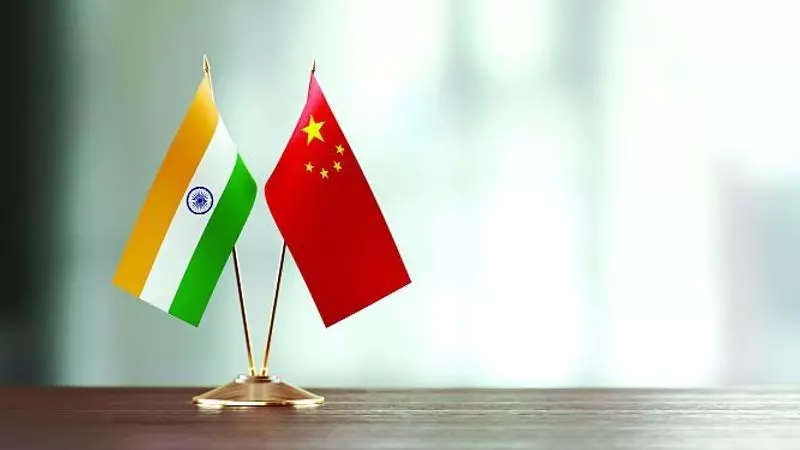
The Indian government has issued a firm and categorical rejection of any role played by China in facilitating the February 2021 ceasefire agreement with Pakistan along the Line of Control (LoC). This clarification comes amidst sustained questioning from opposition parties regarding the timing and circumstances of the truce.
Official Denial from the Ministry of External Affairs
Addressing the media on Thursday, Ministry of External Affairs (MEA) official spokesperson Randhir Jaiswal explicitly stated that China had no part in the process. "Let me make it very clear that the ceasefire agreement that we arrived at with Pakistan in February 2021 was a bilateral agreement," Jaiswal asserted. He emphasized that the decision was reached through established mechanisms between the militaries of India and Pakistan, specifically highlighting the role of the Director Generals of Military Operations (DGMOs).
The spokesperson's statement was a direct response to a question referencing a recent book, 'The Absent Dialogue,' by former Navy Chief Admiral Arun Prakash (Retd). The book had suggested the possibility of China acting as a mediator to broker the truce. The MEA's rebuttal leaves no room for ambiguity, reinforcing India's stated position that its engagement with Pakistan on such matters is strictly bilateral.

Opposition Targets Government Over Truce Details
The government's clarification follows intense political scrutiny. The opposition, particularly the Congress party, has been vocal in demanding answers. Congress leader Manish Tewari raised pointed questions in the public domain, asking why the ceasefire was agreed upon just before the assembly elections in Punjab. He challenged the government to explain the strategic rationale behind halting defensive operations against Pakistan-sponsored terrorism at that specific juncture.
Tewari's queries underscore a broader political debate on national security management. The opposition's line of attack focuses on whether electoral considerations influenced a critical security decision. They have demanded transparency on whether any third-party involvement or external pressure, directly or indirectly, played a role in the timing and terms of the agreement.
Context and Implications of the 2021 Agreement
The ceasefire agreement, announced jointly by India and Pakistan on February 25, 2021, brought a significant reduction in hostilities along the volatile LoC in Jammu and Kashmir. Prior to the truce, the year 2020 had witnessed over 5,000 instances of ceasefire violations. The agreement was largely upheld by both sides in the immediate years following its declaration, leading to a period of relative calm for border residents.
However, this diplomatic and military development has remained a subject of analysis and speculation. The government, until now, had maintained that the move was a result of back-channel discussions. The current firm denial of Chinese involvement is a crucial piece of the puzzle. It serves to assert India's autonomous decision-making in security matters and attempts to shut down narratives suggesting dependency on or intervention by Beijing, especially at a time of strained India-China relations due to the border standoff in Eastern Ladakh.
The episode highlights the complex interplay between diplomacy, national security, and domestic politics. While the government seeks to project the truce as a successful bilateral confidence-building measure, the opposition continues to probe its strategic costs and timing. The MEA's latest statement is an effort to control the narrative, firmly placing the agreement within the framework of direct engagement with Pakistan while dismissing external mediation theories.