

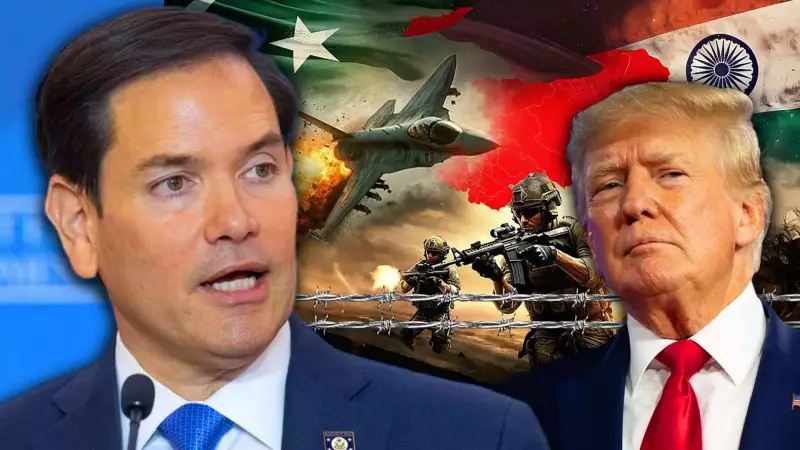
A fresh diplomatic controversy has erupted after US Senator Marco Rubio credited former President Donald Trump with resolving tensions between India and Pakistan, a claim New Delhi has firmly and repeatedly rejected.
Rubio's Assertion and India's Firm Rebuttal
In remarks made recently, Senator Marco Rubio portrayed Donald Trump as a pivotal global peacemaker. Rubio stated that the former US President personally engaged in multiple international disputes, including the long-standing conflict in South Asia between India and Pakistan. This narrative aims to position American diplomacy as an indispensable force for stability.
However, the Indian government has issued a clear and unambiguous denial of any external role in the de-escalation with Pakistan. This followed Operation Sindoor, a military action India launched after the devastating Pahalgam terror attack in Jammu and Kashmir. Official sources in New Delhi maintain that any understanding reached with Islamabad was the result of direct, bilateral communication, not third-party mediation.

Clashing Narratives: Washington, Delhi, and Islamabad
The situation presents a stark contrast in official positions. The claims from Trump, now echoed by his ally Rubio, stand in direct opposition to India's stated position. This diplomatic friction highlights a struggle over who controls the narrative of peace in one of the world's most volatile regions.
Complicating the picture further, Pakistan has publicly endorsed the American version of events, thanking the US for its role. This alignment between Washington and Islamabad, against India's firm stance, underscores the complex geopolitical undercurrents at play. The core dispute revolves around sovereignty and the principle of bilateralism that India strongly advocates for in resolving issues with its neighbor.
Broader Implications for Diplomacy
This incident is not an isolated one. It reflects a recurring theme where major powers seek to claim credit for diplomatic breakthroughs, sometimes conflicting with the narratives of the directly involved nations. For India, which has consistently opposed external mediation on Kashmir and cross-border terrorism, such claims are seen as an infringement on its strategic autonomy.
The controversy also brings into focus the post-Pahalgam attack scenario and India's calibrated military and diplomatic response. By asserting a bilateral resolution, New Delhi sends a clear message about its capability and preference to manage its regional affairs directly. The enduring gap between the US and Indian accounts suggests that managing public narratives will remain a key, and often contentious, part of modern diplomacy.






