

Major Defense Discussions Set for Modi-Putin Summit
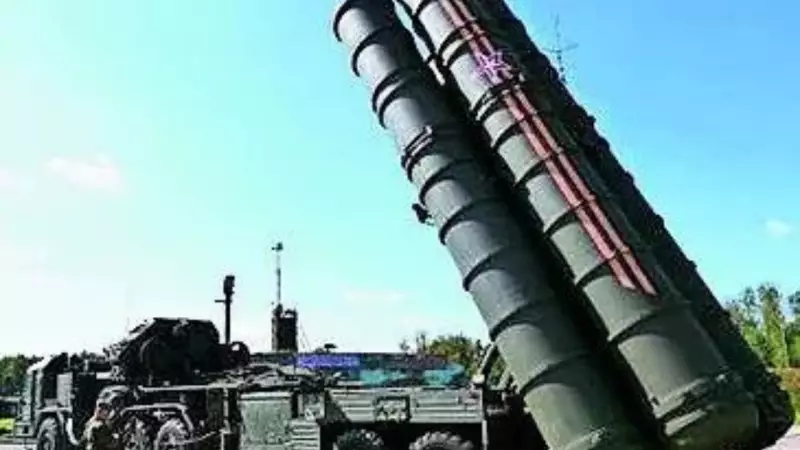
India is preparing to discuss the acquisition of five additional squadrons of the sophisticated S-400 Triumf air defense systems during the upcoming summit between Prime Minister Narendra Modi and Russian President Vladimir Putin on December 5 in New Delhi. The systems have demonstrated exceptional performance during Operation Sindoor, proving their strategic value to Indian security forces.
S-400 Expansion and Indigenous Maintenance
The Indian Air Force has formally requested five more S-400 squadrons to bolster its air defense capabilities. Meanwhile, the defense ministry has already given its approval for a comprehensive annual maintenance contract for these advanced systems. As part of this arrangement, Russia will establish a Maintenance, Repair, and Overhaul (MRO) facility within India, enhancing local technical capabilities and ensuring long-term operational readiness.
Russia has provided assurances to New Delhi regarding the delivery timeline for the remaining two S-400 squadrons from the original order of five systems. These final units, part of the $5.4 billion (approximately Rs 40,000 crore) agreement signed in 2018, are now scheduled for delivery by November 2026, following significant delays caused by the ongoing Ukraine conflict.

Fifth-Generation Fighter Aircraft Considerations
While discussions about the S-400 systems progress, India remains undecided about acquiring two to three squadrons of Russia's fifth-generation Sukhoi-57 fighter jets. Moscow has been actively promoting these aircraft as competitors to American F-35 Lightning-II jets. According to top sources who spoke with TOI on Tuesday, the Indian Air Force recognizes the potential need for interim fifth-generation fighter capability until the indigenous Advanced Medium Combat Aircraft (AMCA) becomes operational around 2035.
No final decision has been made regarding the Sukhoi-57, F-35, or any alternative options, leaving this significant procurement matter open for future consideration. The strategic balance between immediate capability requirements and long-term indigenous development objectives continues to shape these discussions.
Comprehensive Military Modernization Efforts
In parallel developments, the Cabinet Committee on Security (CCS), led by Prime Minister Modi, is poised to approve a massive Rs 63,000 crore upgrade program for the initial batch of 84 Sukhoi-30MKI fighter jets. The Indian Air Force currently operates 259 of these Russian-origin aircraft, which will receive substantial enhancements including advanced radars, modern avionics systems, longer-range weapons, and multi-sensor fusion technology.
This comprehensive upgrade will ensure the Sukhoi-30MKI fleet remains combat-ready for the next three decades. While the upgrade work will be primarily conducted within India, Russian technical expertise will play a supporting role in the modernization process, reflecting the continued defense cooperation between the two nations.
The defense ministry has also sanctioned the procurement of additional S-400 missiles worth Rs 10,000 crore. These missiles, with interception ranges varying from 120km to 380km, will replenish stocks utilized during recent hostilities with Pakistan while also building strategic reserves for future requirements.
Strategic Balancing Between Global Powers
India continues to navigate the complex geopolitical landscape by maintaining relationships with both its traditional defense partner Russia and the United States. The Trump administration's increasingly transactional approach to international relations, including efforts to penalize countries purchasing Russian military equipment and oil, has added complexity to India's defense procurement decisions.
Despite these challenges, multiple defense agreements with the United States remain in progress. Over the past fifteen years, American companies have secured Indian defense contracts totaling $26 billion, demonstrating the significant and growing defense partnership between the two democracies.

Recent developments include the signing of a deal exceeding $1 billion (approximately Rs 8,900 crore) with American industrial giant General Electric for an additional 113 GE-F404 engines to power Tejas Mark-1A fighter aircraft. Additionally, the CCS recently cleared a Rs 7,000 crore follow-on support package for the 24 American MH-60R Seahawk helicopters being inducted by the Indian Navy under a Rs 15,157 crore contract.
Air Chief Marshal A P Singh, the IAF chief, recently described the S-400 as a game-changing system during Operation Sindoor, revealing that it achieved the longest-ever air kill at 314 kilometers by neutralizing at least five advanced Pakistani fighters in the F-16 and JF-17 category. This demonstrated capability has significantly influenced India's continued interest in expanding its S-400 inventory.





