

India Bolsters Defence with Rs 858 Crore Contracts for Tunguska System and P8I Maintenance
In a significant move to enhance its air and maritime defence preparedness, the Indian Ministry of Defence has signed two major contracts totaling Rs 858 crore. The agreements, inked at Kartavya Bhawan-2 in New Delhi, focus on procuring the Tunguska Air Defence Missile System for the Army and providing depot-level maintenance for the Navy's P8I long-range maritime reconnaissance aircraft fleet.
Strategic Allocation and Signing Ceremony
The signing ceremony was conducted in the presence of Defence Secretary Rajesh Kumar Singh and other senior officials, as confirmed by a Press Information Bureau statement. Of the total outlay, Rs 445 crore has been allocated for the Tunguska system procurement, while Rs 413 crore is designated for P8I maintenance. This initiative aligns with the government's broader Aatmanirbhar Bharat (Self-Reliant India) campaign, aiming to modernise defence infrastructure while boosting indigenous capabilities.
Enhancing Air Defence with Tunguska System
The contract for the Tunguska Air Defence Missile System has been signed with Russia's state arms exporter, JSC Rosoboronexport, reinforcing the longstanding defence partnership between India and Russia. This acquisition is expected to strengthen India's multi-layered air defence capabilities against evolving aerial threats, including aircraft, drones, and cruise missiles.

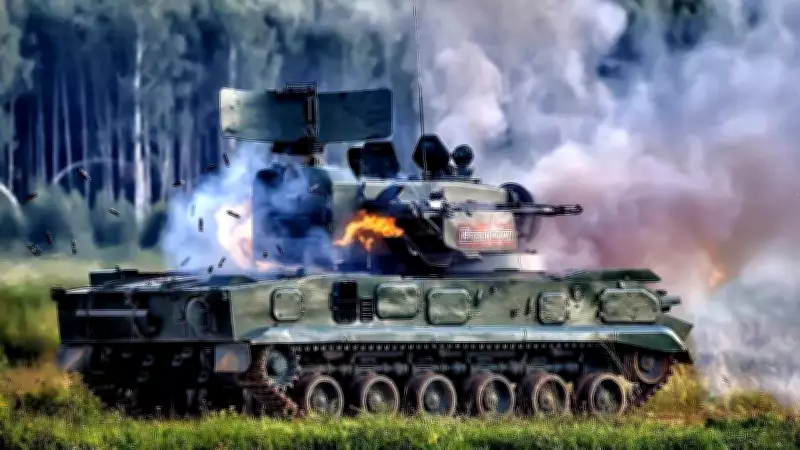
The Tunguska system, known by its NATO designation SA-19 "Grison", is a Soviet-origin, tracked, self-propelled platform that combines missile and gun-based defence. Its hybrid design allows it to engage targets across different ranges and altitudes, making it particularly effective against fast-moving, low-altitude threats like helicopters and drones.
Key features of the Tunguska system include:
- Ability to operate in all weather conditions, day and night.
- Missiles with ranges up to 10 kilometres and altitudes up to 3,500 metres.
- Dual 30 mm autocannons firing at rates between 3,900 and 5,000 rounds per minute.
- Advanced radar and fire control systems for detecting and tracking multiple targets simultaneously.
- High mobility on a tracked chassis, enabling it to keep pace with armoured formations.
Since its induction in the early 1980s, the system has undergone several upgrades to improve performance and adaptability, ensuring relevance in contemporary combat environments dominated by drone warfare and precision-guided munitions.
Boosting Maritime Readiness Through Indigenous P8I Maintenance
Alongside the missile procurement, the Ministry has signed a Rs 413 crore contract with Boeing India Defense Pvt Ltd for depot-level maintenance of the Indian Navy's P8I aircraft. Notably, this maintenance work will be carried out with 100 percent indigenous content, supporting the government's emphasis on domestic manufacturing and self-reliance.
The P8I aircraft serve as the backbone of India's maritime surveillance and anti-submarine warfare capabilities. Regular and sophisticated maintenance is crucial to ensure their operational readiness. By localising such high-end defence servicing, India aims to reduce dependence on foreign support and build a robust domestic ecosystem for defence maintenance.
Dual-Track Approach to Defence Modernisation
These contracts highlight India's dual-track defence policy: strengthening operational capabilities through strategic acquisitions while investing in domestic infrastructure and expertise. The Tunguska system procurement addresses immediate air defence needs, particularly against low-flying threats, while the P8I maintenance initiative fosters long-term self-reliance.
This calibrated effort to modernise the armed forces without compromising on strategic autonomy comes at a time when regional and global security dynamics are rapidly evolving. The inclusion of advanced systems like Tunguska, coupled with indigenous capacity-building, positions India to better address both conventional and emerging threats.

The move also reflects continuity in Indo-Russian defence cooperation, even as India diversifies its procurement sources. Russia has historically been a key supplier of air defence systems to India, and platforms like Tunguska continue to play a vital role in bridging gaps in short-range air defence.





