

India Condemns Pakistan Army Chief's Remarks on Shia Minority
India issued a sharp rebuke on Friday targeting Pakistan Army chief Field Marshal Asim Munir over his reported remarks urging Shias to "go to Iran," labeling the comments as part of Islamabad's persistent and systemic victimization of religious minorities.
MEA Spokesperson's Strong Statement
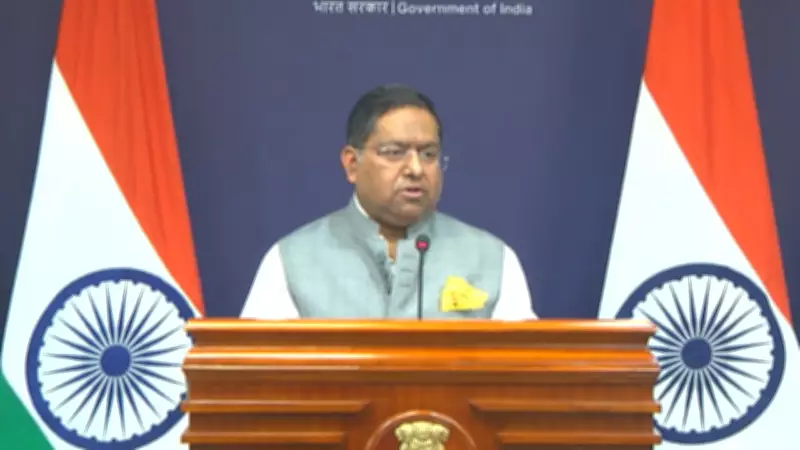
During the weekly media briefing, Ministry of External Affairs spokesperson Randhir Jaiswal addressed the issue directly. "We have seen reports on the issue," Jaiswal stated. "Such comments are not isolated incidents but are part of Pakistan's systemic victimization of minorities, including the Shia minority in that country."
Jaiswal elaborated further, noting that "the shrinking numbers of minorities in Pakistan reflect the decades of fear, marginalization, oppression and neglect that they have had to endure at the hands of the Pakistani state." He added that "the abysmal record of Pakistan when it comes to protection of human rights of minorities is also well documented."

Context of Heightened Tensions
The remarks from India's foreign ministry come amid significantly heightened regional tensions following the killing of Ayatollah Ali Khamenei in a joint US-Israel operation earlier this month. This development sparked widespread outrage among Shia communities across the Muslim world, including in Pakistan where Shias constitute a religious minority.
In Pakistan, protests over the killing turned violent, resulting in at least 25 fatalities. It was against this volatile backdrop that Field Marshal Asim Munir reportedly told Shia clerics that those who "love Iran so much" should "go to Iran"—a comment that drew immediate and strong criticism from community leaders who described it as both provocative and deeply offensive.
Munir's Warning and Clerical Pushback
The reported remark followed Munir's warning that violence in Pakistan in response to developments in Iran would not be tolerated. During the meeting with Shia clerics, prominent religious leader Muhammad Shifa Najafi pushed back against the army chief's comments, urging Munir not to blame the entire Shia community for the actions of a few individuals.
This exchange highlights the delicate and often tense relationship between Pakistan's military establishment and its religious minorities, particularly the Shia community which has faced:
- Systematic discrimination in various sectors
- Targeted violence and sectarian attacks
- Political marginalization over decades
- Restrictions on religious practices and expressions
Broader Implications for Minority Rights
India's condemnation of Pakistan's treatment of minorities comes at a time when international attention is increasingly focused on human rights violations in the region. The shrinking population percentages of religious minorities in Pakistan—including Hindus, Christians, Sikhs, and Shias—have been documented by numerous human rights organizations and international bodies.
The current situation underscores several critical issues:
- The precarious position of religious minorities in Pakistan
- The role of military leadership in shaping interfaith relations
- The regional implications of sectarian tensions
- The international community's monitoring of minority rights violations
India's strong statement represents not just bilateral criticism but also positions New Delhi as a vocal advocate for minority rights in the region, drawing attention to what it characterizes as Pakistan's failure to protect vulnerable communities within its borders.






