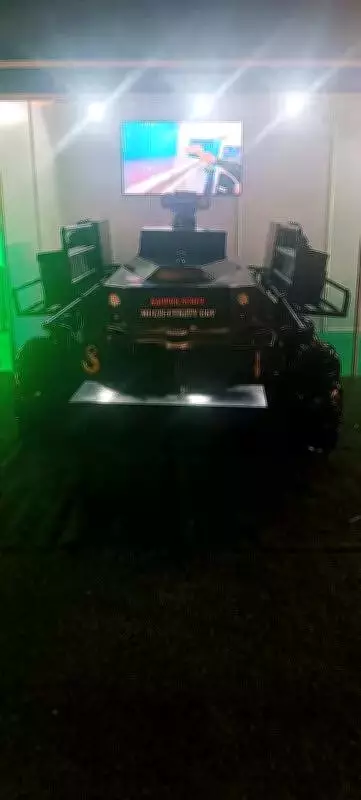
Indian Army Introduces Indigenous Sapperscout 2.0 Unmanned Ground Vehicle
In a significant advancement for modern land warfare, the Indian Army has unveiled the Sapperscout 2.0, an indigenously developed Unmanned Ground Vehicle (UGV) designed to tackle the most perilous battlefield tasks. This innovative platform represents a strategic leap forward in operational efficiency and soldier protection by automating high-risk roles that have traditionally exposed personnel to grave danger.
Addressing Critical Battlefield Challenges
The Sapperscout 2.0 is specifically engineered to handle three core missions: mine detection, reconnaissance, and surveillance. Developed under the leadership of Major Rajprasad RS from the Corps of Engineers (7 Engineer Regiment), this home-grown technology meets the precise operational demands of the Indian military. The vehicle was recently showcased at the "JAI se VIJAY" seminar in Pune, an event organized by the Headquarters Southern Command to highlight cutting-edge defense innovations.
As a multi-utility, all-terrain unmanned platform, the UGV directly confronts one of the Indian Army's persistent challenges: detecting and neutralizing mines and improvised explosive devices without endangering soldiers. Equipped for mine detection and route clearance, it enables engineer units to conduct forward reconnaissance remotely, particularly in contested and hostile environments where human exposure would be extremely hazardous.

Enhanced Capabilities for Modern Warfare
"Reconnaissance and surveillance remain central to dominance in modern conflicts, especially in high-altitude regions, deserts, and border areas where terrain and visibility present unique challenges," Major Rajprasad explained to TOI. The vehicle features environmental sensing and obstacle detection systems, allowing it to operate ahead of advancing troops and mechanized columns.
With its ability to conduct persistent ground-level surveillance, the Sapperscout 2.0 significantly enhances situational awareness by transmitting real-time data from forward areas. This capability is crucial for:
- Identifying enemy movements
- Monitoring vulnerable flanks
- Securing routes in both conventional and sub-conventional operations
Integration into Manned-Unmanned Teaming Doctrine
Military planners view the Sapperscout 2.0 as a vital component of the Manned-Unmanned Teaming (MUM-T) doctrine, which integrates unmanned platforms with infantry and mechanized forces. "By deploying the UGV ahead of troops, commanders can gather actionable intelligence while minimizing casualties during initial contact, ambush detection, or minefield identification," stated the officer.
Beyond surveillance, the platform can be configured for:
- Payload carriage
- Casualty evacuation
- Integration of mission-specific modules
Its modular architecture also permits future integration of weapon systems or counter-drone payloads, expanding its battlefield utility across diverse operational scenarios.
Path to Operational Deployment
Sapperscout 2.0 marks the 12th innovation developed by Major Rajprasad, with four of his earlier systems already inducted into the Indian Army. Officials anticipate that this UGV will follow a similar trajectory, progressing from demonstration to operational absorption in the near future.
"This is a special internal project, and further modifications according to operational requirements will be made in subsequent stages. At this juncture, developing our in-house product was crucial. The basic Research and Development has been successfully completed. Several trials will be conducted under different conditions before official induction and mass manufacturing," Major Rajprasad elaborated.
Emphasis on Indigenous Innovation
During the seminar, Chief of Defence Staff General Anil Chauhan and GOC-in-C Southern Command Lieutenant General Dhiraj Seth emphasized the importance of indigenous innovation in strengthening operational preparedness and achieving the national vision of Aatmanirbharta (self-reliance) in defense.

As threats evolve and the demand for unmanned reconnaissance and mine warfare solutions intensifies, systems like Sapperscout 2.0 underscore a decisive shift in the Indian Army's approach. "It leverages home-grown technology to protect soldiers while enhancing battlefield dominance. Additionally, it instills confidence in field troops to handle our own in-house system. Unlike imported systems that must be operated in a specific manner, it can be tweaked according to field requirements," noted a senior army officer from the Corps of Engineers.
This development reflects the Indian Army's commitment to adapting to the rapidly evolving landscape of modern warfare, where unmanned systems and high-tech sensors are becoming increasingly central to maintaining tactical superiority and ensuring soldier safety in complex operational environments.