

Indian Entrepreneur's US Visa Denial Under Trump Administration Sparks Major Immigration Debate
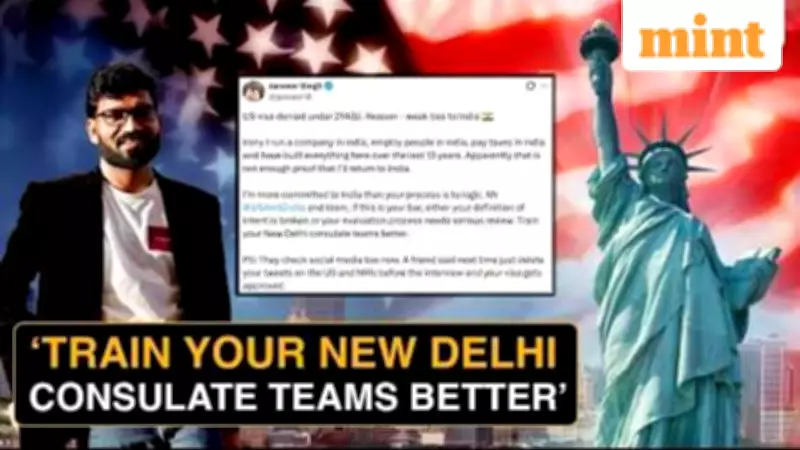
In a development that has captured significant attention across business and diplomatic circles, Delhi-based entrepreneur Jasveer Singh has had his United States visa application rejected under Section 214(b) of the Immigration and Nationality Act. The co-founder and CEO of a prominent matrimonial platform shared his official rejection letter on social media platform X, where it quickly went viral, generating widespread discussion about US immigration policies under the Trump administration.
Entrepreneur's "Savage" Response Questions Visa Evaluation Criteria
Jasveer Singh's response to the visa denial has been described as particularly pointed and thought-provoking. In his public statement, the entrepreneur highlighted what he perceives as a fundamental contradiction in the visa evaluation process. "I have been running a company in India for thirteen years, employing numerous people, and paying substantial taxes here throughout that period," Singh stated. "Yet this apparently does not constitute sufficient proof that I would return to India after a temporary visit to the United States."
The entrepreneur directly tagged US Ambassador to India Sergio Gor in his social media post, calling for improved training of consulate teams in New Delhi. His message suggested that current evaluation methods may not adequately account for established business professionals with deep roots in their home countries.

Social Media Scrutiny Emerges as Key Concern
An additional dimension to the controversy involves potential social media screening practices. Singh's public statement included a warning to other visa applicants, suggesting they might need to delete critical social media posts to improve their chances of approval. This has raised questions about whether visa evaluations now routinely include examination of applicants' online presence and political opinions expressed through digital platforms.
The timing of this rejection is particularly significant, occurring amid President Trump's broader immigration crackdown and policy shifts. Business communities in both India and the United States are closely monitoring how these policies affect legitimate business travel and international entrepreneurship.
Broader Pattern of Similar Rejections Emerging
Jasveer Singh's case is not isolated. Other Indian entrepreneurs have reported similar experiences with US visa applications under the current administration. Bengaluru-based founder Dhananjay Yadav represents another prominent example of a business professional facing unexpected visa denials despite established careers and business commitments in India.
These cases collectively point to what some observers describe as a tightening of visa approval processes that may disproportionately affect legitimate business travelers from countries like India. The business community is increasingly questioning whether current evaluation methods adequately distinguish between different categories of applicants.
Implications for US-India Business Relations
The viral nature of Singh's response and the broader pattern of similar rejections have sparked significant debate about the potential impact on US-India business relations. As global entrepreneurship becomes increasingly interconnected, visa policies that restrict legitimate business travel could have unintended consequences for economic collaboration between the two nations.
Business leaders and policy analysts are now calling for greater transparency in visa evaluation processes and more nuanced approaches that recognize the established professional credentials of entrepreneurs with proven track records in their home countries. The conversation extends beyond individual cases to broader questions about how immigration policies balance security concerns with facilitating legitimate international business activity.
As the debate continues to unfold, the case of Jasveer Singh has become a focal point for discussions about immigration fairness, business mobility, and the evolving relationship between government policies and global entrepreneurship in an increasingly digital world.






