Over 1,200 Indian Students Remain in Iran Amid Escalating Conflict, Call for Evacuation Preparedness
The Jammu & Kashmir Students Association has reported that approximately 1,200 Indian students are currently stranded in Iran following the initiation of US and Israeli military strikes on Saturday. The association is urgently appealing to the Indian government to formulate a comprehensive evacuation strategy in case the volatile situation deteriorates further.
Academic Commitments Delay Student Departures
Faizan Nabi, a 22-year-old Iran coordinator for the Jammu & Kashmir Students Association and a third-semester MBBS student at Kerman University of Medical Sciences in southwestern Iran, provided detailed insights. He explained that nearly half of the Indian students had already returned to India after the Indian embassy in Tehran issued an advisory on February 23, strongly recommending nationals to depart via available means.
However, a significant portion chose to stay behind due to critical academic obligations. These students were scheduled to appear for two essential exams conducted by Iran’s Ministry of Health and Medical Education on March 5. The assessments included a comprehensive general science test and another exam linked to internship eligibility under the MBBS curriculum.

Nabi noted, "Many believed they would complete the exams and then leave. They did not anticipate a sudden escalation in hostilities." The majority of Indian nationals currently in Iran are medical students enrolled across various universities in different provinces. A large contingent hails from Jammu & Kashmir, with additional students from Kerala, Uttar Pradesh, and other states.
Embassy Issues Fresh Advisory Amid Communication Disruptions
On Saturday, the Indian embassy in Iran released a new advisory on its X handle, urging all Indian nationals in the country to exercise utmost caution. The advisory stated, "Avoid unnecessary movements and remain indoors. Indians may continue to monitor news, maintain situational awareness and await further guidance from the embassy of India." Emergency contact details were provided: +989128109115, +989128109109, and +989932179359.
Nabi added that internet and mobile connectivity were disrupted in parts of Iran from Saturday morning, severely limiting real-time communication. "Parents in India are anxious and contacting us for updates. After considerable effort, we managed to share details of the stranded students with officials at the Indian embassy in Tehran through SMS. The government has cooperated with us earlier, and we hope preparations are made in case evacuation becomes necessary," he emphasized.
Student Experiences and Broader Reactions
An MBBS student from Isfahan, who returned to India via Baku five days ago and requested anonymity, described the atmosphere in Tehran as subdued in the days leading up to the strikes. "There were noticeably fewer people outside in the evenings. It felt like something was anticipated," he said, adding that students who stayed back did so largely because of their academic commitments.
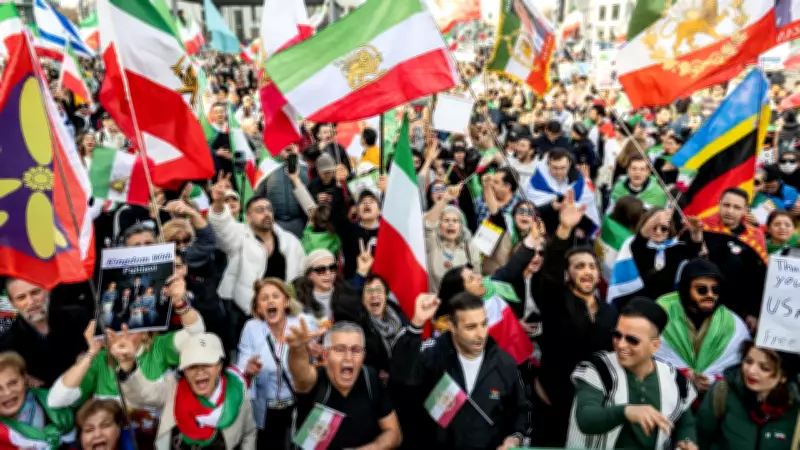
Meanwhile, Iranian nationals residing in India expressed sharply divided and emotionally charged reactions to the developments. Mohammed, who agreed to be identified by his first name and has lived in Delhi for over a decade, described the moment as decisive. "After the deaths of thousands of people, including women and children, at the hands of regime forces during recent mass protests, we hope the regime is finally toppled. People of Iran have suffered a lot. We hope to celebrate Nowruz on March 20 in a free Iran," he stated.
The situation remains fluid, with ongoing strikes reported across the region, including incidents affecting US navy headquarters in Bahrain and explosions heard in Abu Dhabi and Doha. As tensions escalate, the focus intensifies on the safety and evacuation of Indian citizens abroad.