India Considers Historic 114 Rafale Fighter Jet Acquisition Worth Rs 3.25 Lakh Crore
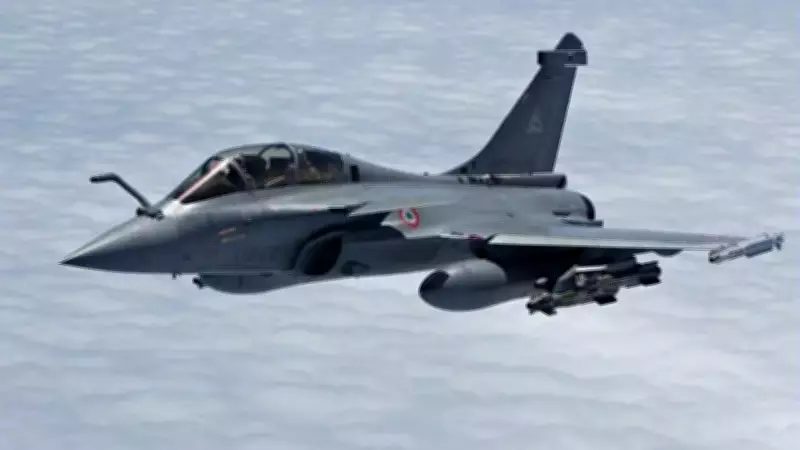
The Indian defence ministry has initiated high-level discussions on a landmark proposal to acquire 114 Rafale fighter jets from France at an estimated cost of Rs 3.25 lakh crore. This monumental procurement, if approved, would represent India's largest-ever defence acquisition, significantly enhancing the Indian Air Force's combat capabilities during a period of escalating regional security concerns.
Defence Acquisition Council to Review Proposal Ahead of Macron's Visit
According to authoritative defence sources, the proposal is expected to be presented shortly before the Defence Acquisition Council, which is chaired by Defence Minister Rajnath Singh. This timing coincides with French President Emmanuel Macron's scheduled visit to India later this month, adding diplomatic significance to the potential agreement. The project has already received clearance from the Defence Procurement Board and now requires Acceptance of Necessity approval before advancing to technical and commercial negotiations.
Comprehensive Details of the 114-Rafale Acquisition Plan
Under the ambitious proposal, 18 Rafale jets would be procured in ready-to-fly condition directly from France, while the remaining 96 aircraft would be manufactured domestically under a government-to-government agreement. Sources indicate that approximately 80% of the total 114 aircraft are planned for indigenous production, with initial domestic content estimated at around 30%. Officials anticipate this percentage will increase substantially to over 60% as production progresses and local manufacturing capabilities mature.

The Indian Air Force has specifically requested a configuration comprising 88 single-seater and 26 twin-seater aircraft. French aerospace manufacturer Dassault Aviation would collaborate with Indian private sector companies for manufacturing and systems integration. India has also sought permission to integrate indigenous weapons and systems onto the aircraft, although critical source codes would remain under French control for security reasons.
Strategic Rationale Behind India's Rafale Expansion
This substantial push for additional Rafale aircraft comes despite competing offers from global powers. Both the United States and Russia have presented their fifth-generation fighter options, including the F-35 and Su-57, to Indian defence planners. However, military strategists view the Rafale as a proven, immediately available solution that can effectively bridge the IAF's capability gap while providing technological superiority.
"The Statement of Case for the 114 Rafale jets, prepared by the Indian Air Force, was formally submitted to the defence ministry several months ago," confirmed knowledgeable sources. "Once approved by the Defence Ministry, the proposal will require final authorization from the Cabinet Committee on Security before implementation."
This acquisition urgency stems from the IAF's current operational strength of approximately 30 fighter squadrons, which falls significantly below the sanctioned requirement of 42 squadrons. This deficit occurs precisely as security threats from neighboring nations, particularly China and Pakistan, continue to intensify across multiple fronts.
Proven Combat Performance and Industrial Benefits
The Rafale's demonstrated operational effectiveness has substantially strengthened its case for expanded procurement. Defence officials have highlighted the aircraft's performance during Operation Sindoor, where Rafale jets reportedly successfully countered Chinese PL-15 air-to-air missiles using their advanced Spectra electronic warfare systems.
Equipped with sophisticated weaponry including long-range Meteor missiles, SCALP cruise missiles, and precision-guided munitions, the Rafale represents the cornerstone of India's 4.5-generation-plus combat capability. Beyond immediate military advantages, the agreement promises significant industrial benefits for India's aerospace sector.

The French side plans to establish a comprehensive maintenance, repair, and overhaul facility for M-88 engines in Hyderabad, a development expected to significantly deepen India's aerospace ecosystem. Dassault Aviation has already created an Indian subsidiary to support maintenance of French-origin fighter aircraft, with major Indian corporations like Tata likely to play substantial roles in manufacturing and logistical support operations.
Bridging the Capability Gap Before Indigenous Programs Mature
Defence planners view the Rafale acquisition as critically important during the interim period before indigenous fighter programs reach operational maturity. While India has placed orders for 180 Tejas Mark 1A fighters, production has encountered delays primarily related to engine supply chains. Meanwhile, the indigenous Advanced Medium Combat Aircraft fifth-generation project is not anticipated to enter service before the mid-2030s.
Given these developmental timelines, the Rafale is projected to remain the IAF's primary multirole combat aircraft alongside the existing Su-30 MKI fleet, providing essential technological superiority and operational readiness during a period of heightened regional tensions. If finalized, this agreement would expand India's total Rafale fleet to 176 aircraft, incorporating the 36 Rafales already operational with the IAF and 26 Rafale-M jets ordered by the Indian Navy for aircraft carrier operations.