

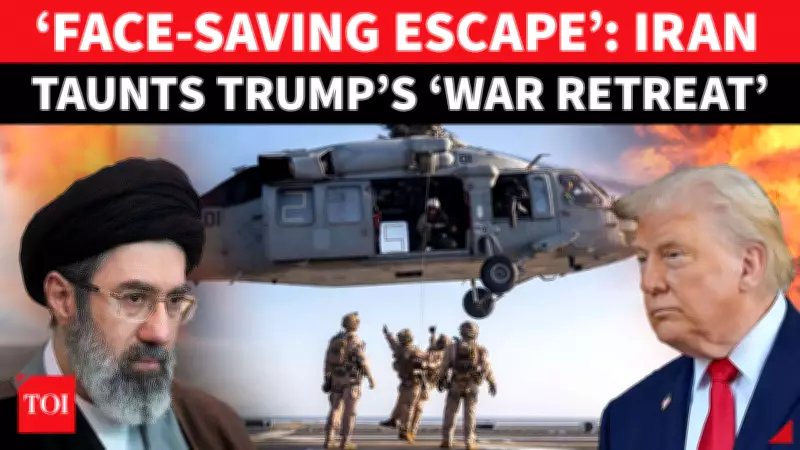
Is the United States looking for an exit strategy from its standoff with Iran? As Jared Kushner and Steve Witkoff land in Islamabad for a fresh round of talks, Iran’s Defence Ministry is sharpening its tone, calling the U.S. position a 'war quagmire.' Tehran is making it clear: they are not coming to the negotiating table out of weakness. By refusing direct talks and insisting on Pakistani mediation, Iran is trying to control the narrative of who exactly is 'seeking peace.' In the world of high-stakes diplomacy, it is not just about what is said—it is about who blinked first.
Iran's Stance on Negotiations
Iranian officials have repeatedly stated that they will not engage in direct negotiations with the United States unless certain conditions are met. Instead, they have proposed Pakistan as a mediator, a move that analysts say is aimed at gaining leverage and portraying the U.S. as desperate for a deal. The Iranian Defence Ministry's recent statement underscores this strategy, accusing Washington of trying to find a 'face-saving' way out of a conflict that Tehran believes the U.S. cannot win.
US Envoys in Islamabad
The arrival of Jared Kushner and Steve Witkoff in Islamabad signals the U.S. administration's urgency to de-escalate tensions. However, Iran's refusal to meet directly has complicated efforts. The Pakistani government, which has historically maintained close ties with both Iran and the United States, is now in a delicate position. Islamabad must balance its relationship with Tehran while also accommodating Washington's requests for mediation.

High-Stakes Diplomacy
Diplomatic experts note that both sides are engaging in a careful game of brinkmanship. Iran's insistence on mediation is seen as a tactic to avoid appearing weak, while the U.S. envoys' visit is interpreted as a sign of Washington's eagerness to avoid a broader conflict. The term 'war quagmire' used by Iran's Defence Ministry is a pointed reference to the U.S. experience in Iraq and Afghanistan, suggesting that any military engagement with Iran would be similarly costly and protracted.
As talks continue behind closed doors, the international community watches closely. The outcome of these negotiations could have significant implications for regional stability, global oil prices, and the broader balance of power in the Middle East. For now, both Iran and the United States are holding firm, each accusing the other of intransigence while seeking to shape public perception.






