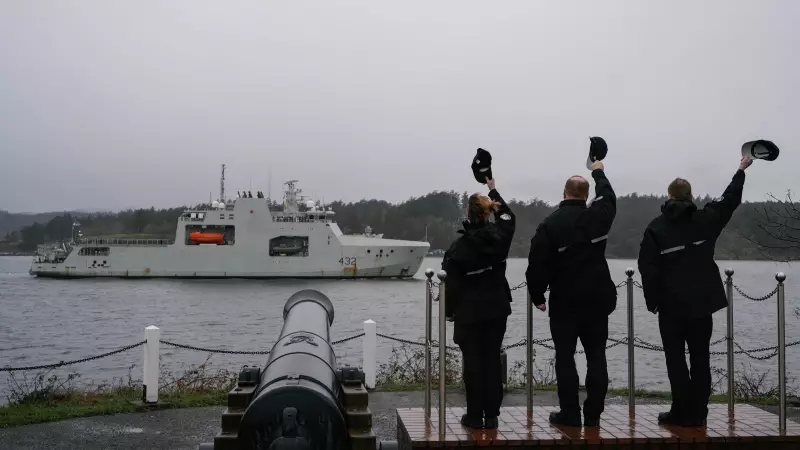
In a dramatic escalation of diplomatic hostilities, the Islamic Republic of Iran has officially designated the Royal Canadian Navy as a terrorist organisation. This unprecedented move marks a significant downturn in relations between the two nations and adds a new layer of complexity to global maritime security dynamics.
The Official Announcement and Legal Basis
The decision was formally ratified by Iran's parliament, known as the Majlis, on Sunday. The legislative body overwhelmingly approved the bill, which now categorises the entire naval force of Canada under the country's stringent anti-terrorism laws. This legal designation is not merely symbolic; it carries serious implications under Iranian law, potentially justifying a range of retaliatory measures against what Tehran now views as a state-sponsored terrorist entity.
The Iranian government's action is framed as a direct and proportional response to Canada's own foreign policy stance. Earlier this year, in June 2024, the Canadian government officially listed the Islamic Revolutionary Guard Corps (IRGC), a powerful branch of Iran's military, as a terrorist organisation. Iran's latest parliamentary vote is widely interpreted as a tit-for-tat retaliation, aiming to mirror the diplomatic and legal pressure applied by Ottawa.

Context of Deteriorating Bilateral Relations
The friction between Iran and Canada is not a sudden development but the culmination of years of deteriorating ties. Diplomatic relations were formally severed by Canada back in 2012. The decision was driven by a combination of factors, including concerns over Iran's nuclear programme and its alleged support for terrorist groups. Since then, the two countries have maintained no direct diplomatic channels, communicating instead through intermediary nations or in international forums.
Canada's listing of the IRGC in June was a landmark move, praised by Iranian opposition groups and criticised by Tehran as a provocative and illegal act. The IRGC is integral to Iran's security apparatus and holds significant economic and political influence within the country. By targeting Canada's naval force, Iran is employing a similar tactic, aiming to challenge Western nations' unilateral designations of its institutions.
The parliamentary session also saw the approval of other retaliatory measures against Canadian officials and entities involved in the IRGC blacklisting. This indicates a broader strategy of legal and political pushback from Iranian authorities.
Potential Implications and International Reaction
The designation of a NATO member's national navy as a terrorist group is an extraordinary step with potentially far-reaching consequences. While the immediate practical impact on Royal Canadian Navy operations in international waters may be limited, it creates a dangerous rhetorical and legal precedent. It could complicate naval interactions in volatile regions like the Strait of Hormuz, where multiple nations' forces operate in close proximity.
Furthermore, this move risks further inflaming an already tense geopolitical landscape. It signals Iran's willingness to adopt an increasingly confrontational posture towards Western nations that take actions against its military and political institutions. The development is likely to be closely monitored by other global powers and could influence similar disputes elsewhere.
As of now, the Canadian government has not issued an official public response to this specific designation. However, analysts expect a firm condemnation, reaffirming Canada's position on the IRGC and its commitment to its own national security policies. The incident underscores the growing trend of using domestic legal frameworks—like anti-terrorism laws—as tools of international diplomatic conflict, a practice that raises complex questions about international law and state sovereignty.

In conclusion, Iran's parliamentary vote to label the Royal Canadian Navy a terrorist organisation represents a severe escalation in its ongoing feud with Canada. It is a direct countermeasure to Canada's earlier blacklisting of the IRGC and reflects the deep, unresolved tensions between the two nations. This action not only deepens their bilateral rift but also introduces a new element of risk into international maritime relations, highlighting how domestic legal designations can reverberate on the global stage.