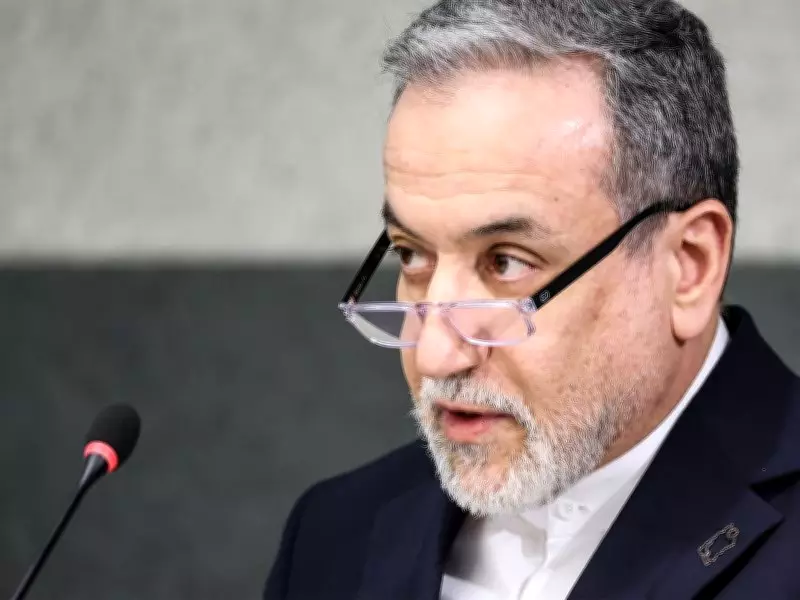
Iranian Foreign Minister Abbas Araghchi has accused the United States of deliberately violating the terms of a bilateral memorandum of understanding (MoU) concerning the Strait of Hormuz. According to Araghchi, Washington established an alternative shipping route without Tehran's approval and actively redirected commercial vessels away from the corridor designated by Iran.
Alleged Violation of Article 5
In an interview with an Iranian daily, as reported by Press TV, Araghchi emphasised that Article 5 of the MoU is unambiguous. He stated that the US actions go beyond a simple misunderstanding. "It appeared that they insisted on creating other routes alongside the one Iran had designated to ensure safe and free passage through the Strait of Hormuz," Araghchi said.
The foreign minister detailed that American forces directed vessels away from the safe transit corridor specified by Iran, encouraging them instead to navigate the US-established alternative route. He reiterated that setting up a "separate" route unilaterally was fundamentally inconsistent with the terms of the memorandum.

Tehran's Authority Over Shipping Arrangements
Araghchi clarified that Article 5 explicitly grants Tehran the authority to oversee shipping arrangements during the transitional post-war period. "When Article 5 says that 'Iran will make arrangements', it means that Iran determines the required route and mechanisms to restore traffic to pre-war levels within a month," he explained. The one-month timeline was necessary for critical mine-clearing operations and implementing essential safety measures before full commercial maritime operations could resume safely.
The framework also stipulates that maritime services in the strategic waterway will be provided free of charge for 60 days. After that period, Iran and Oman will enter discussions regarding future waterway management and service protocols.
US Actions Described as 'Spiteful'
Araghchi noted that under Article 5, any modifications or additions to shipping corridors required prior consultation with Iranian authorities. He affirmed that responsibility for demining lies with Iran. The Iranian minister described the US deployment of a southern route approximately 10 days after reopening the strait as "truly a spiteful move."
Addressing broader regional relations, Araghchi emphasised that Iran holds no hostility toward neighbouring nations and remains committed to building mutual trust. However, he criticised countries that made their facilities available to US forces during the hostilities. "There is no doubt that tensions currently exist in relations with some regional countries and this issue is quite natural and clear given the conflicts that have taken place," he said.
Right to Self-Defence
The foreign minister defended Iranian strikes against regional US bases and military installations, reiterating that "we believe this action was carried out entirely within the framework of our right to self-defence." He highlighted the need for a "period of trust-building," asserting that lasting regional stability must be achieved collectively rather than through reliance on external military powers. "They also seek stability and economic progress, and we too seek a stable region. In fact, a collective understanding has now formed in the region that security and stability must be ensured collectively," Araghchi stated. He added that "the presence of US bases has not brought them greater security and stability, but has in some cases become a factor against security."
US Central Command's Stance
Earlier in the day, US Central Command (CENTCOM) announced that the American naval blockade against Iran remains in full effect. CENTCOM reported that two ships that did not comply with orders were "disabled," while two others were boarded "to ensure total compliance." In a post on X, CENTCOM disclosed that coalition forces have redirected 12 commercial vessels attempting to breach the perimeter as part of an ongoing effort to restrict unauthorised maritime transport bound for Iranian ports.