

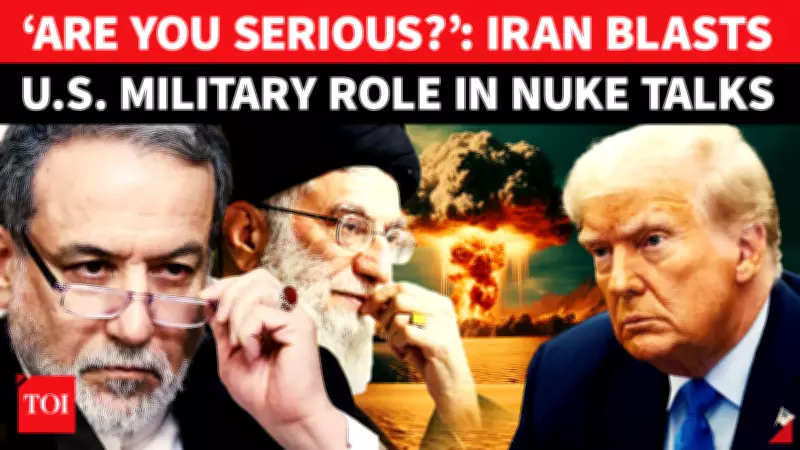
Iran's Foreign Minister Condemns US Military Presence Amid Nuclear Negotiations
Iran's Foreign Minister Abbas Araghchi has issued a strong rebuke of United States military activities in the Middle East, openly questioning Washington's commitment to diplomatic negotiations. The criticism follows the recent tour of the USS Abraham Lincoln aircraft carrier by US CENTCOM Commander General Michael Kurilla in the region, which Iran views as a provocative act undermining ongoing indirect talks between the two nations.
Diplomatic Process Undermined by Military Movements
Araghchi emphasized that military figures have no legitimate role in what should be a purely diplomatic negotiation process. "We will not accept military personnel interfering in diplomatic channels," Araghchi stated, highlighting Iran's position that continued US sanctions coupled with visible military deployments create an atmosphere of distrust rather than cooperation.
The foreign minister's comments come at a particularly sensitive time in US-Iran relations, with both sides having signaled interest in continuing discussions about Iran's nuclear program. However, Araghchi made clear that decisions now rest squarely with Tehran and Washington, suggesting that progress depends on concrete actions rather than mere expressions of interest.

Regional Tensions and Trump's Hardline Stance
The diplomatic friction occurs against a backdrop of heightened regional tensions, increased US military deployments, and former President Donald Trump's persistent hardline conditions regarding Iran's nuclear activities and internal protests. Iran has consistently responded to what it perceives as threats with defiant rhetoric, including previous statements that the country "is not afraid of US military power."
Observers note that the timing of the US commander's highly visible tour of the USS Abraham Lincoln—a nuclear-powered aircraft carrier with significant strike capabilities—sends mixed signals about American intentions. While diplomatic channels remain technically open, such military demonstrations complicate the negotiation landscape and fuel Iranian suspicions about Washington's true objectives.
The Path Forward for US-Iran Relations
Despite the current tensions, both nations have maintained indirect communication channels, suggesting neither side wants a complete breakdown in relations. The key issues remain:
- Iran's nuclear program and compliance with international agreements
- US economic sanctions and their impact on Iran's economy
- Regional security concerns and military posturing
- Internal protests within Iran and US responses to them
Araghchi's statement represents Iran's firm position that meaningful diplomacy cannot proceed alongside what Tehran views as hostile military gestures. The coming weeks will reveal whether Washington adjusts its approach or maintains its current strategy of combining diplomatic outreach with visible military presence in the region.






