

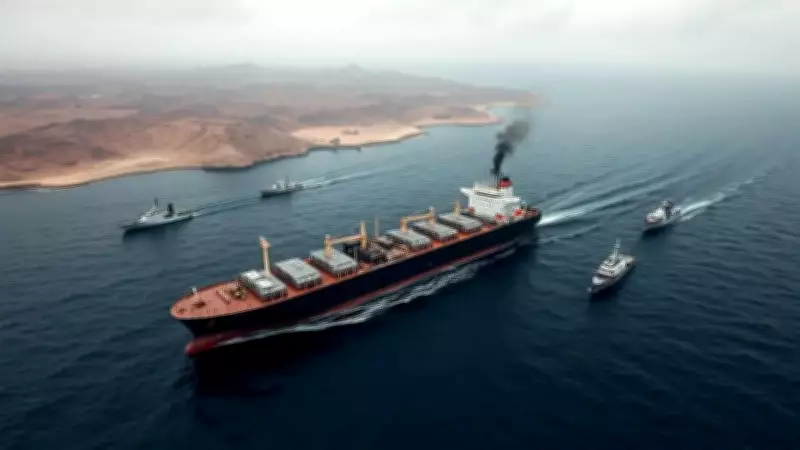
Iranian Gunfire Forces Indian Tankers to Retreat as Tenth Vessel Navigates Hormuz Strait
In a tense maritime development, Iranian gunboats opened fire on Saturday, compelling two Indian-flagged tankers to abort their passage through the critical Strait of Hormuz. Despite this aggression, a tenth Indian-flagged vessel successfully transited the strait on the same day. The vessel, identified as Desh Garima, was transporting crude oil en route to the Mumbai port, highlighting the ongoing risks in this vital energy corridor.
Iran's Sporadic Access and Blockade Strategy
Since Iran initiated a blockade of the Strait of Hormuz last month amid its escalating conflict with the United States and Israel, which commenced on February 28, the regime has been intermittently permitting Indian vessels to sail through. This erratic access has created significant uncertainty for maritime traffic. Data from Maritime Traffic indicates that numerous Indian- and foreign-flagged ships destined for Indian ports remain in a holding pattern, awaiting clearance to cross the Hormuz Strait.
Official Data Reveals Extensive Indian Maritime Presence
According to official statistics, the Persian Gulf region currently hosts a substantial Indian maritime footprint. Specifically, there are 13 Indian vessels stationed in the Persian Gulf, located to the west of the Strait of Hormuz. Additionally, six Indian ships are positioned in the Gulf of Oman to the east, one in the Gulf of Aden, and three in the Red Sea. This distribution underscores the strategic importance and vulnerability of Indian shipping in these contested waters.

Evacuation Plans for Critical Vessels and Seafarers
The petroleum ministry has identified 17 vessels for evacuation, comprising four LPG carriers, three LNG carriers, and ten crude oil tankers. Of these, three are Indian-flagged, while the remaining 14 are foreign-flagged ships. In a parallel effort, the chemicals and fertilisers ministry has compiled a list of another 16 ships earmarked for evacuation. This list includes the Indian-flagged vessel Jag Arnav, which was attacked by Iran's Islamic Revolutionary Guard Corps (IRGC) on Saturday.
Officials reported that as of Saturday, 499 Indian seafarers are aboard Indian-flagged vessels in the Persian Gulf region, with 343 located west of the Strait of Hormuz and 156 in the Gulf of Oman. To date, various shipping companies have evacuated 2,487 seafarers, reflecting the urgent humanitarian and logistical challenges posed by the crisis.
Reuters Report Details Iranian Naval Warnings and Attacks
A Reuters report shed further light on the Saturday incidents, revealing that vessels attempting to cross the Strait of Hormuz received radio messages from Iran's navy instructing them that passage was not permitted. Two ships reported being struck by gunfire during these encounters. The report noted that several commercial vessels had attempted to transit the strait following a notice to mariners issued a day earlier, which indicated that passage would be allowed but restricted to lanes deemed safe by Iran. This contradictory guidance has exacerbated the perilous conditions for international shipping in the region.






