

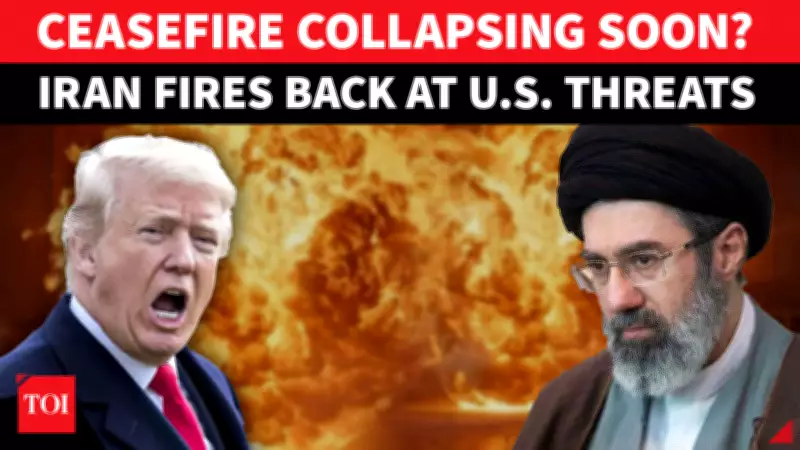
Iranian President Issues Defiant Response to U.S. Pressure as Ceasefire Deadline Approaches
The diplomatic clock is ticking with increasing urgency. In just 48 hours, the temporary ceasefire agreement between the United States and Iran is scheduled to expire, creating a tense international standoff that has captured global attention.
Iran's Unyielding Stance Against Coercion
Iranian President Masoud Pezeshkian has delivered a sharply worded message to the White House, making it unequivocally clear that Tehran will not engage in negotiations under what he describes as coercive pressure tactics. "There is no question of surrender," declared President Pezeshkian, emphasizing Iran's determination to maintain its sovereign position in the face of American demands.
The Iranian leader's statement comes at a critical juncture, with Wednesday evening marking the potential expiration of the fragile ceasefire arrangement that has temporarily halted hostilities between the two nations. President Pezeshkian's remarks suggest Iran is preparing for multiple possible outcomes as the deadline approaches.

Trump's Dual Approach: Criticism and Conditional Offers
Meanwhile, former U.S. President Donald Trump has intensified his criticism of previous diplomatic efforts while presenting what he frames as a potential path forward. Trump has labeled the Obama-era nuclear agreement with Iran as fundamentally "weak and ineffective," arguing that it failed to address broader security concerns in the region.
In what appears to be a strategic maneuver, Trump has proposed a new, more comprehensive agreement that would include the unfreezing of billions of dollars in Iranian assets currently held under international sanctions. However, this offer comes with a significant condition: Tehran must demonstrate willingness to compromise on key security issues before any assets are released.
"The ball is in Iran's court," Trump stated, suggesting that Iranian leadership must make the first conciliatory move for negotiations to proceed productively. This position creates what analysts describe as a classic diplomatic standoff, with both sides waiting for the other to make concessions.
Global Concerns Over Potential Conflict Escalation
As the Wednesday evening deadline looms, international observers are closely monitoring the situation, concerned that the current brinkmanship could escalate into renewed regional conflict. The stakes are particularly high given Iran's strategic position in the Middle East and its network of regional alliances.
Several factors contribute to the heightened tension:
- The expiration of the temporary ceasefire agreement without extension
- Iran's development and demonstration of new missile capabilities
- Increased U.S. military presence in the Gulf region
- Historical animosities between the two nations
Diplomatic experts note that the current situation represents a critical test of both nations' commitment to peaceful resolution versus military confrontation. The international community, including United Nations officials and regional powers, has urged restraint and continued dialogue despite the challenging circumstances.
Broader Implications for Regional Stability
The outcome of this diplomatic showdown carries significant implications beyond bilateral U.S.-Iran relations. Regional stability in the Middle East hangs in the balance, with neighboring countries monitoring developments closely for potential spillover effects.
Energy markets are particularly sensitive to developments, given Iran's position as a major oil producer and the strategic importance of shipping lanes in the Persian Gulf. Any escalation could disrupt global energy supplies and trigger economic repercussions worldwide.
As Wednesday evening approaches, the world watches to determine whether current negotiations represent a masterclass in diplomatic brinkmanship or the final countdown to renewed hostilities. The coming hours will reveal whether both nations can find common ground or whether regional tensions will escalate into more direct confrontation.






