

Iran Condemns EU Position on Strait of Hormuz Transit Rules
Iran issued a sharp rebuke against the European Union on Sunday, criticizing Brussels over its stance regarding transit regulations in the strategically vital Strait of Hormuz. The diplomatic confrontation unfolds against a backdrop of escalating tensions directly linked to the ongoing conflict between the United States and Iran.
Iran Accuses EU of Selective Application of International Law
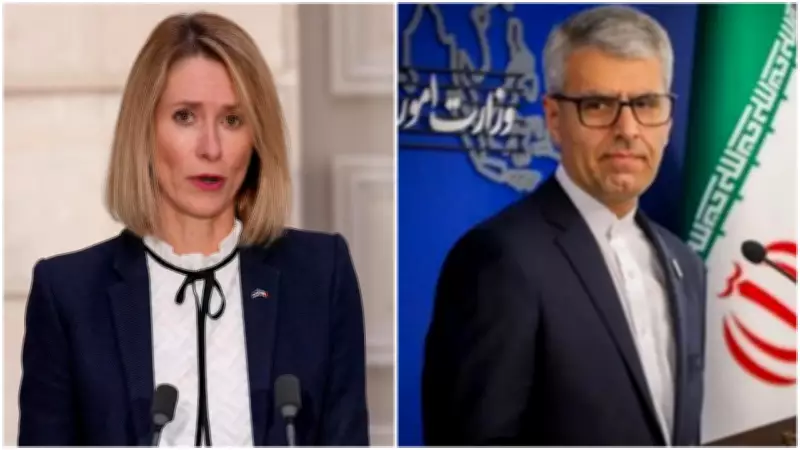
Foreign Ministry spokesperson Esmail Baghaei launched a pointed attack against EU foreign policy chief Kaja Kallas, asserting that Europe invokes international law selectively and opportunistically. "Oh, that 'international law'?! The one that the EU dusts off to lecture others while quietly green-lighting a US-Israeli war of aggression... Spare the sermons," Baghaei declared in a strongly worded statement. He characterized the European Union's position as representing "peak hypocrisy."
Baghaei firmly defended Iran's sovereign rights as a coastal state to regulate maritime movement within the critical waterway. He pushed back aggressively against international calls for completely unrestricted and unconditional passage through the strait.

Tehran Defends Right to Control Hormuz, Rejects 'Unconditional Transit'
The Iranian spokesperson emphasized that Tehran operates fully within its legal rights when taking actions in the Strait of Hormuz. "No rule of international law forbids Iran... from taking necessary measures to stop the Strait of Hormuz being used for waging military aggression against Iran," Baghaei stressed during his remarks.
He further dismissed the very concept of free passage under the current heightened security conditions. "'Unconditional transit passage' in Hormuz? That fiction sailed the moment US/Israeli aggression brought US military assets into the strait's backyard," Baghaei stated, highlighting what Iran perceives as direct threats to its national security.
EU Warns Against Transit Fees, Offers Maritime Support
Baghaei's comments came directly in response to statements from EU foreign policy chief Kaja Kallas, who had earlier emphasized that transit through crucial global waterways must remain open and freely accessible. Kallas issued a clear warning that any implementation of a "pay-for-passage scheme will set a dangerous precedent for global maritime routes."
The EU diplomat added that Europe stands ready to play a constructive role in restoring normalcy once hostilities eventually ease. She specifically noted that the European Union's Aspides naval mission could be significantly strengthened and expanded to provide enhanced protection for commercial shipping across the broader region.
Tensions Escalate as Iran Signals Stricter Measures
The diplomatic exchange follows recent indications from Iranian authorities that they may begin prioritizing vessels willing to pay transit fees under newly proposed protocols, citing limited capacity and security concerns. The situation deteriorated further when Iran's Revolutionary Guard announced that the Strait of Hormuz would remain closed to certain traffic, warning ominously that any vessel approaching without authorization could be "targeted."
These developments occur within the context of broader regional tensions, particularly surrounding the United States naval blockade on Iranian ports. Iranian officials have stated unequivocally that the Strait of Hormuz will not fully reopen unless Washington lifts its blockade measures.
Mohammad Bagher Ghalibaf, speaker of the Iranian parliament, reinforced this hardline position, warning that a final comprehensive peace agreement remains "far" from realization given current circumstances.
Global Implications of the Hormuz Standoff
The Strait of Hormuz represents one of the world's most critical maritime chokepoints, carrying approximately one-fifth of global oil and gas supplies. Its continued disruption has already begun impacting international trade flows and energy markets worldwide, with potential for more severe economic consequences if the standoff prolongs.

The escalating war of words between Tehran and Brussels underscores deepening divisions in how international law and maritime security are interpreted during periods of conflict, with significant implications for global shipping, energy security, and diplomatic relations in the volatile Middle East region.





