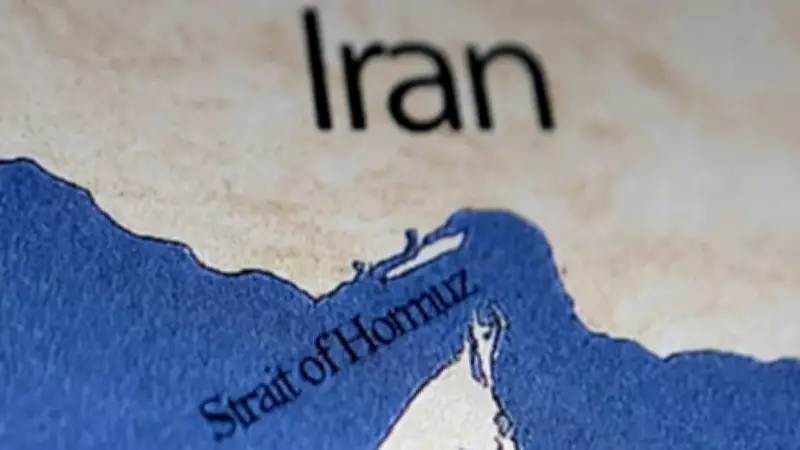
Iran Declares Strait of Hormuz Reopening Impossible Under Continuing US Naval Blockade
Iran has issued a firm declaration that reopening the strategic Strait of Hormuz remains impossible as long as the United States maintains its naval blockade of Iranian ports. The statement comes amid escalating tensions and ongoing diplomatic maneuvers between the two nations.
Parliament Speaker's Strong Statement on Ceasefire Conditions
Iran's parliament speaker, Mohammad Bagher Ghalibaf, emphasized that any ceasefire agreement between Tehran and Washington would be meaningless without addressing what he described as fundamental violations. In a detailed post on social media platform X, Ghalibaf articulated Iran's position clearly.
"A full ceasefire only makes sense if it is not violated by the naval blockade and the hostage-taking of the world's economy," Ghalibaf wrote. "The reopening of the Strait of Hormuz is not possible with such a flagrant breach of the ceasefire."

He further demanded that what he called "Zionist warmongering across all fronts" must be halted for any meaningful progress to occur in US-Iran relations.
Iran's Response to US Military Aggression
Ghalibaf addressed recent military actions by the United States against Iran, stating firmly that American objectives have not been achieved through military aggression. "They did not achieve their objectives through military aggression, nor will they through bullying," he declared.
The Iranian official emphasized that the only viable path forward requires recognition of the rights of the Iranian nation by the United States and its allies. This position reflects Tehran's longstanding demand for respect of its sovereignty in international affairs.
Trump's Peace Talk Signals and Iranian Uncertainty
Former US President Donald Trump has hinted at potential peace negotiations with Iran, suggesting that a second round of US-Iran talks could occur as early as Friday. In comments to The New York Post, Trump indicated that developments might unfold within the next 36 to 72 hours.
However, significant uncertainty persists on the Iranian side regarding participation in proposed negotiations. Iranian foreign ministry spokesman Esmaeil Baqaei confirmed that the government has not yet decided whether it will participate in a new round of Pakistan-mediated talks proposed to be held in Islamabad.
Trump has notably softened his earlier hardline stance on Iran, announcing an indefinite extension of the ceasefire earlier this week. This diplomatic shift comes amid fresh military escalation in the region.
Recent Military Escalation in the Strait of Hormuz
The diplomatic developments occur against a backdrop of renewed military activity. According to Iranian media reports, Iran's Revolutionary Guard reportedly opened fire on three vessels in the Strait of Hormuz on Wednesday, seizing two of them and escorting the ships toward Iranian waters.
This incident highlights the ongoing volatility in the strategic waterway through which approximately one-fifth of the world's oil passes. The Strait of Hormuz has long been a flashpoint in US-Iran tensions, with both nations asserting their rights and interests in the critical maritime passage.
The combination of diplomatic signals and military actions creates a complex landscape for potential resolution of the longstanding tensions between Washington and Tehran. Iran's firm position on the naval blockade suggests that any breakthrough will require addressing what Tehran views as fundamental violations of international norms and Iranian sovereignty.