

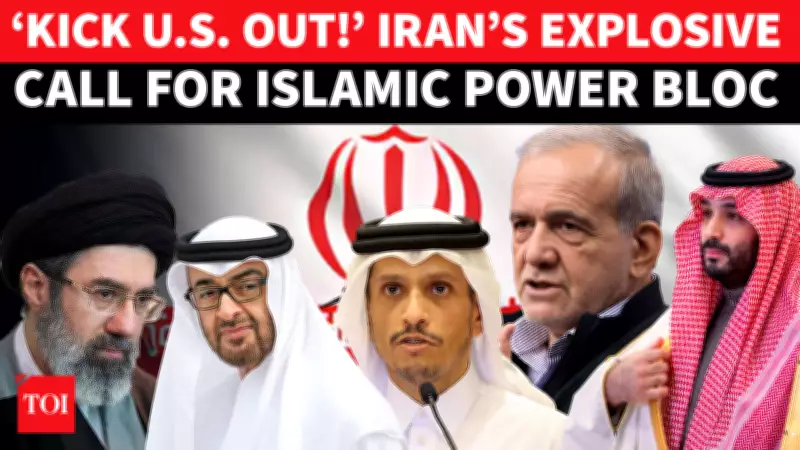
Iran Calls for Islamic Nations to Expel US Forces, Unveils Regional Power Bloc Plan
In a landmark Nowruz address, Iranian President Masoud Pezeshkian has issued a bold call for Islamic nations to expel United States military forces from the region while unveiling a comprehensive plan for a "Mideast Power Bloc." The proposal centers on creating an "Islamic Parliament" and establishing a unified security architecture among Middle Eastern countries, marking a significant push for regional autonomy.
Proposal for Islamic Parliament and Unified Security
President Pezeshkian emphasized the necessity for Muslim-majority nations to reject foreign military presence and resolve conflicts through internal cooperation. He framed this unity as essential for achieving peace, stability, and prosperity, warning against divisions fostered by external forces. The proposed bloc aims to foster dialogue and collective security measures, with Pezeshkian expressing readiness to engage with neighboring countries, whom he referred to as "brothers."
Denial of Nuclear Ambitions and Accusations Against West
During his address, Pezeshkian categorically denied that Iran is pursuing nuclear weapons, accusing Western narratives of spreading misinformation. He also placed blame on Israel for contributing to regional instability, highlighting tensions that have long plagued the area. This stance aligns with Iran's historical positioning against Western influence and Israeli policies in the Middle East.

Context of Regional and Global Dynamics
The call comes amid ongoing geopolitical shifts, including recent developments such as Russia's declared loyalty to Iran and U.S. military deployments under the Trump administration. Pezeshkian's proposal seeks to capitalize on these dynamics by advocating for a self-reliant regional bloc that can operate independently of superpower interventions. The plan underscores Iran's ambition to lead a coalition that prioritizes Islamic solidarity and internal conflict resolution.
Implications for International Relations
If implemented, the Mideast Power Bloc could reshape alliances and security frameworks in the region, potentially reducing U.S. influence and fostering new diplomatic channels. However, it may also face challenges from countries with existing ties to Western powers or those skeptical of Iran's intentions. The proposal reflects broader trends in global politics where nations are increasingly seeking to assert regional sovereignty and counter external dominance.
President Pezeshkian's address marks a pivotal moment in Iran's foreign policy, signaling a renewed effort to rally Islamic nations around a shared vision of autonomy and cooperation. As the region navigates complex conflicts and power struggles, this initiative could influence future diplomatic and security arrangements across the Middle East.






