

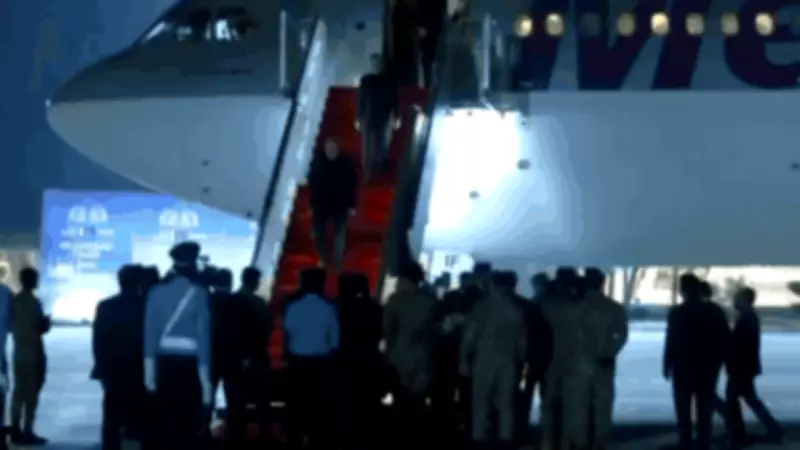
High-Level Iranian Delegation Lands in Islamabad for Critical US Peace Negotiations
A significant Iranian delegation, headed by Parliament speaker Mohammad Bagher Qalibaf and foreign minister Abbas Araghchi, touched down in Islamabad late Friday for pivotal peace discussions with the United States. This diplomatic mission unfolds as international efforts intensify to cement a fragile ceasefire in the ongoing Middle East conflict, which has threatened regional stability for weeks.
Pakistan's Warm Welcome and Hopeful Outlook
Upon arrival, the Iranian officials were greeted at the airport by a distinguished Pakistani reception committee. Foreign minister Ishaq Dar, National Assembly speaker Sardar Ayaz Sadiq, army chief field marshal Asim Munir, and interior minister Mohsin Naqvi all participated in the welcoming ceremony. Dar articulated optimism for productive engagement, reaffirming Islamabad's dedication to mediating "a lasting and durable solution" to the crisis.
These talks commence just days after US President Donald Trump proclaimed a two-week ceasefire in the six-week-long war, despite persistently elevated tensions across the region. The timing underscores the urgency of diplomatic intervention to prevent a resurgence of hostilities.

Iran's Firm Preconditions and Historical Skepticism
Even as Tehran consented to participate in the dialogue, it has expressed reservations about immediately launching negotiations by demanding specific preconditions be satisfied first. According to Reuters reports, Iran insists on the release of its blocked financial assets and a ceasefire in Lebanon, where Israeli military operations against Hezbollah persist, before formal discussions can advance.
Speaking upon landing in Islamabad, Qalibaf echoed Iran's deep-seated distrust of Washington. "Our experience of negotiations with the Americans has always been met with failure and breach of promise. We have goodwill but no trust," he stated, highlighting the challenging atmosphere surrounding the talks.
Comprehensive Delegation Reflects Talks' Gravity
The Iranian delegation itself, comprising approximately 70 members, mirrors the seriousness of these negotiations. It includes senior officials and technical experts spanning economic, political, security, and legal domains. This broad representation suggests that conversations could encompass a wide array of issues, from sanctions relief and nuclear concerns to regional security dynamics and control over vital energy transit routes.
Iran has maintained a uncompromising stance on safeguarding its strategic interests, particularly concerning the Strait of Hormuz. This critical global oil transit chokepoint remains under Tehran's influence, and its blockade has already disrupted worldwide energy supplies, contributing to rising inflation and economic uncertainty globally.
US Warns Against Negotiating in Bad Faith
Concurrently, US Vice President J D Vance, who will lead the American delegation and is anticipated to arrive in Islamabad shortly, cautioned that Washington is open to dialogue but will not endure bad faith tactics. "If they're going to try to play us, then they're going to find the negotiating team is not that receptive," he remarked, as per news agency AP.
Washington's primary goals are believed to involve reopening the Strait of Hormuz, restraining Iran's nuclear ambitions, and addressing its regional military posture. Nevertheless, analysts observe that the chasm between US demands and Iran's conditions remains substantial and difficult to bridge.
Despite Trump's claim that Iran has been militarily weakened, Reuters indicated that Tehran still possesses considerable missile and drone capabilities, alongside a significant stockpile of enriched uranium, adding complexity to the negotiations.
Talks Viewed as a Make-or-Break Diplomatic Phase
Earlier, Pakistan Prime Minister Shehbaz Sharif characterized the talks as a "make-or-break phase," emphasizing the high stakes as both parties endeavor to reconcile major differences and avert a renewed escalation in the region.
While the ceasefire has temporarily halted direct hostilities, parallel conflicts continue to muddy the situation. Israeli strikes in southern Lebanon have persisted, and Hezbollah has retaliated with rocket fire, raising alarms that the truce could disintegrate prematurely.

Additionally, disputes over the ceasefire's scope, especially whether it includes Lebanon, have further strained the fragile understanding between the involved parties.
With global energy markets unsettled and geopolitical tensions soaring, the Islamabad talks constitute a critical endeavor to forestall a return to full-scale conflict. However, given the profound mistrust and conflicting demands on both sides, the pathway to a sustainable agreement remains highly uncertain and fraught with challenges.





