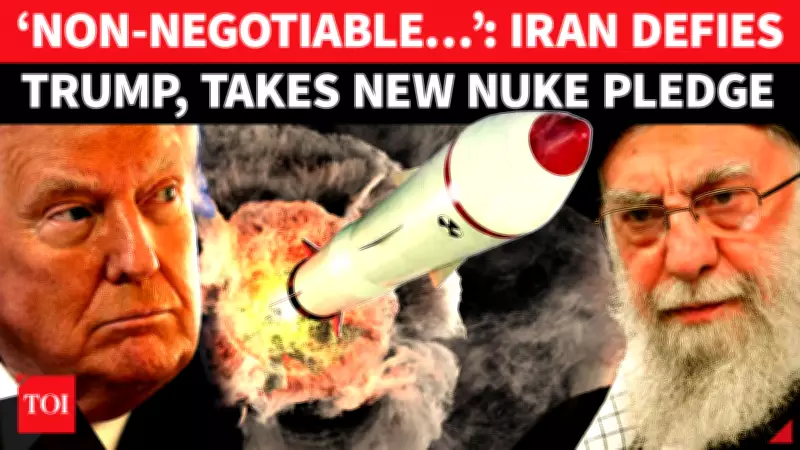
Iran Vows Nuclear Enrichment Is Non-Negotiable As Trump Hints At Strikes
In a dramatic escalation of geopolitical tensions, Iran has firmly declared that its nuclear enrichment activities are a sovereign and non-negotiable right, directly challenging international pressure amid renewed threats of military action from the United States. The latest round of U.S.–Iran nuclear talks in Geneva has concluded with little progress, setting the stage for a potentially volatile confrontation between the two nations.
Iran's Unwavering Stance on Nuclear Sovereignty
Iran's Atomic Energy chief, Mohammad Eslami, delivered a defiant statement following the Geneva negotiations, emphasizing that uranium enrichment is an inalienable right of the Iranian state. He asserted that Tehran's nuclear program fully complies with International Atomic Energy Agency (IAEA) regulations and is dedicated solely to peaceful purposes, such as energy production and medical research.
Eslami's remarks underscore Iran's long-standing position that its nuclear ambitions are legitimate under international law, despite widespread skepticism from Western powers. He highlighted that Iran has consistently denied pursuing nuclear weapons, pointing to past agreements like the Joint Comprehensive Plan of Action (JCPOA) as evidence of its commitment to transparency.

Trump's Threats and the Looming Military Option
Simultaneously, U.S. President Donald Trump has hinted at potential military strikes against Iran if diplomatic efforts fail to curb its nuclear activities. In a series of public comments, Trump suggested that the United States is prepared to take decisive action to prevent Iran from acquiring nuclear capabilities, echoing his administration's hardline approach toward Tehran.
This threat adds a layer of urgency to the already fragile negotiations, as experts warn that any military confrontation could destabilize the entire Middle East region. Trump's rhetoric has been met with concern from global allies, who fear that escalating tensions could derail years of diplomatic efforts and lead to a broader conflict.
Persistent Concerns Over Iran's Nuclear Activities
Despite Iran's assurances, international observers remain deeply worried about several key aspects of its nuclear program:
- High-Level Uranium Enrichment: Iran has been enriching uranium to levels that approach weapons-grade, raising alarms about potential weaponization.
- Restricted Access for Inspectors: The IAEA has faced obstacles in monitoring Iranian facilities, limiting transparency and fueling suspicions.
- Expanding Ballistic Missile Capabilities: Iran's development of advanced missile systems is viewed by many as a dual-use technology that could deliver nuclear warheads.
These factors contribute to a growing consensus that Iran's nuclear program poses a significant threat to regional and global security, even as Tehran maintains its peaceful intentions.
The Fragile State of Diplomacy and Future Prospects
With diplomacy continuing but threats looming, the nuclear standoff between Iran and the United States appears increasingly fragile and volatile. The Geneva talks, while ongoing, have yielded little tangible progress, leaving both sides entrenched in their positions.
The situation is further complicated by geopolitical dynamics, including Russia's vocal support for Iran and Europe's cautious mediation efforts. As tensions peak, the international community watches closely, hoping for a peaceful resolution but preparing for the possibility of escalation.
In summary, Iran's non-negotiable stance on nuclear enrichment, coupled with Trump's military hints, has created a high-stakes impasse. The world now faces a critical juncture where diplomatic breakthroughs are urgently needed to avert a potentially catastrophic conflict.